TADF Materials


TADF molecules, commonly referred to as third-generation OLED materials, are organic molecules that efficiently convert both singlet and triplet excited states into light, offering great potential to achieve near 100% internal quantum efficiency (IQE) for high OLED efficiencies and without the use of heavy metals.
Common TADF materials are organic molecules designed with electron-donating (D) and electron-accepting (A) units to facilitate efficient light emission in OLEDs by minimizing the energy gap between singlet and triplet states, enabling fast reverse intersystem crossing (RISC) for high efficiency. These molecules, often structured as D-A, D-A-D', or A-D-A, feature spatial separation of the highest occupied molecular orbital (HOMO) and lowest unoccupied molecular orbital (LUMO) for small singlet-triplet energy gap.
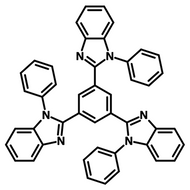
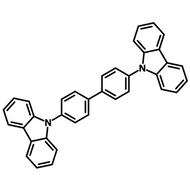
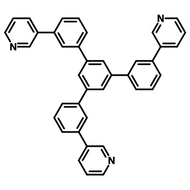
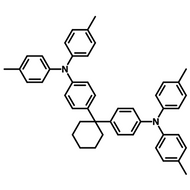
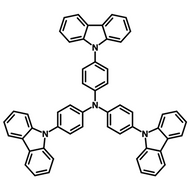
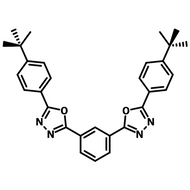
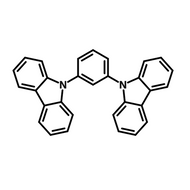
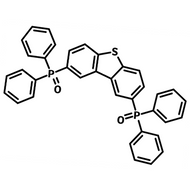
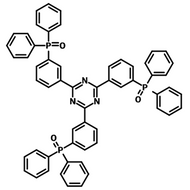
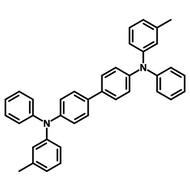
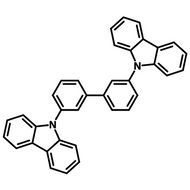
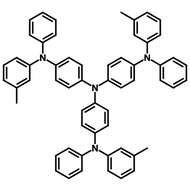
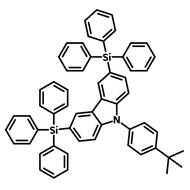
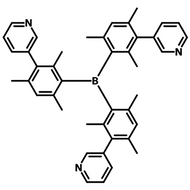
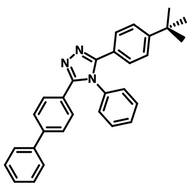
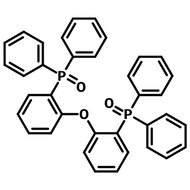
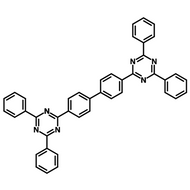
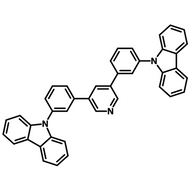
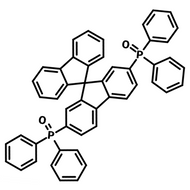
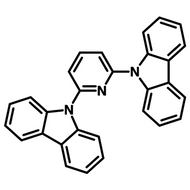
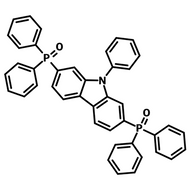
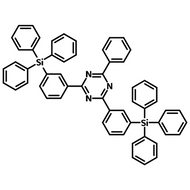
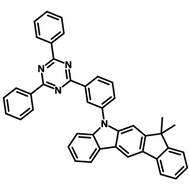
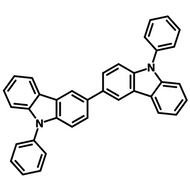
Benchmark exemplary TADF dopants are 4CzIPN, DABNA-1, DMAC-DPS, and hosts like TPBi, CzSi and mCBP, often incorporating carbazole (donor) and nitrogen-containing heterocycles (acceptor) for blue, green, and red light generation, enabling cost-effective, high-performance displays.
Page 1 of 4