


Choosing Working, Reference and Counter Electrodes
Jump to: Three-Electrode Set Up | Working Electrode | Reference Electrode | Counter Electrode | Electrode Body | Other Considerations

Choosing the right electrodes is an important part of innovative electrochemical research. There are several factors to consider when choosing which electrode is best for your application.
Before choosing an electrode, you should fully consider and outline the expected experimental conditions, such as electrolyte choice, pH, and required potential range, and their effects on the electrochemical reaction. Once these are decided, you will need to choose the appropriate material, electrode geometry and electrode body to suit your experimental parameters.
While there are some common requirements, working, counter and reference electrodes all require slightly different things. For example, in working and counter electrodes, you must consider the material’s specific potential window, sometimes referred to as its “safe zone”. These are the potential limitations where the electrode won’t experience oxidation, reduction, or degradation.
Please note that the following electrode suggestions are only for laboratory electrochemistry experiments.


Three Electrode Electrochemical Cell Set-Up

To get reliable and repeatable data, it’s always encouraged to conduct your electrochemistry experiments using a three-electrode set up. This consists of:
- A Working Electrode (WE) where the electrochemical reaction of interest occurs.
- A Reference Electrode (RE) that provides a stable, known potential against which the WE is measured.
- A Working Electrode (WE) which completes the circuit, allowing current to flow without passing significant current through the RE.
These are suspended within an electrochemical cell, with each electrode connected to a potentiostat.
Important things to bear in mind:
- No significant current should pass through the reference electrode, as this would polarise it and lead to potential drift.
- Where possible, the electrodes should be housed in separate compartments, connected via a glass frit or membrane separator. This is particularly important for high-precision experiments or electrocatalysis studies, where cross-contamination or product crossover can significantly affect results.
- The reference electrode should always be housed in a separate compartment.
Choosing a Working Electrode
The working electrode is arguably the most important feature of an electrochemistry set-up, as it is the site where the measured reaction takes place. Selecting the right electrode for your experiment is key to reliable and accurate electrochemistry measurements.
Electrode Material
Glassy Carbon (GC), Platinum (Pt), and Gold (Au) are the most common working electrode materials. The benefits and limitations of each material are listed in the table below.
| Glassy Carbon | Platinum (Pt) | Gold (Au) |
|---|---|---|
 High potential window High potential window |
Excellent electrical conductivity |
Chemically stable & conductive metal |
|
Low intrinsic catalytic activity |
Fast electron transfer kinetics |
High selectivity and affinity |
|
Highly inert |
Highly resistive for a metal. Stable under most hostile environments (acids, high temp, various solvents) |
Most common choice for CO2 reduction studies |
|
Low cost (compared to platinum) |
 High catalytic activity in some situation High catalytic activity in some situation |
|
|
Robust – will degrade in hot concentrated acid |
Unsuitable for HER & ORR reactions |
|
|
Most common choice for standard electrochemical experiments |
Most common choice for measuring for experiments with fast electron transfer kinetics |
Stationary vs Rotating Disk Electrode
Most experiments only require stationary working electrodes. However, rotating disk or rotating ring disc electrodes allow for higher control over reactant transfer, facilitating more interesting studies.
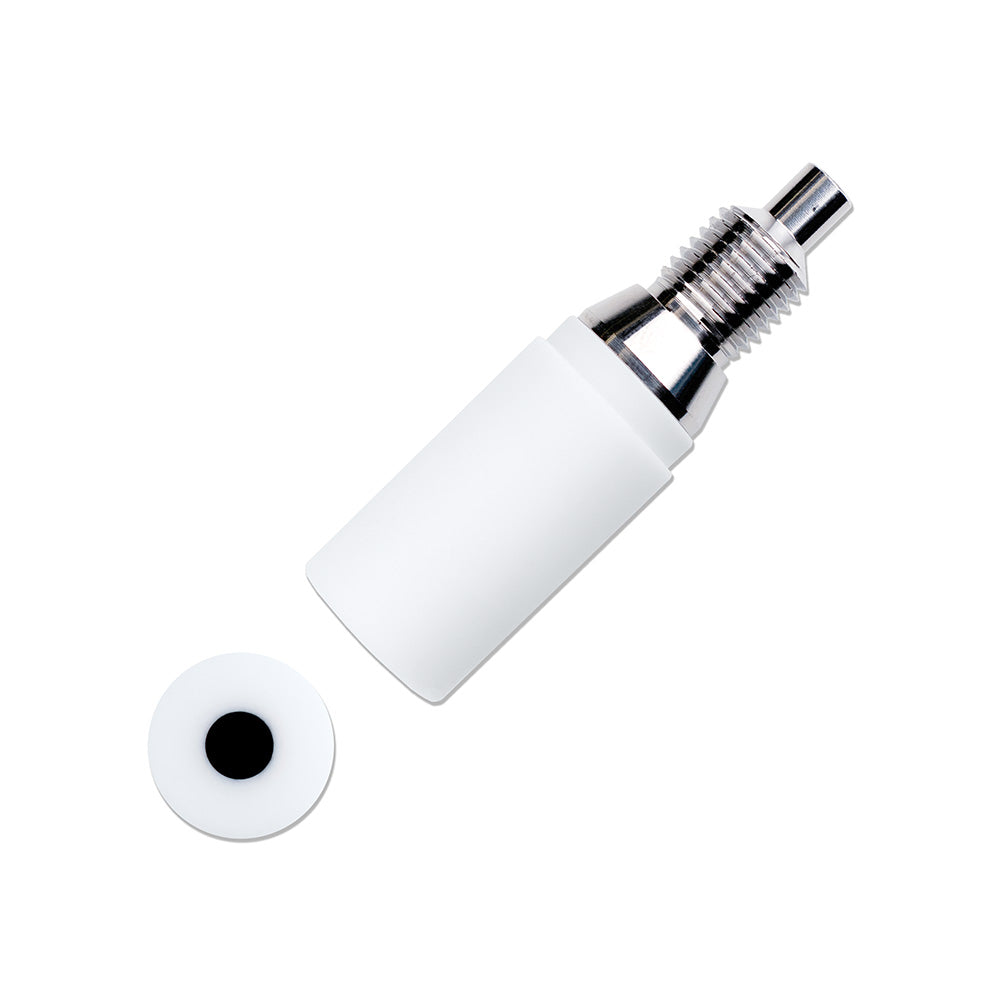
An RDE can create a laminar flow that maintains a constant diffusion layer thickness at the electrode surface and ensures a continuous supply of dissolved reactants. This creates a steady-state current where mass transport is precisely controlled. This is important for:
- ORR studies
- OER studies
- HER studies
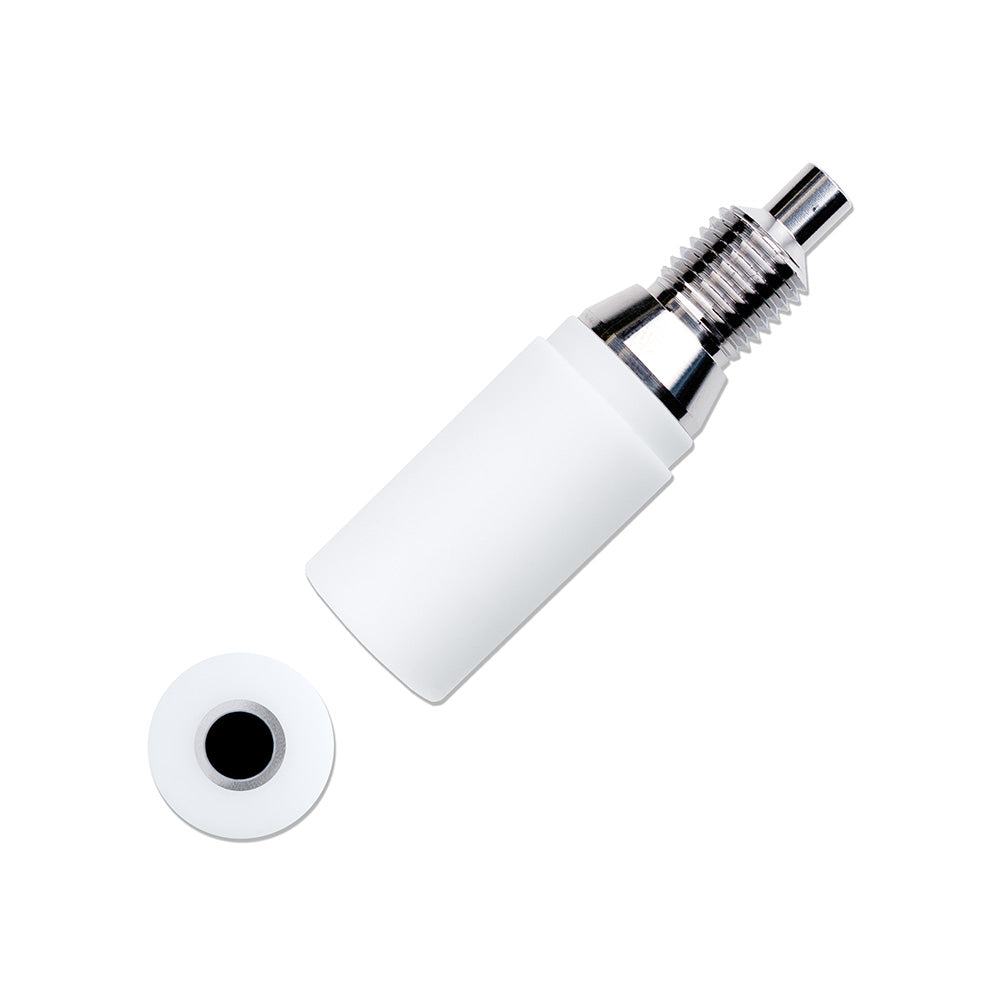
Rotating Ring Disk Electrodes (RRDE) offer a similar level of laminar flow control, with the additional benefit of providing two electrode measurements in one. The center disc and ring are separated by an insulating layer, so they effectively act as two distinct working electrodes.
This RRDE configuration enables deeper electrochemical investigations such as:
- Finding the electron transfer number of a reaction
- Tracking reaction pathways
- To probe intermediate products
Working Electrode Designs
Working electrodes can have different shapes and geometries. Different geometries have different advantages and can be used for different purposes.
Standard Electrode
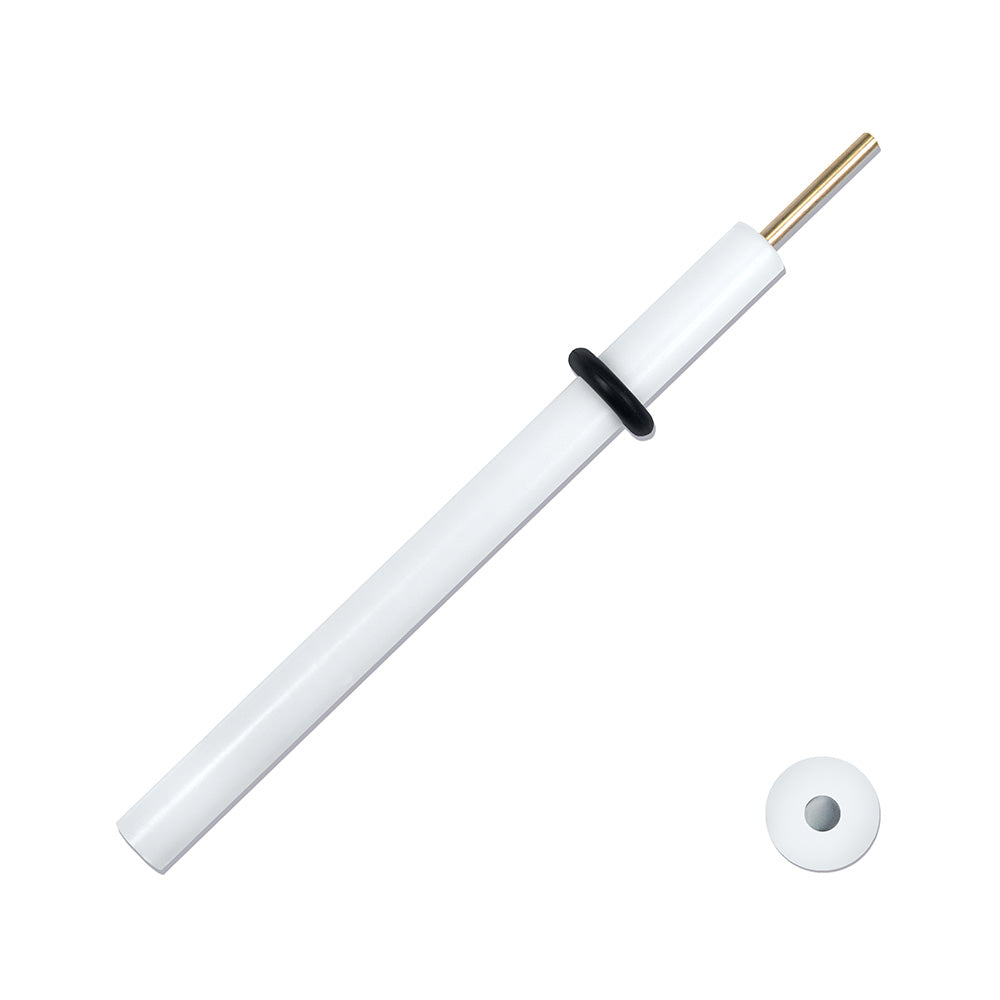
Advantages
- Standard design for most electrochemistry experiments
- Will fit in any electrochemical cell
Uses
- Basic electrochemistry measurements
Available in various materials including platinum, glassy carbon, gold and graphite.
L-Shaped Electrode
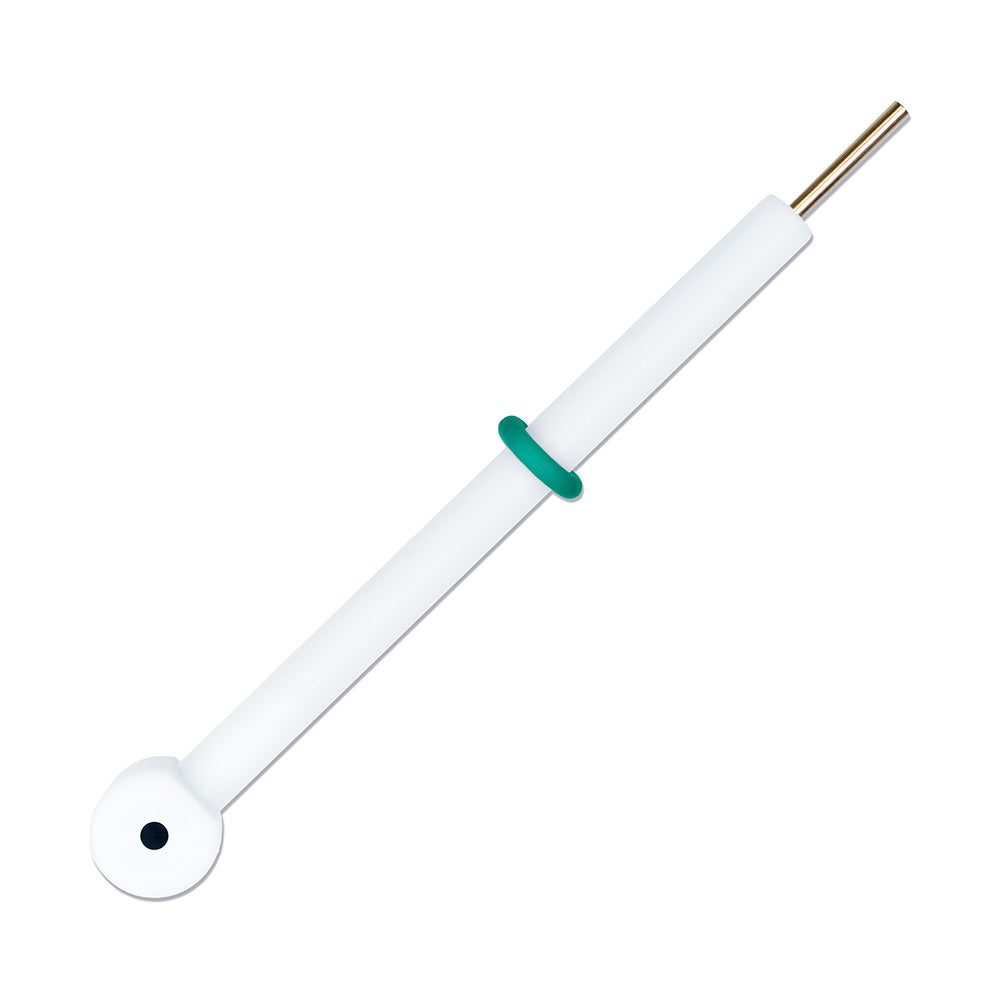
Advantages
- Positions working electrode closer to reference
- Reduces uncompensated resistance & iR drop
- More accurate potential measurements
Uses
- With non-aqueous or organic solvents, or for viscous electrolytes
- In small volume or specialised cells
- For relatively high electrolyte resistance
Electrode Holders
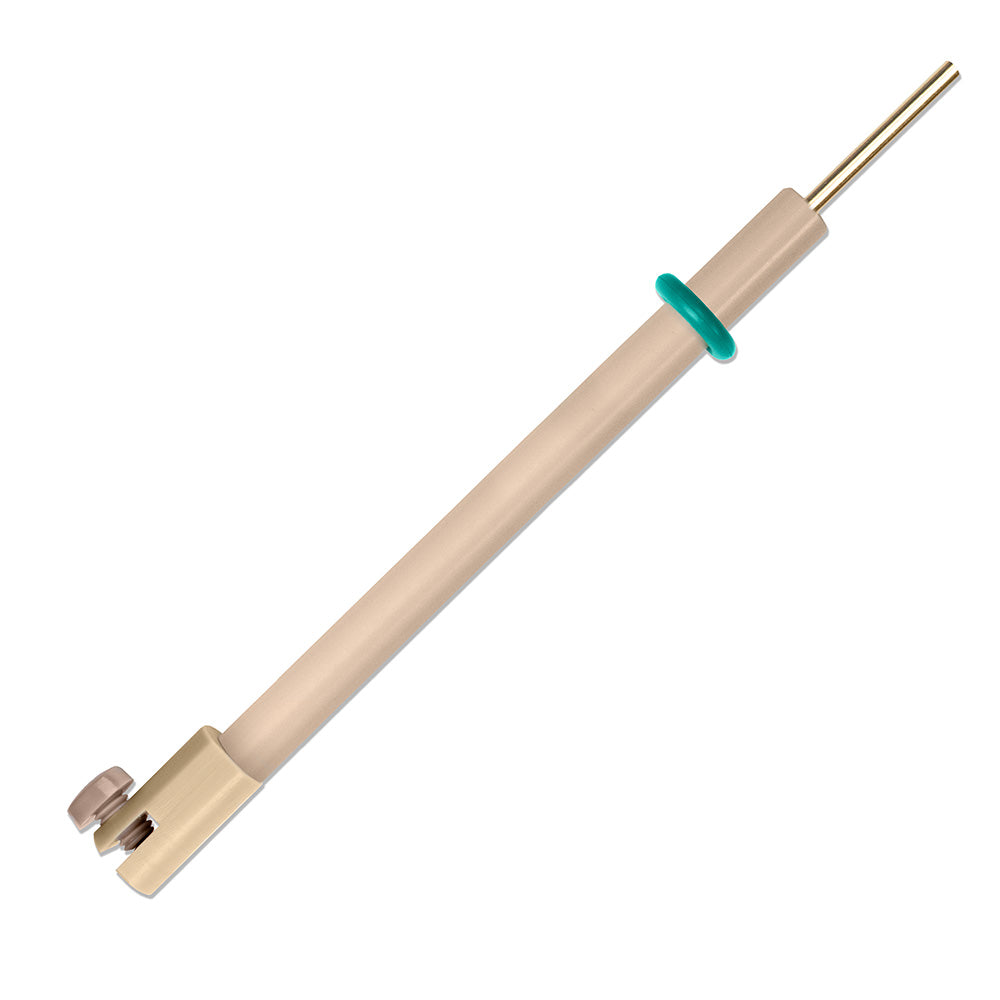
Advantages
- Allows for measurement of any electrode material
- Can accommodate various substrate types and sizes
- Easy screw-fit connection to conductive core
Uses
- Photoelectrochemistry experiment (e.g. using ITO substrates)
- Measuring specialist working electrodes
Detachable Holders
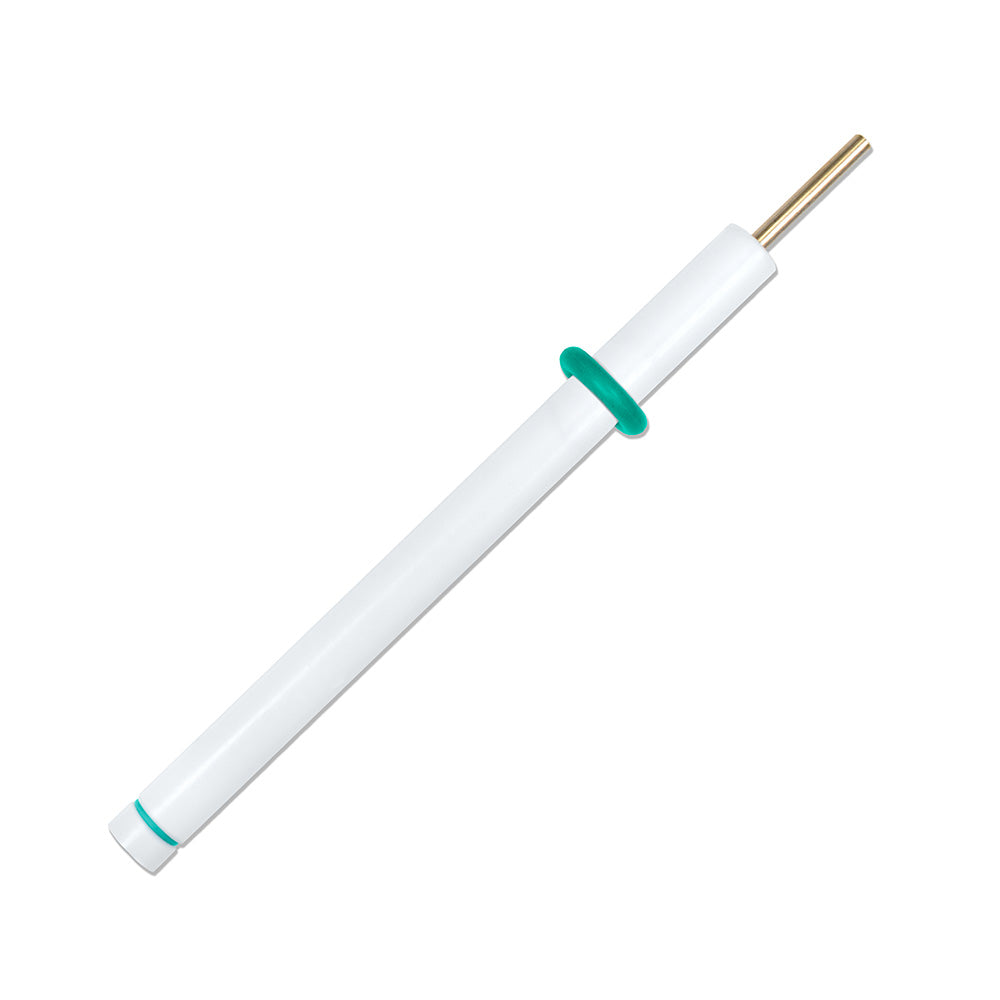
Advantages
- Detachable working electrode disk
- Transfer working electrode between different measurement techniques
- Easy push-fit connection to conductive core
- Enables post-reaction characterization
Uses
- Fundamental material studies and thin film characterization
Choosing a Reference Electrode
The reference electrode provides the stable, consistent potential that the WE potential is measured against. It is in a separated half-cell with a well-defined chemical equilibrium that remains unchanged under controlled conditions.
Ag/AgCl
For use in aqueous reference cells.
Advantages
- Excellent stability
- Ease of handling
- No toxic materials.
Uses
- AgCl in saturated potassium chloride solution
- 3.0-3.5 M in distilled water
Ag/Ag+
For use in non-aqueous reference cell. This includes reactions where water is a contaminant.
Advantages
- No water contamination in bulk electrolyte
- Excellent stability
Configuration
- Use an Ag/Ag+ reference electrode in matching electrolyte.
- The Ossila Ag/Ag+ recommends using 0.01 M silver nitrate in acetonitrile.
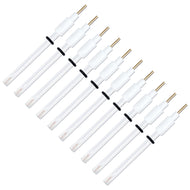
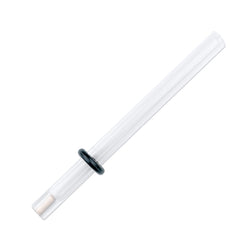
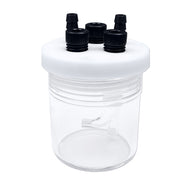
Pseudo-reference electrodes (e.g. Ag wire)
You can also use a pseudo-reference electrodes (such as Ag wire) which make direct contact with the bulk electrolyte itself. These require calibration with a known internal standard such as ferrocene. One of the advantages of these referecence are they don't need a seperated half cell. However, these can be subject to contamination issues. Also it can be difficult to keep the reaction seperate and unaffected by the reaction in the bulk electrolyte, which can lead to some issues.
Choosing a Counter Electrode
A counter electrode, or auxillary electrode, must be highly conductive with low charge-transfer resistance, and excellent chemical stability across various pH ranges.
Counter Electrode Materials
The benefits and limitations of the Ossila Counter Electrode materials are listed in the table below.
| Platinum | Graphite |
|---|---|
|
Excellent conductivity |
Highly conductive |
|
Highly inert and thermally stable |
Relatively inert and high thermal stability |
|
Resistance to oxidation |
Good alternative where platinum would lead to Pt poisoning e.g. HER studies. |
|
Wide potential range |
Low cost alternative to platinum |
|
Industry standard for EC experiments |
Subject to oxidation, particle shredding and corrosion. |
|
Can lead to Pt poisoning in certain reactions e.g. HER/ORR/CO2RR studies* |
Good alternative where platinum would lead to Pt poisoning e.g. HER studies. |
|
More limited potential range than platinum and not for use in harsh conditions. |
*Platinum working electrodes can be used for these studies when used in with H-Cell.
For certain applications, alternative counter electrode materials such as stainless steel or titanium can offer improved mechanical durability or compatibility with specific electrolytes.
However, with all counter electrodes it is important to consider their electrochemical behaviour such as surface oxidation, passivation, or corrosion under certain potentials.
Counter Electrode Shape
The surface area of a counter electrode should be roughly 10 x the area of the working electrode to assure any counter electrode surface effects won’t be the limiting factor of the reaction. This is known as the 10:1 rule.
Electrodes with different shapes offer increased surface area. Different counter electrode geometries offer distinct advantages depending on the application:
Wire
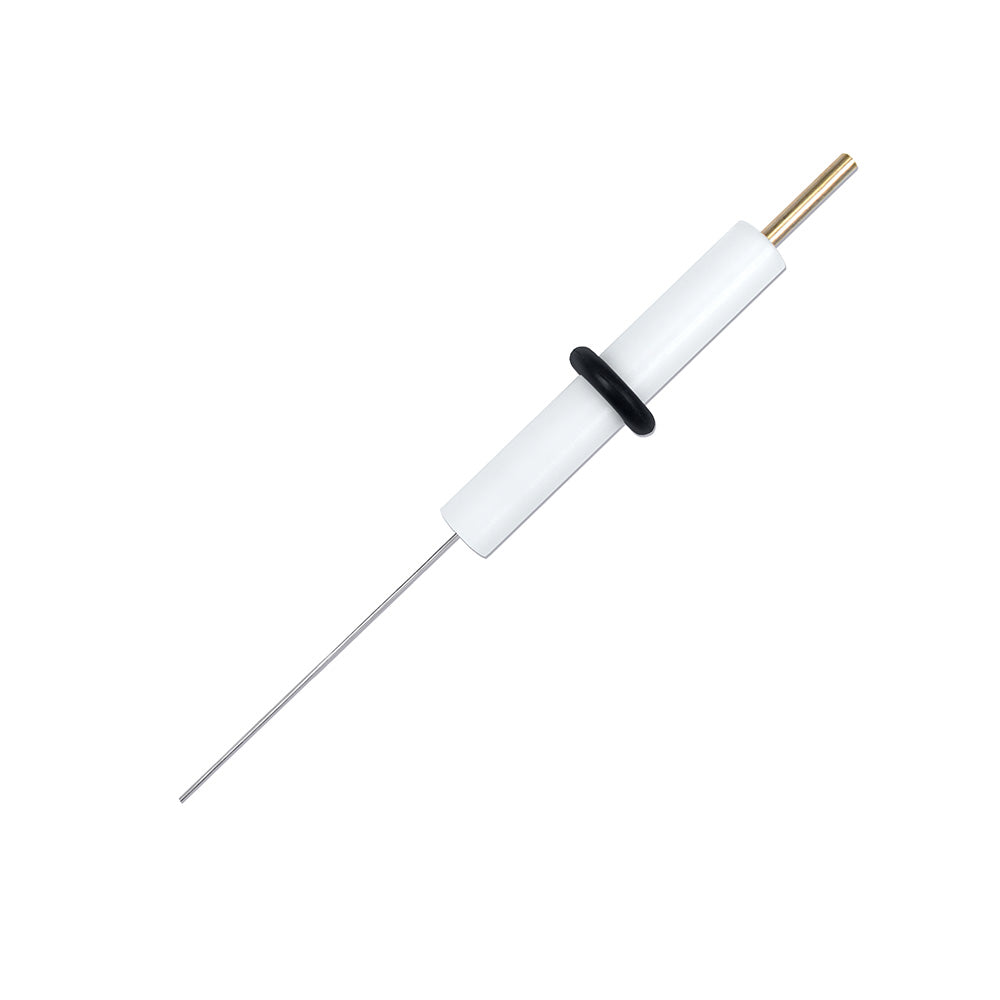
Advantages
- Simplest and most common design
- Compatible with practically all electrochemical cells
Uses
- Suitable for low-current applications and standard laboratory cells.
Coil
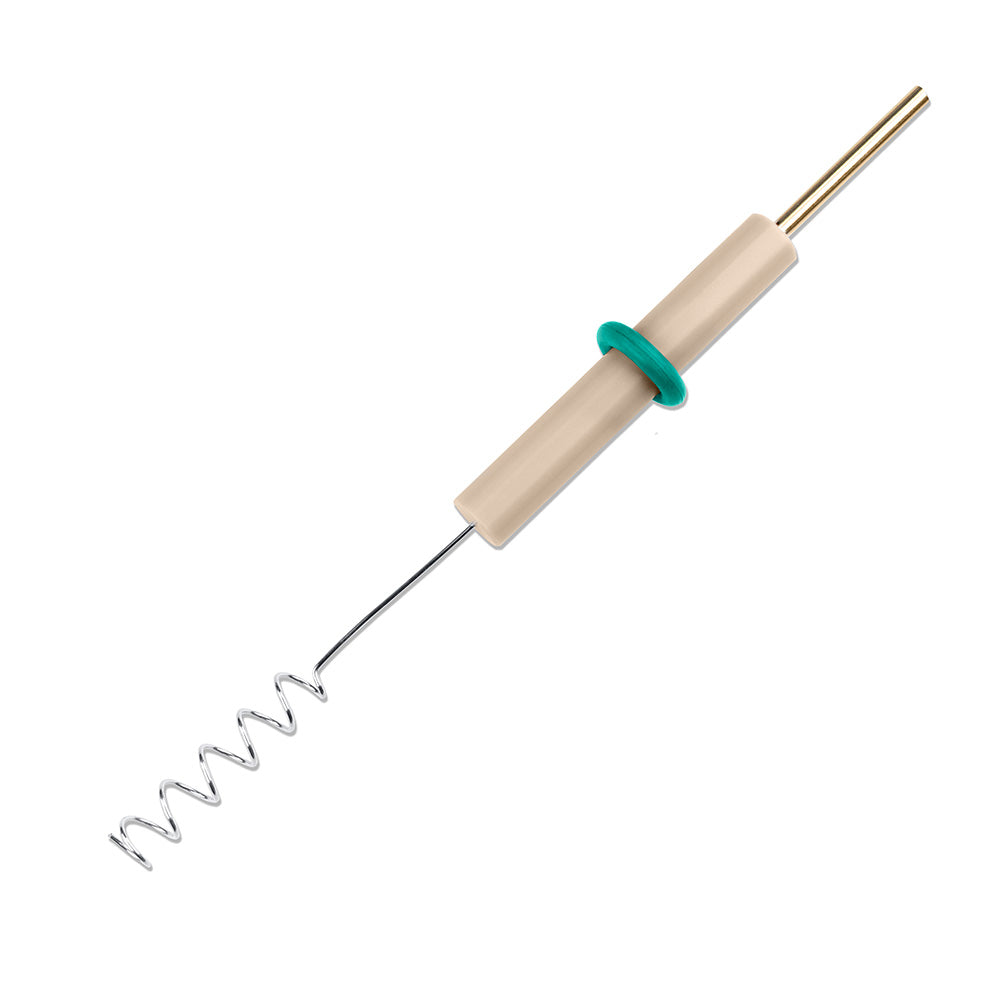
Advantages
- Increased surface area relative to a straight wire
- Same conductivity to straight wire
Uses
- Suitable for higher current applications than straight wire.
Plate
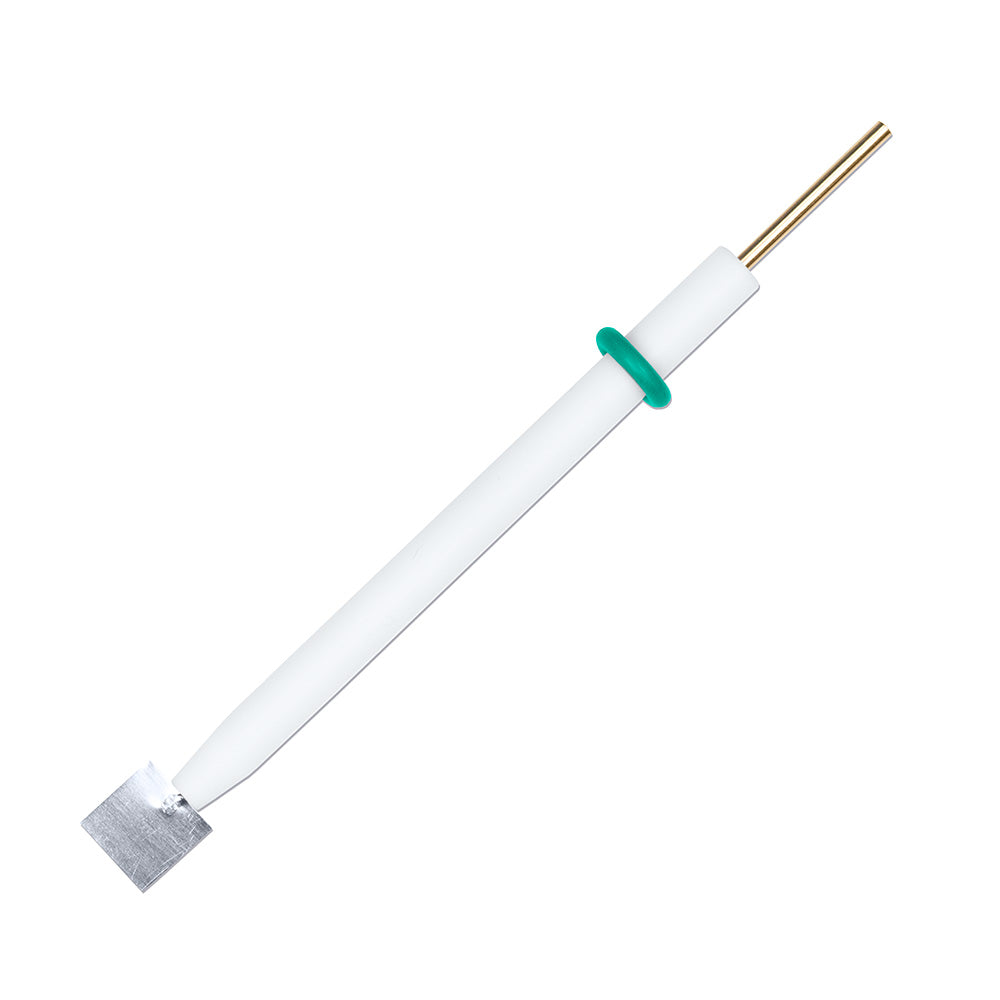
Advantages
- Well-defined, uniform surface area
- High electrical conductivity
Uses
- Suitable for applications requiring high SA as prevents voltage clipping.
Mesh
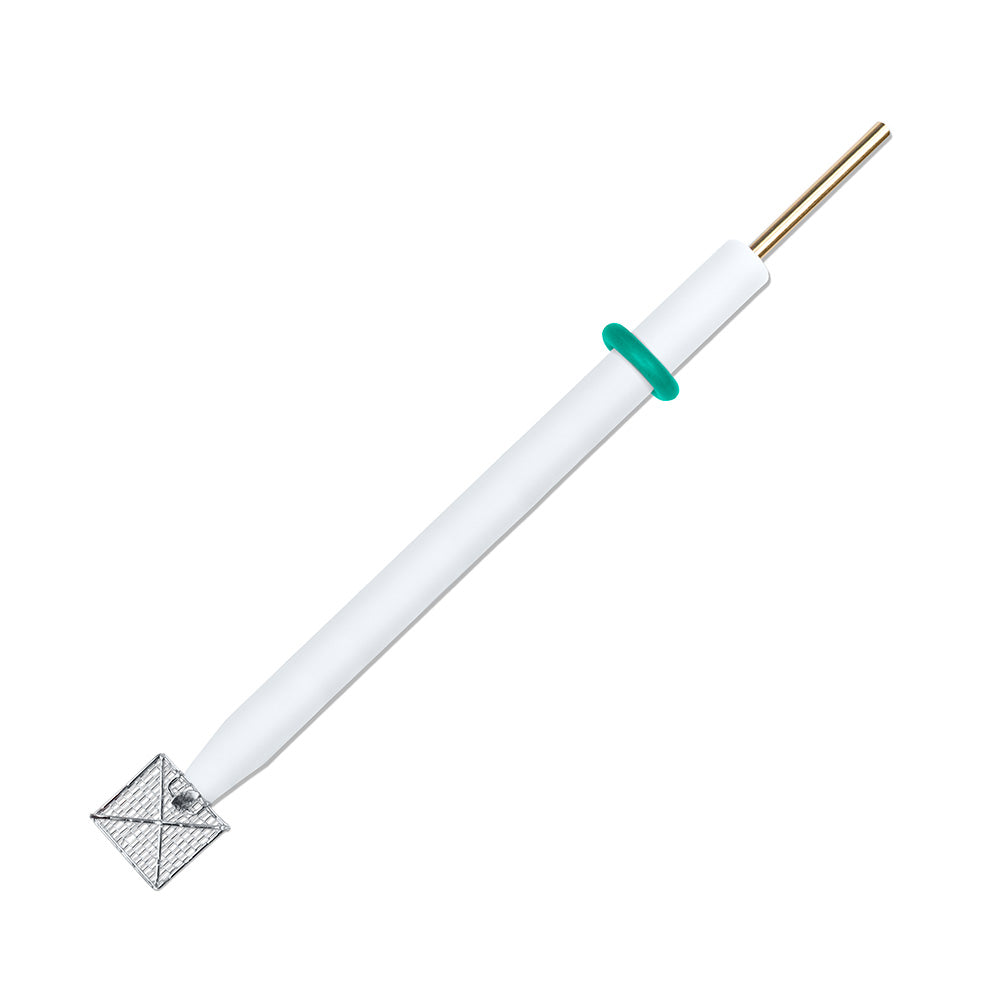
Advantages
- High surface area (similar to plate)
- Optical transparency and porosity
Uses
- Photoelectrochemical studies
- Applications where electrolyte accessibility are important.
Electrode Body
The main requirement of the electrode body is that it is as stable, inert and insulating as possible (while not increasing costs too much).

PTFE is a common choice as it is almost totally chemically inert and an excellent electrical insulator, making it preferable for harsh chemical environments. However, PEEK electrodes offer superior mechanical strength, hardness, and thermal stability. The best choice depends on your experiment's specific chemical, mechanical, thermal, and electrical requirements.
Electrode Considerations
- Never use a Pt counter electrode in the same compartment as a non-noble HER catalyst (like MoS2 or NiFe). Trace Pt will dissolve and deposit on your catalyst, making a mediocre material look like a world-record performer.
- Avoid using low-density graphite rods in high-current alkaline studies. The graphite can exfoliate, releasing micro-particles that physically coat your working electrode and invalidate your surface area measurements.
- Glass frits are porous and "trap" ions. If you move a fritted counter-electrode assembly from a concentrated acid to a neutral buffer without extensive soaking in ultra-pure water, you will contaminate your new electrolyte.
- Do not assume "Inert" means "Invincible." Even Platinum can form surface oxides or hydrides that change its catalytic behaviour over long-duration experiments.
Contributing Authors
Written by
Product Development Electrochemist
Diagrams by
Graphic Designer