


Powerful RDDE for Revealing Intermediates & Quantifying Reaction Pathways
Used in fuel cell catalysis, sensor development, corrosion studies, and electroplating
Overview | Specifications | Related Products | Resources and Support
The rotating ring disk electrode (RRDE) is a powerful electrochemical electrode that consists of two concentric, independently controlled electrodes with a central disk and a surrounding ring, separated by an insulator. The central disk serves as the primary and the ring serves as the secondary working electrode, respectively. By rotating together, the central disk and the ring create a controlled flow that pulls reactants to the disk and then carries them radially outwards to the ring. RRDE is engaged to study reaction mechanisms by generating products at the disk and detecting them at the ring, revealing intermediates and quantifying reaction pathways.
As a quantitative in situ electroanalytical detection tool, a rotating disk electrode can be used in fuel cell catalysis like oxygen reduction reactions (ORR), sensor development, corrosion studies, electroplating, and understanding fundamental redox chemistry. They help determine reaction steps, selectivity, diffusion coefficients, and catalyst efficiency by separating kinetic and mass transfer effects, making them vital for catalysis research and advanced materials science. The Ossila Rotating Ring Disk Electrode is compatible with relevant Pine products*.

Laminar Flow of Electrolyte
Increases mass transport for ORR,
OER, and HER studies

2 Electrode Measurement
Separated ring and disc electrodes
for more information

High Quality Materials
Made from reliable glassy carbon
and platinum

Expert Support
From in-house scientists & our
customer care team
*Ossila is not affiliated with, endorsed by, or sponsored by Pine Research. Compatibility information is based on published interface standards.
Rotating Ring Disk Electrode (RRDE) Specifications
| RRDE Electrode Glassy Carbon Diameter | 5.61 mm |
|---|---|
| Platinum Ring Outer Diameter | 7.92 mm |
| Platinum Ring Inner Diameter | 6.25 mm |
| PTFE Outer Diameter | 15 mm |
| Electrode Height | 50 mm |

Related Products


Literature and Reviews
- I. Filimonenkov et al. (2018), Rotating ring-disk electrode as a quantitative tool for the investigation of the oxygen evolution reaction, Electrochim. Acta, 286, 304-312; DOI: 10.1016/j.electacta.2018.08.056.
- W. Fujita et al. (2023), Rotating Ring-Disk Electrode Voltammetry for Determining the COR–OER Selectivity in Seawater Electrolysis under Neutral to Alkaline Conditions, J. Electrochem. Soc., 170, 036507; DOI 10.1149/1945-7111/acc13c.
- C. Li et al. (2021), Multielectron Electrode Reaction Kinetics with RDE and RRDE: An Advanced Electrochemical Laboratory Experiment, J. Chem. Educ., 98 (9), 3026–3031; DOI: 10.1021/acs.jchemed.1c00202.
Resources
 PEEK vs PTFE
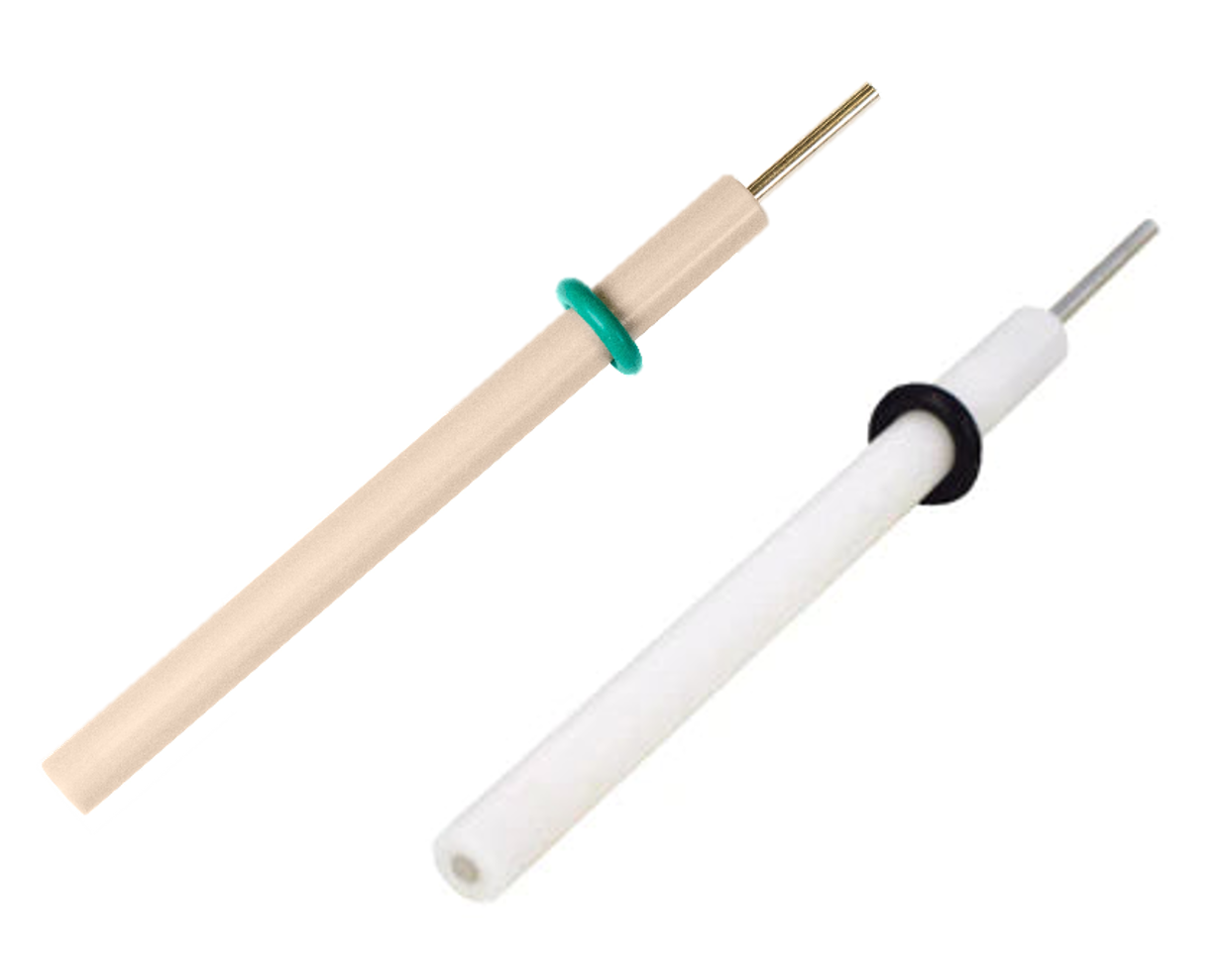
The choice of whether to use PEEK (polyether ether ketone) or PTFE (polytetrafluoroethylene, Teflon) comes down to the conditions of your planned experiments. The key polymer properties to consider are:
Read more...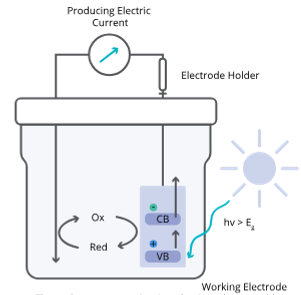 What is a Photoelectrochemical Cell?
A photoelectrochemical cell (PEC) is a device that converts solar energy (light) into chemical energy or electricity. Light activates a semiconductor or photosensitizer component within the cell.
Read more...Technical Support