


Spectrofluorometers


Buy a Spectrofluorometer | Accessories | Choose the Right System | Fluorescence Measurements
Spectrofluorometer Components | Resources | Technical Support
Spectrofluorometers are measurement instruments capable of taking both fluorescence, or photoluminescence, measurements and absorbance measurements, with high levels of accuracy and repeatability. Systems like the Ossila Spectrofluorometer contain a sample holder, multiple light sources, and multiple single pixel detectors. To measure both absorbance and fluorescence as accurately as possible, spectrofluorometers use wavelength selection components such as monochromators.
Separate excitation and emission monochromators are used to select wavelengths of light individually either before or after passing through a sample. This allows for you to do many different spectroscopy measurements with one instrument, achieving a high level of accuracy and resolution.
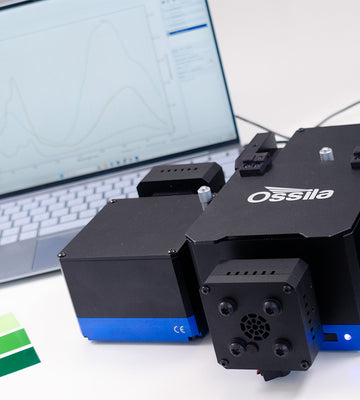
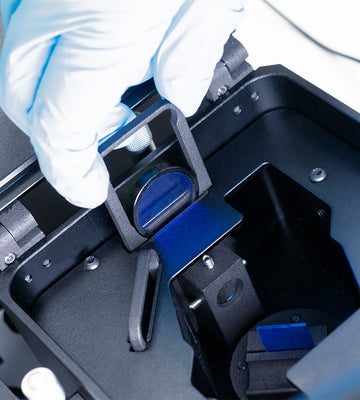
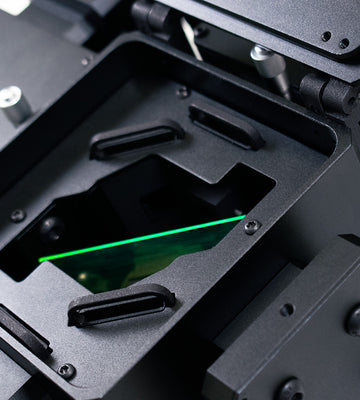
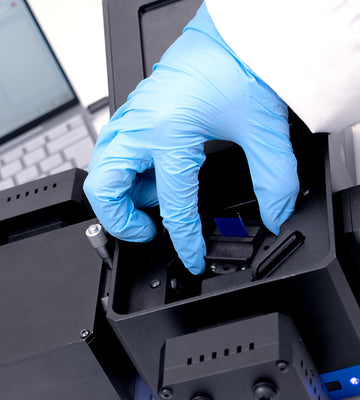
A high quality spectrofluorometer designed as a low cost option for small labs that are priced out by other options on the market. The Ossila Spectrofluorometer delivers reliable spectroscopy data at an upfront price and fits on any lab bench or worktop to integrate into your workflow.
The hyperspectral white LED is well-suited for absorption, transmission, and fluorescence excitation measurements, while the UV light provides excitation light for fluorescence emission measurements. Both sources have adjustable output power, short warm-up times, and long lifetimes. The sample holder accommodates both thin films and cuvettes and, with integrated filter holders, bandpass filters can be easily added to the beam path.
Software is included as standard and makes setting custom measurement parameters simple. With useful live data plotting, it is also easy to display, save, and analyze your data.
Spectrofluorometers and Accessories


Choose The Right Spectroscopy System
The terms spectrometer, a spectrophotometer, or spectrofluorometer are often used interchangeably, and every system will have different designs and specifications.
As with most measurement equipment, this comes down to your experimental needs, lab space and budget. Simple spectrometers can be incorporated into modular optical systems, and are a cost-effective way to take simple optical spectroscopy measurements. However, they lack the resolution and accuracy of most spectrofluorometers.
Spectrofluorometers are versatile pieces of equipment. They are more costly than modular spectrometers but provide higher resolution, accuracy and consistency in all measurements.
 Reliable and Calibrated Optical MeasurementsNon-invasive Molecular ProbingAll-In-One SystemWide Range of MeasurementsNo Complex Optical AlignmentMeasure Dynamic Reactions in Real Time
Spectrofluorometer Measurements
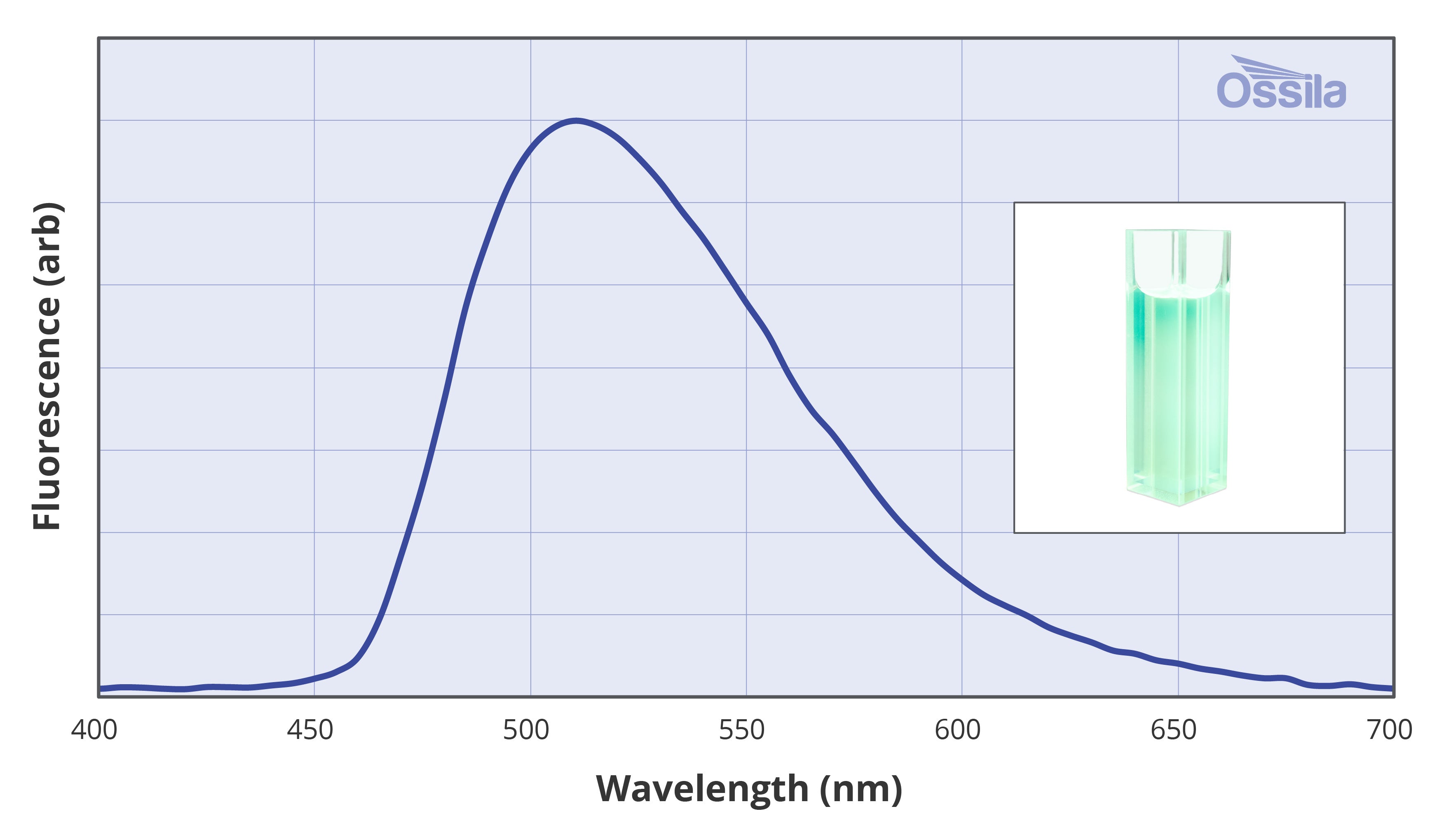
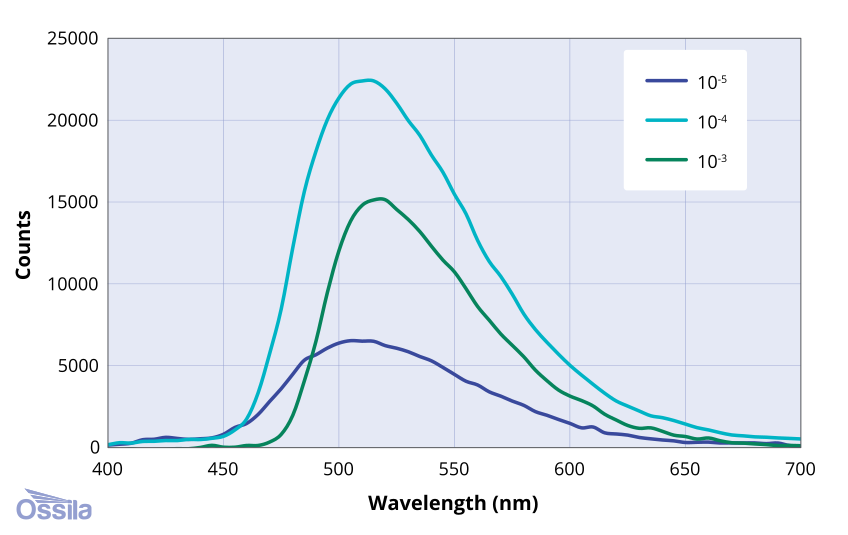
Spectrofluorometers can perform a variety of measurements:
- Fluorescence Spectroscopy
- Emission Spectra: If the excitation wavelength is fixed and the emission wavelength is varied, spectrofluorometers can measure the emission spectrum of a fluorophore. These measurements tell you about the light emitted from a fluorophore.
- Excitation Spectra: Where the measured emission wavelength remains the same (ideally where emission is strongest) but the excitation wavelength is varied. These measurements will tell you which wavelengths of light stimulate the most fluorescence.
- Absorbance Spectroscopy
- Spectrofluorometers can also measure absorbance, much like a spectrophotometer. This method takes longer than absorbance measurements taken with a standard optical spectrometer but with higher sensitivity and resolution as you can measure transmission intensity 1 nm at a time.
Spectrofluorometers are most commonly used in fluorescence spectroscopy. This is the study of fluorophores, either for use in fluorescent applications such as in LEDs, or as a marker to study biological processes or chemical reactions.

Fluorescence spectroscopy analyzes light emitted from a sample due to an excited electron relaxing from the first electronic state into the ground state. There are two types of fluorescence measurement: steady state fluorescence and time resolved fluorescence. Time resolved PL measurements are used to measure dynamic processes like fluorescence lifetime. Steady state fluorescence can be used to probe the molecular structure of a material and is measured using a spectrofluorometer.
Fluorescence spectroscopy is often used alongside absorbance spectroscopy, as absorbance measures the excited state of a molecule whereas fluorescence measurements probe the ground state.
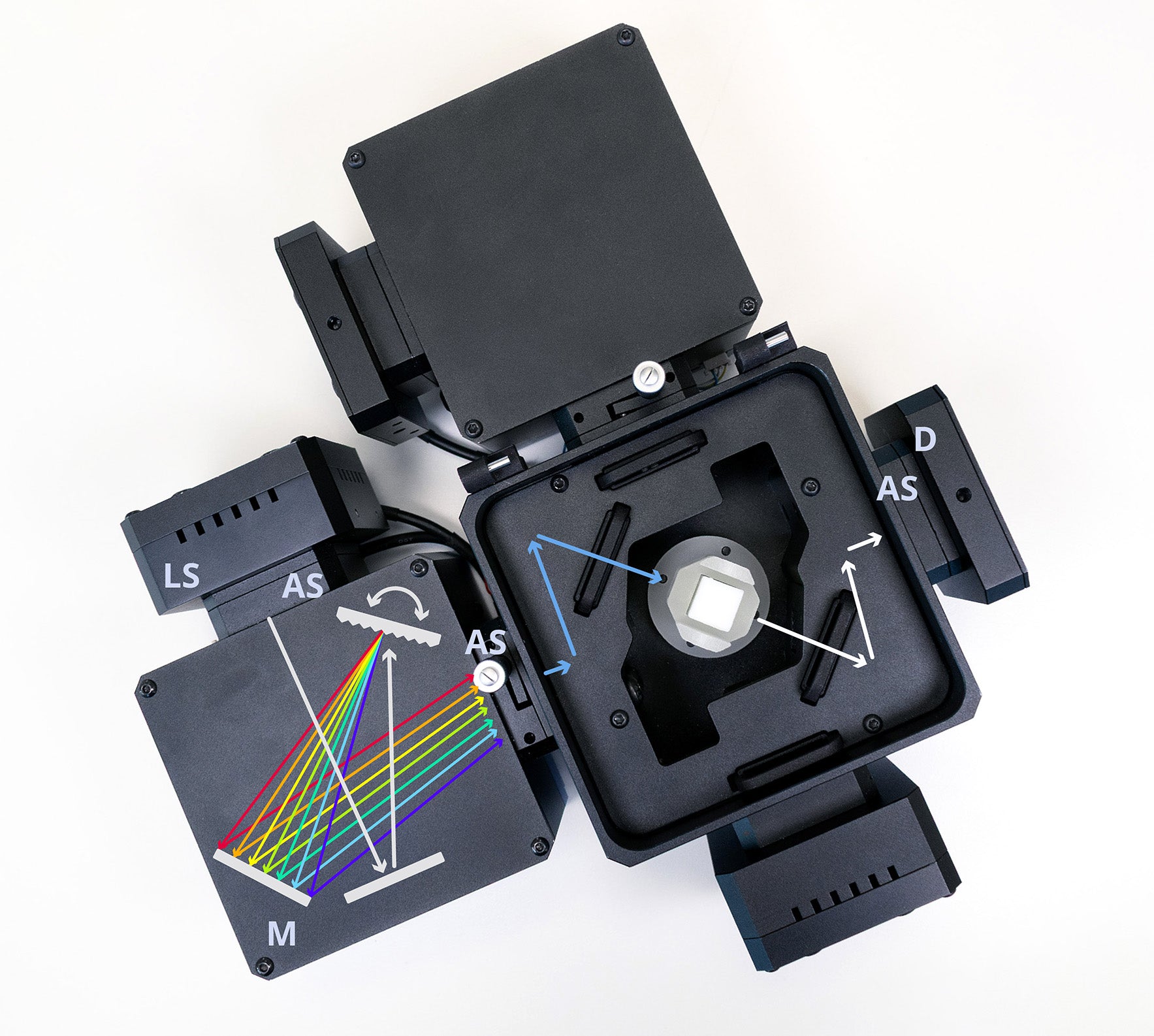
The Ossila Spectrofluorometer works by combining high quality components in various configurations, with the ability to select both the excitation and detection wavelength, enabling different measurements.
For fluorescence measurements, a single wavelength light source is directed towards your sample to excite any fluorophores. This can use the UV light source or combine the broadband light source and excitation monochromator to create a variable light source. Which source is best depends on the measurement you are taking. Any emitted light from the sample enters the detection monochromator. This monochromator either selects a specific emission wavelength, or scans through various wavelengths before intensity is measured by the detector.
For absorbance measurements, the broadband light source travels through the excitation monochromator, which again selects a specific wavelength or scans through a wavelength range. This monochromatic light is directed straight through your sample, where transmission is measured by a separate detector

Which Configuration Do I Need?
To efficiently use a spectrofluorometer, ensure that you are using the correct combination of components.
| Excitation Fluorescence Measurements | Emission Fluorescence Measurements | Absorbance/Transmission Measurements | |
|---|---|---|---|
| Light Source Required | Broadband light source | Single wavelength light source | Broadband light source |
|
Number of Monochromators |
Two required:
|
One required, between the sample and detector | One required, between the light source and sample |
Spectrofluorometer Components
Spectrofluorometers contain the following components:
- Excitation sources (usually both a broadband light source and a UV only source)
- A sample holder
- A detector or multiple detectors
- Two Monochromators
The arrangement of these various components will depend on spectrofluorometer design and alignment.
Excitation Sources
Emission fluorescence spectroscopy requires an high energy excitation source with a narrow wavelength range to selectively excite fluorophores. For this, you will likely need a narrowband light emitter, such as a UV light source. However, using single wavelength sources alone limits the type of measurements you can do.
Absorbance measurements and excitation fluorescence measurements require a broadband light source. To conduct excitation fluorescence measurements, you can combine a broadband light source with a monochromator to select specific wavelengths for sample excitation. This monochromator will also increase the accuracy of absorbance measurements, by assessing transmission and absorbance of each wavelength individually. However, for fluorescence measurements, variable light sources may produce a less intense excitation signal, leading to a lower signal.
The Ossila Spectrofluorometer has both a high energy UV light source and a variable light source option, allowing users to conduct a wider range of measurements with just one instrument.
Sample Holder
The sample holder is a straight-forward but vital part of the system. It ensures consistency between measurements and holds the sample steady. There are sample holders designed to measure substrates for thin film measurement. Additionally, many samples measure fluorescence within solution, usually in a quartz cuvette. Using ultra-flat quartz cuvettes or substrates helps to reduce reflection, scattering and absorbance of light. This ensures that the maximum possible light is transmitted through the holder without interaction.
Detectors
Spectrofluorometers use single pixel detectors, unlike spectrometers which use array detectors. Single pixel detectors can only measure intensity and have no way to decipher between different wavelengths of light. This makes spectrofluorometers more sensitive to smaller signals, but means that wavelength selection must take place before or after interacting with the sample.
For fluorescence measurements, detectors are combined with a monochromator. This means that the detector only measures light emitted at specific wavelengths, omitting the strong excitation wavelength. To produce a fluorescence spectra, a sample can be stimulated by a high energy light source, then scanning monochromators cycle through the different wavelengths as the detector measures the delivered intensity. This way the system builds a fluorescence spectrum piece by piece.
For absorbance measurements, the light source must be able to pass through the sample directly into the detector. Therefore, for maximum versatility, some spectrofluorometers come with multiple detectors in different locations to facilitate both absorbance and fluorescence measurements.
Often photomultipliers are used as these detectors. The type of photomultipliers used will determine the spectral range and sensitivity of the spectrofluorometer.
Resources
 Ossila Spectrofluorometer Comparison
We’ve compared our specifications with one of the leading competitors to demonstrate how the Ossila Spectrofluorometers compares.
Read more... Measuring Fluorescence with a Spectrofluorometer
Learn how to take fluorescence emission and excitation measurements with the Ossila Spectrofluorometer.
Read more... Choosing Spectroscopy Instruments
UV-Vis spectroscopy (or optical spectroscopy) is a simple but effective technique used to probe the molecular structure of a material. Measuring absorbance and emission of light from a sample can give you vital data about:
Read more... Measuring Thin Film Fluorescence
Instruments like the Ossila Spectrofluorometer can accommodate thin films easily, and ensure consistent alignment between measurements, with sufficient light blocking and easy measurement.
Read more... Fluorescence Spectroscopy
Fluorescence spectroscopy is used to measure fluorescence. The technique often used together with absorbance spectroscopy. Fluorescence is a type of photoluminescence where light is quickly reemitted from a material after incident photons are absorbed. This is different to phosphorescence where there is a delay between photon absorption and emission. The term fluorescence is often used interchangeably with photoluminescence.
Read more...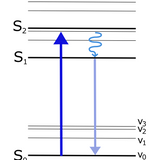 Fluorescence and Phosphorescence
Both fluorescence and phosphorescence are types of photoluminescence. The main empirical difference between fluorescence and phosphorescence is the time in between absorbance and the emission of photons.
Read more...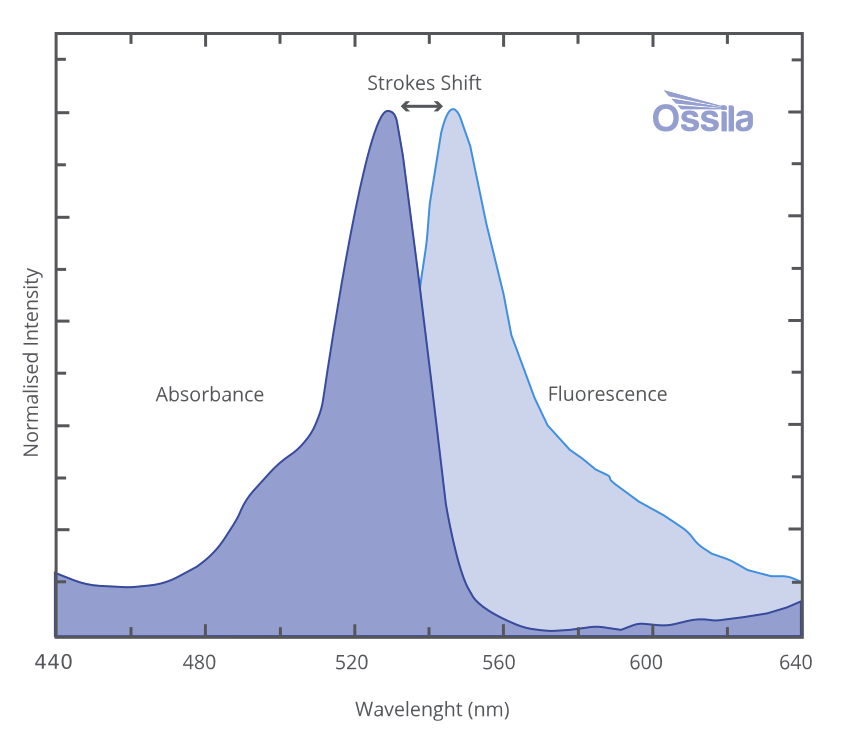 Photoluminescence Spectroscopy
Photoluminescence is luminescence resulting from photoexcitation. In other words, photoluminescence is when a material emits light following the absorption of energy from incident light from another light source.
Read more...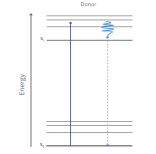 Fluorescence Quenching and Non-Radiative Relaxation
Photoluminescence occurs when electrons relax from photoexcited states radiatively. Emissions resulting from singlet-singlet transitions are known as fluorescence. However, there are a number of ways in which electrons in these excited states can relax non-radiatively.
Read more...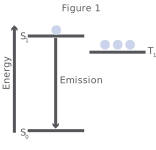 Thermally Activated Delayed Fluorescence (TADF)
Thermally Activated Delayed Fluorescence (TADF) is a mechanism by which triplet state electrons can be harvested to generate fluorescence.
Read more...Technical Support