


Spectrometers & Spectroscopy Equipment


Spectrometers and Spectroscopy Equipment | Choosing a System | Resources | Technical Support
What is a Spectrometer?
Spectroscopy is the study of the interaction between a radiative energy and matter, and this is mainly measured using a spectrometer.
This equipment is used to measure interaction of visible light with matter, through measurements like absorbance, transmittance and fluorescence. The information is presented as a spectrum, showing radiative intensity as a function of energy, frequency, or wavelength.
There are multiple types of spectrometer, such as:
- Compact spectrometers, which use CCD arrays to measure all wavelengths at once.
- Spectrofluorometers and spectrophotometers, which use monochromators to separate individual wavelengths.
At Ossila, we have a wide range of spectroscopy equipment to help you conduct a wide range of optical spectroscopy experiments.
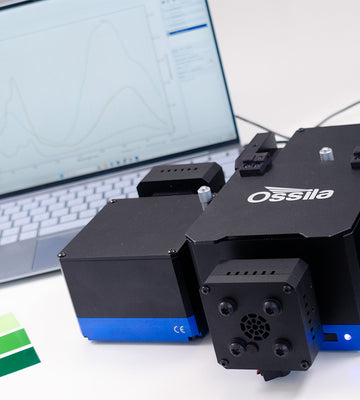
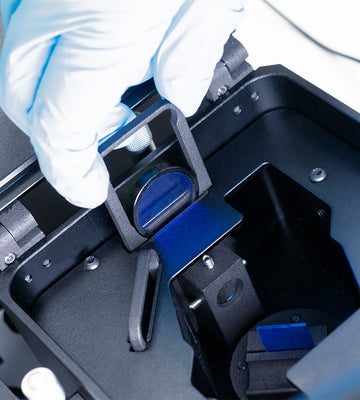
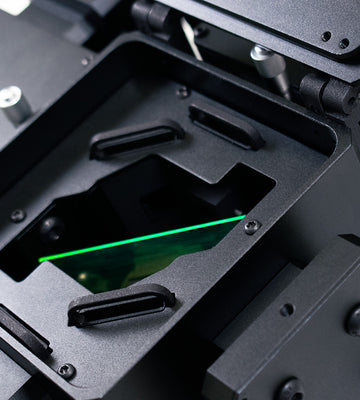
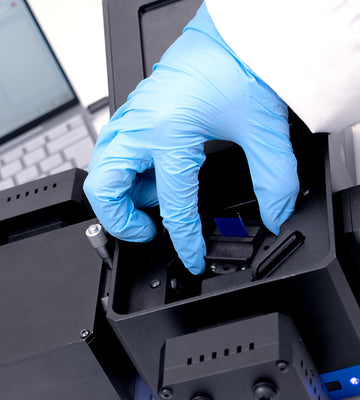
A complete spectrofluorescence system that ensures consistent alignment between components for reliable measurements.
The two integrated light sources support different measurements. The hyperspectral white LED is well-suited for absorption, transmission, and fluorescence excitation measurements, while the UV light provides excitation light for fluorescence emission measurements. Both sources have adjustable output power, short warm-up times, and longer lifetimes than traditional fluorescence spectroscopy light sources. On the detection side, the two integrated single-pixel silicon photomultipliers (SiPMs) with active temperature correction are more sensitive than standard photodiodes and offer a wide dynamic range.
The included sample holder supports both thin films and standard cuvettes, and can be rotated in indexed 22.5-degree increments. The integrated filter holders, meanwhile, allow bandpass filters to be easily inserted into the beam path.
Spectrometers and Spectroscopy Equipment
Filter by product:
Filter by component:





Choosing a System
Spectrofluorometer vs. Spectrophotometer
With a common foundation,the spectrofluorometer and spectrophotometer differ in complexity and capability. The Ossila Spectrophotometer uses a single monochromator and detector to select the wavelength of incident light and measure absorption and transmission. The Ossila Spectrofluorometer can be used in this way too, but is also equipped with a second monochromator and detector, plus a UV light source. With these additional components, the spectrofluorometer can isolate the emission light coming out and capture both emission and excitation fluorescence spectra.
| Ossila Spectrofluorometer | Ossila Spectrophotometer | |
|---|---|---|
| Number of Monochromators | 2 | 1 |
| Number of Detectors | 2 | 1 |
| Broadband Light Source |  |
|
| UV Light Source | |
 |
| Suitable for Absorbance Measurements? | |
|
| Suitable for Fluorescence Measurements? |
Emission and excitation spectra |
|
Spectrophotometer vs. USB Spectrometer
Both the spectrophotometer and USB spectrometer split light into constituent wavelengths and measure intensity at specific wavelengths, but operate under different working principles. In the Ossila Spectrophotometer, the diffraction grating rotates, sequentially directing different wavelengths onto a single pixel detector. By comparison, the Ossila USB Spectrometer uses a fixed diffraction grating and a multi-pixel array detector, so all the dispersed light hits the detector at once and the intensity of all wavelengths is measured simultaneously.
The Ossila Spectrophotometer is a complete system that can provide higher resolution and accuracy, while the Ossila USB Spectrometer is a flexible, modular instrument designed for integration with separate components into custom setups.
| Spectrophotometers | Spectrometers | |
|---|---|---|
| Diffraction Grating | Rotating (in monochromator) | Fixed |
| Sensor | Single-pixel photodetector | Multipixel array (CCD) |
| Entrance Slit | Adjustable | Fixed |
| Measurement Acquisition | Intensity of transmitted light at specific wavelengths | Entire spectrum at once |
| Light Source Included? |
Broadband |
|
| Sample Holder Included? |
For thin films and liquids |
|
| Additional Components Needed | None | Light source, sample holder, optical fibers |
Resources
Buying Guides
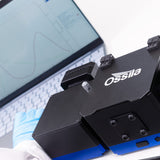 Choosing Spectroscopy Instruments
UV-Vis spectroscopy (or optical spectroscopy) is a simple but effective technique used to probe the molecular structure of a material. Measuring absorbance and emission of light from a sample can give you vital data about:
Read more...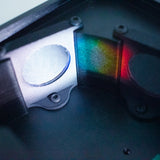 Which Light Source Do You Need?
A spectrometer is a device that measures a continuous, non-discrete physical characteristic by first separating it into a spectrum of its constituent components.
Read more...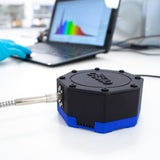 Do You Need a Sample Holder?
A spectrometer is a device that measures a continuous, non-discrete physical characteristic by first separating it into a spectrum of its constituent components.
Read more...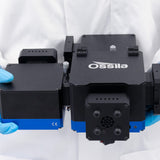 Ossila Spectrofluorometer Comparison
We’ve compared our specifications with one of the leading competitors to demonstrate how the Ossila Spectrofluorometers compares.
Read more...Applications
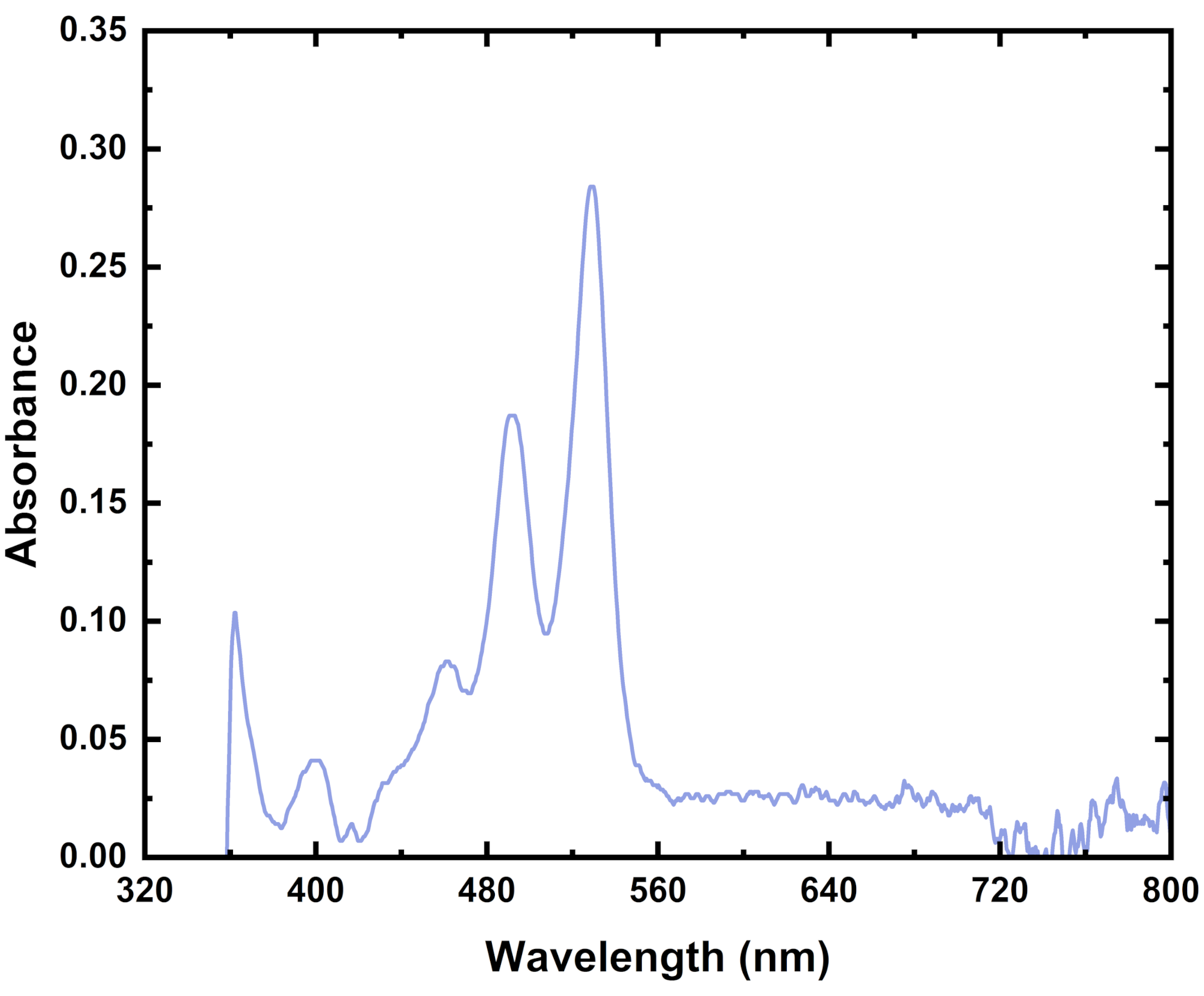 How to Measure Absorbance
Absorbance measurements are crucial in many areas of scientific research. This article describes how to take an absorbance measurement using an optical spectrometer.
Read more... How To Read An Absorbance Spectrum
There are many material properties and phenomena that can be measured with absorbance spectroscopy. The key to unlocking these insights lies in carefully reading absorbance spectra and interpreting spectral properties they reveal.
Read more...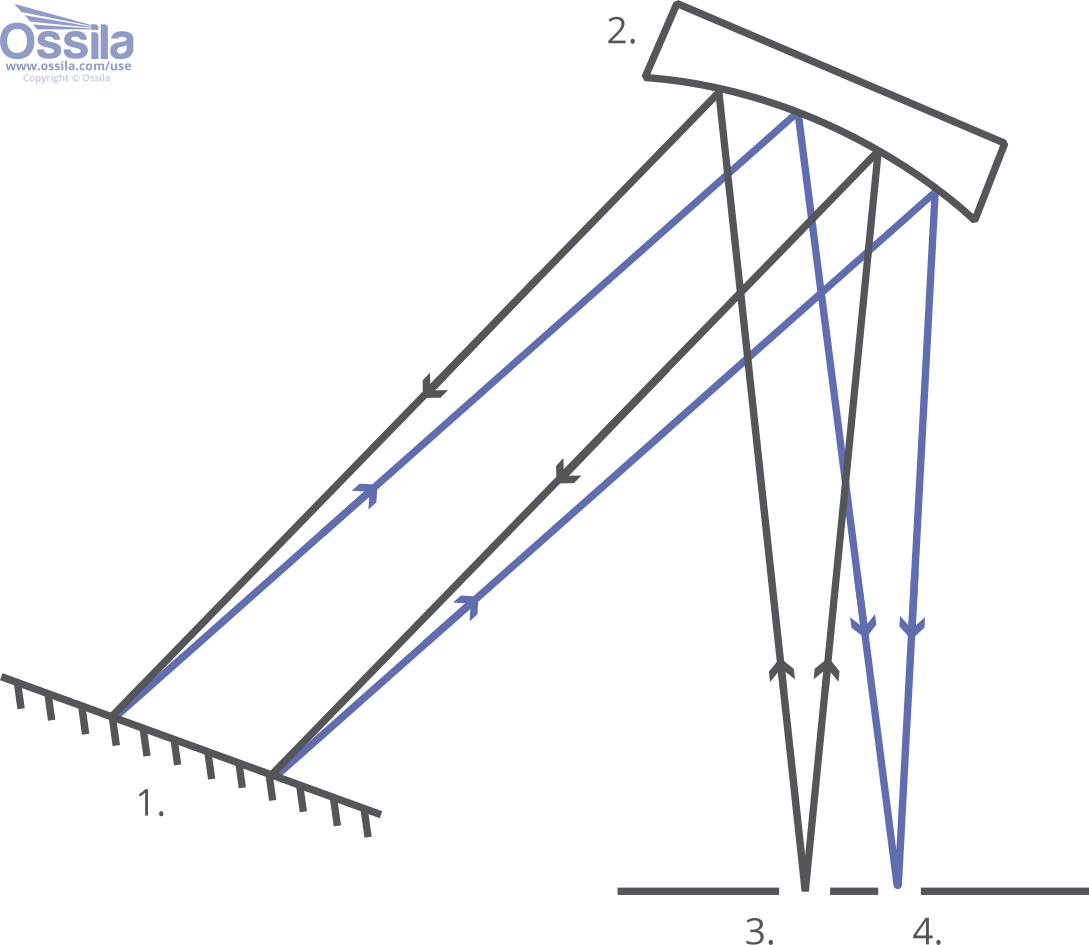 Spectrometer Optics
Spectrometers can be designed and built using a number of different optical configurations. Careful choice of components and configuration can avoid aberrations, which result in distorted or blurred spectra.
Read more... UV-Vis Spectroscopy Troubleshooting
It can be incredibly frustrating if you encounter a problem while performing UV-Vis spectroscopy, and usually causes an unnecessary delay.
Read more... UV-Vis Spectroscopy Errors
Like any analytical technique, spectrometers are subject to error, including dark noise, stray light, and spectral bandwidth.
Read more... Python for Spectroscopy: Spectra Data Visualization
Optical spectroscopy data can be processed faster and more consistently using programming tools such as Python. This is a step-by-step guide of how researchers process multiple spectra that were taken using the Ossila Optical Spectrometer. The code in this guide is designed for the Ossila Optical Spectrometer.
Read more... Thin Film Spectroscopy: Setup and Measurement
This article contains some advice from our researchers that should help you get started taking optical spectroscopy measurements of thin films.
Read more... Measuring Thin Film Fluorescence
To measure the fluorescence of a thin film, you will need an optical spectrometer, a fixed sample holder and a high energy light source (such as a UV laser or the Ossila UV light source). We also recommend using optical fiber cables between modular elements to reduce the attenuation of your signal.
Read more... Measuring Fluorescence with a Spectrofluorometer
Learn how to take fluorescence emission and excitation measurements with the Ossila Spectrofluorometer.
Read more... Spectroscopy For Organic Electronics
The different types of spectroscopy can be categorized by either the application it is used for or by type of radiative energy employed. The application of spectroscopic methods in organic (carbon-based) chemistry and organic electronics is known as organic spectroscopy.
Read more...Theory and Techniques
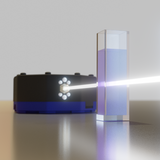 Absorption Spectroscopy
In absorption spectroscopy, the intensity of light absorbed by a sample is measured as a function of wavelength. This can provide important information about the electronic structure of an atom or molecule.
Read more...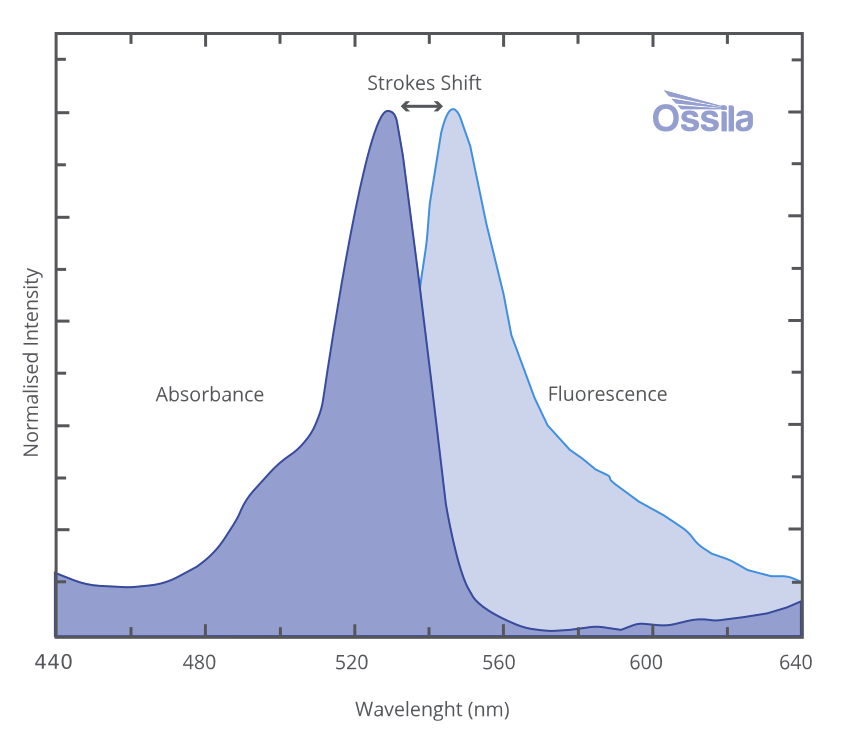 Photoluminescence Spectroscopy
Photoluminescence is luminescence resulting from photoexcitation. In other words, photoluminescence is when a material emits light following the absorption of energy from incident light from another light source.
Read more... Fluorescence Quenching and Non-Radiative Relaxation
Photoluminescence occurs when electrons relax from photoexcited states radiatively. Emissions resulting from singlet-singlet transitions are known as fluorescence. However, there are a number of ways in which electrons in these excited states can relax non-radiatively.
Read more...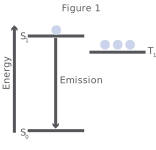 Thermally Activated Delayed Fluorescence (TADF)
Thermally Activated Delayed Fluorescence (TADF) is a mechanism by which triplet state electrons can be harvested to generate fluorescence.
Read more...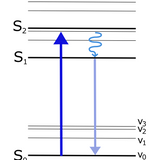 Fluorescence and Phosphorescence
Both fluorescence and phosphorescence are types of photoluminescence. The main empirical difference between fluorescence and phosphorescence is the time in between absorbance and the emission of photons.
Read more...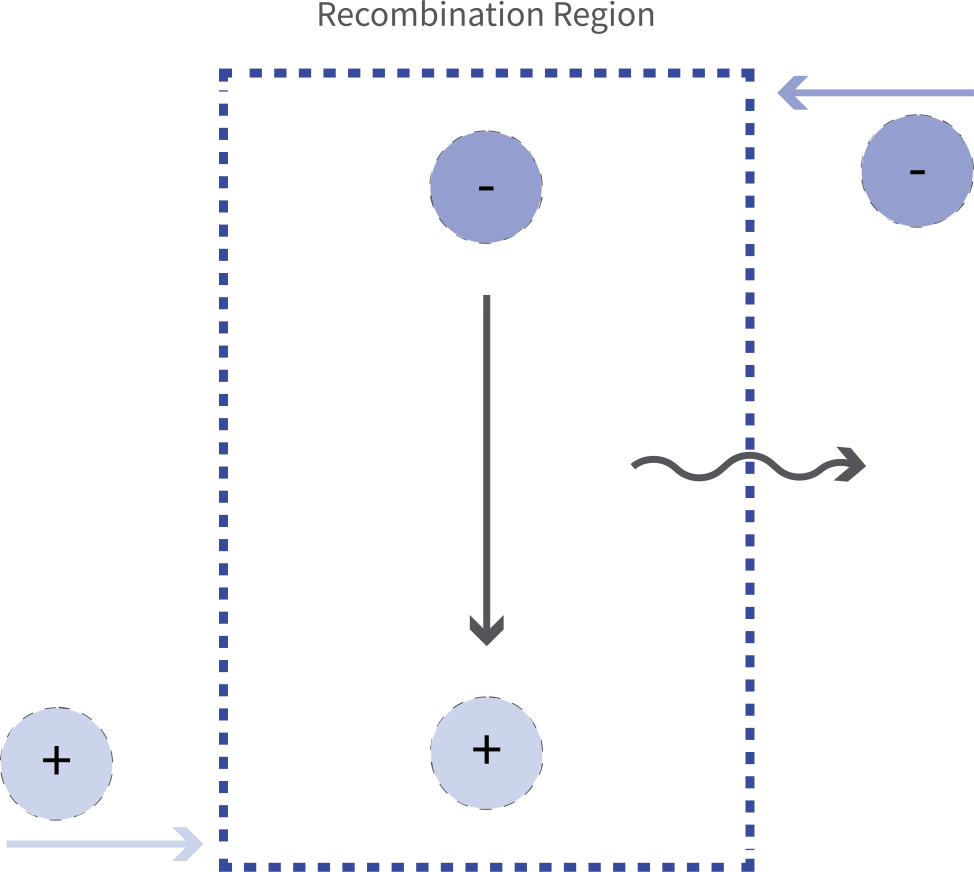 Electroluminescence
Electroluminescence (EL) is the generation of light through the radiative recombination of holes and electrons which have been injected into the material from cathode and anode contacts. The charge carriers are injected into the material due to an applied bias over the cathode and anode. These cathode and anodes are orientated opposite each other.
Read more... Exciplex and Excimer Absorption and Emission
An exciplex (or excited complex) is a complex formed between two different conjugated molecules (monomers), one of which is in an excited state.
Read more... Spectroelectrochemistry (SEC) Techniques
Spectroelectrochemistry (SEC) is an experimental technique that combines electrochemistry and spectroscopy. While electrochemical experiments provide information on macroscopic properties like reaction rates, spectroscopic techniques give information on a molecular level, such as the structure of molecules and their electronic configuration.
Read more... Jablonski Diagrams
Jablonski diagrams are the simplest way to the transitions between electronic and vibrational states. The representative energy levels are arranged with energy on the vertical axis and vary horizontally according to energy state multiplicity.
Read more... How Does a Spectrometer Work? Principles Explained
Optical spectrometers take light and separate it by wavelength to create a spectra which shows the relative intensity of each. This basic principle has a wide range of applications and uses.
Read more... Spectrophotometry
Spectrophotometry examines the interactions between visible light and matter through measurements like absorbance, transmission, and reflectance spectroscopy.
Read more... What is Spectroscopy? Definition and Types
Spectroscopy refers to a range of techniques which are used to study the interaction between a radiative energy and matter.
Read more...Technical Support