


Spectrofluorometer


Affordable Benchtop System for Reliable Fluorescence Measurements
Measure fluorescence emission and excitation, as well as absorption and transmission
Specifications | Software | Features | Data | Gallery | In The Box | Related Products | Resources | Technical Support
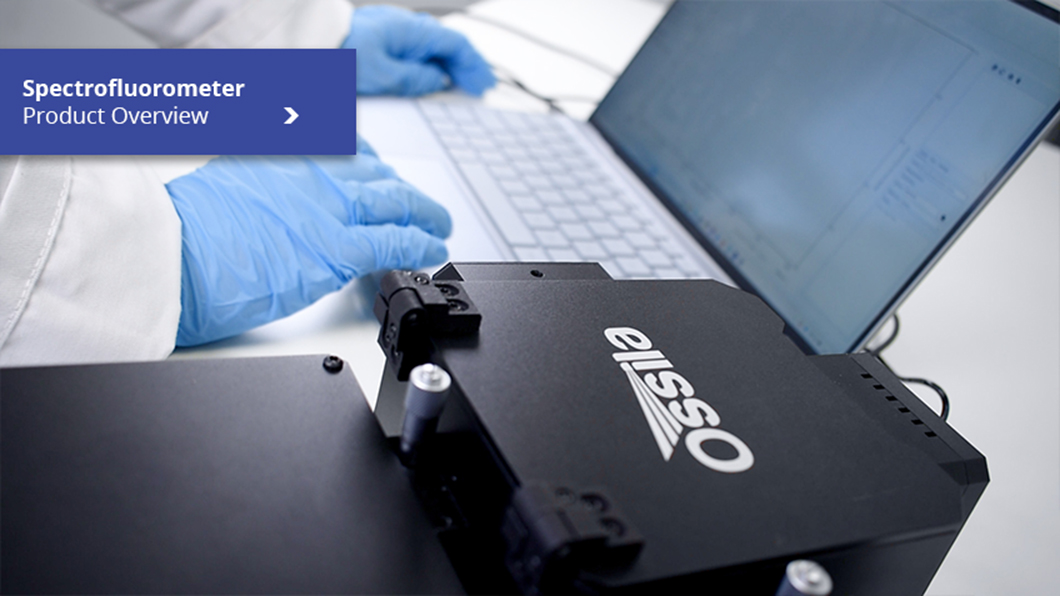
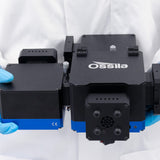
A high quality standalone spectrofluorometer designed as a low cost option for small labs that are priced out by other options on the market. The Ossila Spectrofluorometer delivers reliable spectroscopy data at an upfront price, without blowing your research budget or compromising on performance with a DIY set up. The compact footprint fits on any lab bench or worktop to provide a complete fluorescence system that easily integrates into your workflow.
Intuitive software is included with the system as standard and is built to make setting your custom measurement parameters simple. With useful live data plotting, it is also easy to display, save, and analyze your data.
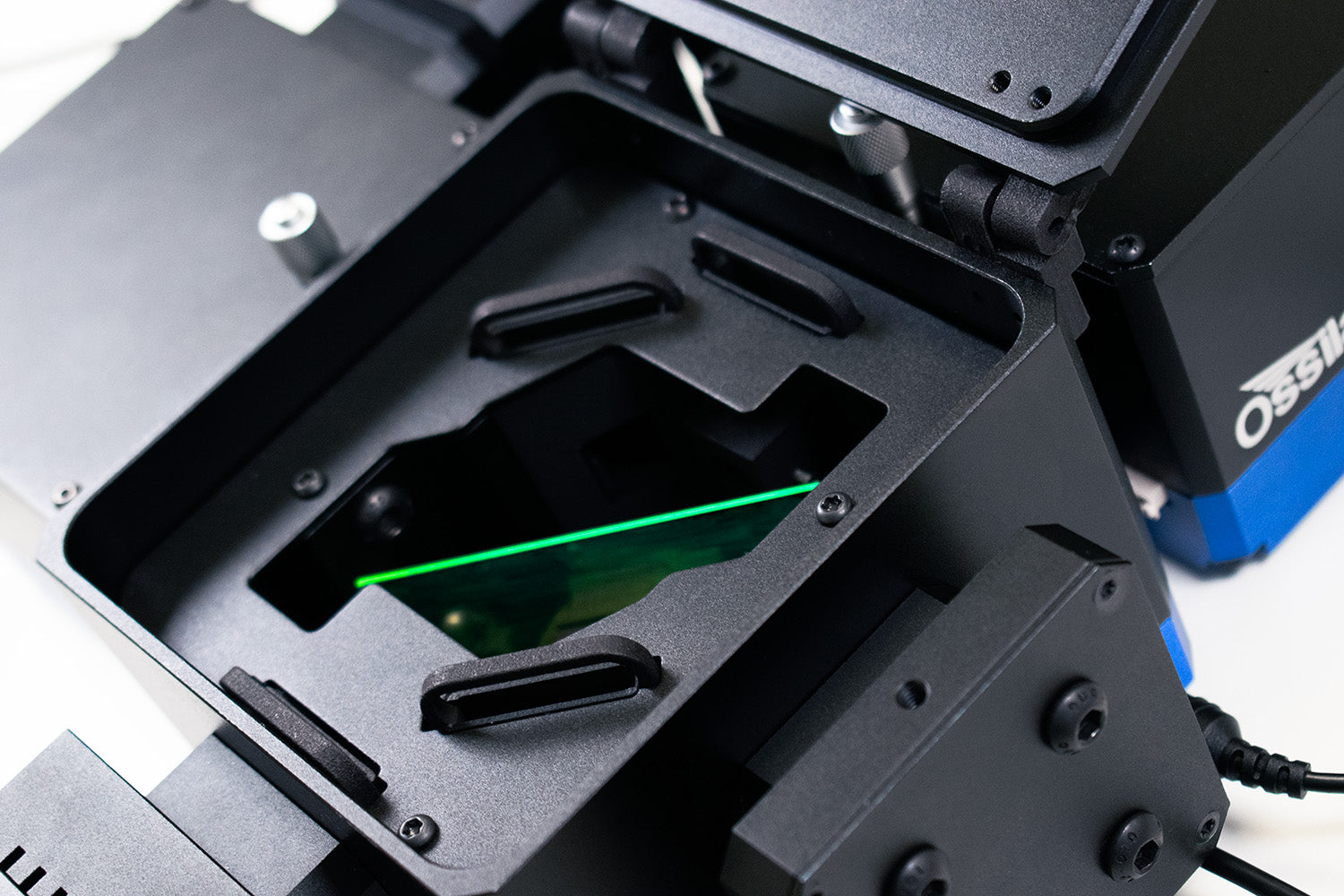
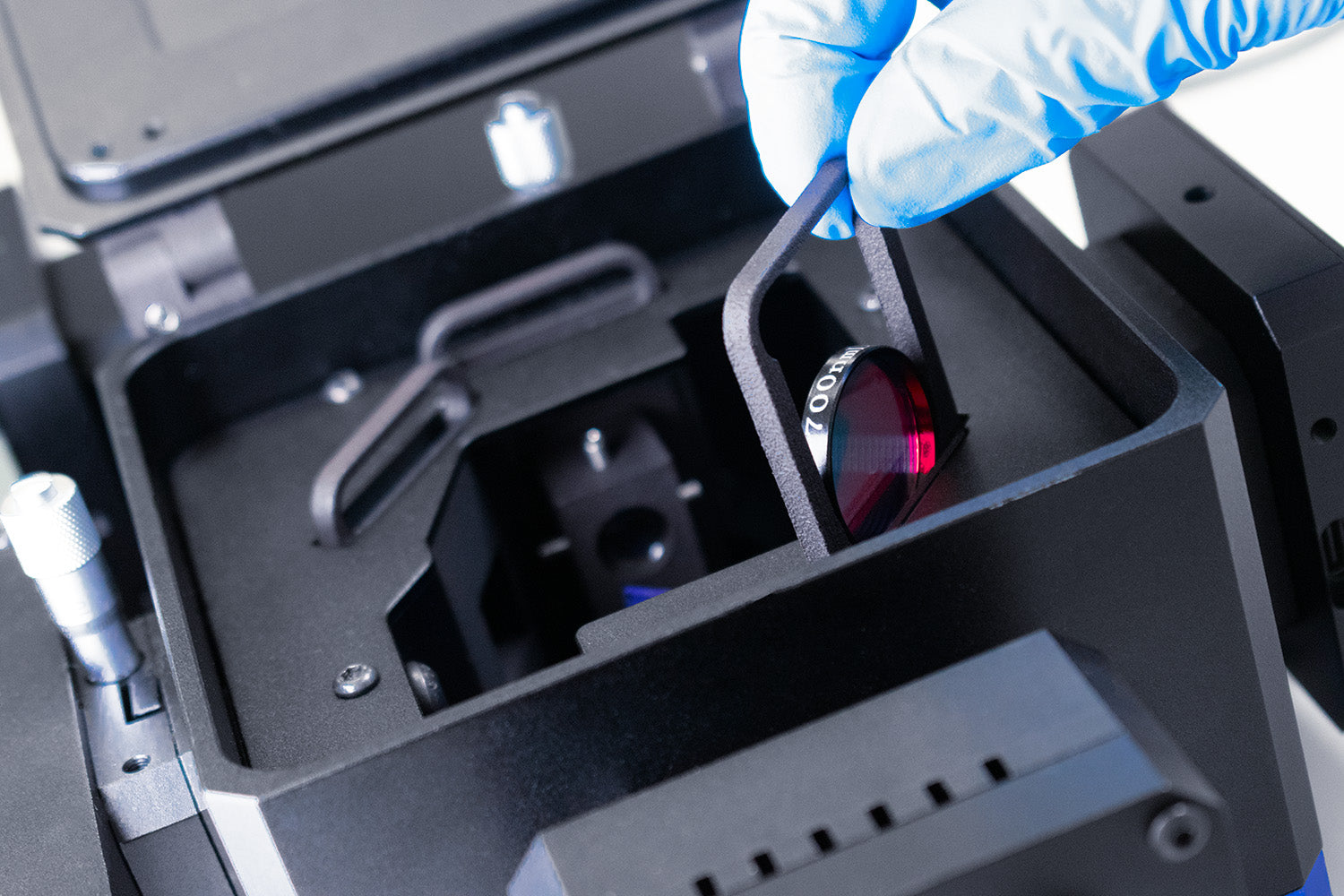
In one system, use two measurement configurations to take a range of optical measurements while ensuring consistent alignment between components. The hyperspectral white LED is well-suited for absorption, transmission, and fluorescence excitation measurements, while the UV light provides excitation light for fluorescence emission measurements. Both light sources have adjustable output power, short warm-up times, and long lifetimes. On the detection side, the two integrated single-pixel silicon photomultipliers (SiPMs) with active temperature correction are more sensitive than standard photodiodes and offer a wide dynamic range. The sample holder can be rotated in indexed 22.5-degree increments. The integrated filter holders, meanwhile, allow bandpass filters to be easily inserted into the beam path.

Measure Thin Films and Solutions
Cuvette and thin film holders included for quick, easy measurements

Intuitive Software
Support for multiple measurement types and periodic measurements
Highly Sensitive Detectors
Silicon photomultipliers provide impressive low-light performance

Reliable LED Light Sources
Two integrated light sources allow you measure UV-IR with minimal hassle
Specifications
| Spectral Range (Broadband) | 380 – 1000 nm |
|---|---|
| Wavelength Accuracy | <1 nm (in calibrated range) |
| Wavelength Repeatability | <0.1 nm |
| UV Source Wavelength | 365±15 nm |
| Spectral Resolution | Slit width dependant |
| SNR (Standard Fluorescent Slide RMS) [?] | 26,000:1 |
| Data rate (Max.) | 30 Hz |
| Slit Type | Manual, micrometer driven with 10 μm resolution |
| Slit Size (W x H) | 50 μm – 6 mm x 10 mm |
| Maximum Sample Size (W x H x D) | 75 mm x 50 mm x 5 mm |
| Cuvette Size | 10 mm x 10 mm; maximum height 52 mm |
| Dimensions (W x D x H) | 280 mm x 260 mm x 100 mm |
| Weight | 4.2 kg |

Spectrofluorometer Software
The Ossila Spectrofluorometer software provides a user-friendly interface for setting measurement parameters and acquiring data, allowing for precise control of fluorescence (excitation and emission), absorbance, and transmission measurements.
Control each component individually to identify experimental parameters, take preliminary measurements, and diagnose issues. The results panel makes it easy to plot, display, save, and analyze your data. For absorbance and transmission, the separate measurement tabs mean you just set your parameters and press go. For excitation fluorescence measurements, you can choose the best light source set up for you; use the UV LED or choose an individual wavelength from the tunable light source.
- Assign reference measurement and automatically perform necessary calculations for each measurement type.
- Automatically perform background calculations which are applied to your measurements.
- Perform periodic measurements (also known as kinetic series).
- Save data and settings to .csv files and keep your data save with the autosave function.
Standalone Spectrofluorescence System
Consistent Alignment, Confident Measurements
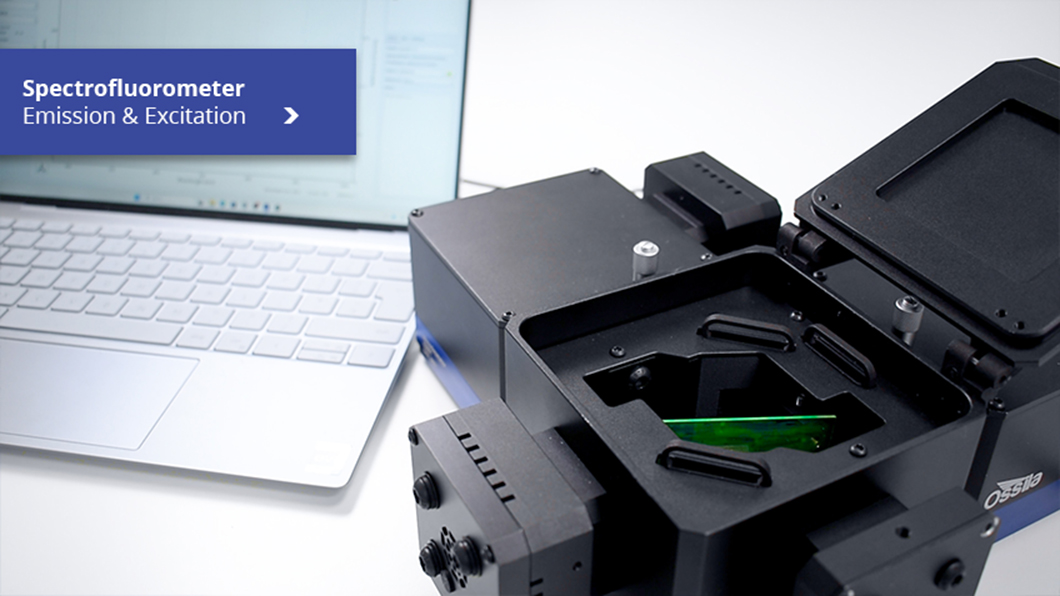
This standalone, integrated instrument is both affordable and high quality, removing the compromise on reliability that comes with building a DIY setup. With two integrated light sources, a hyperspectral white LED and a high-power UV light source, take advantage of the multiple measurement configurations to facilitate your optical measurements.
Flexible Setup in One System
Switch between measurements using the simple tab interface in the software, without having to reconfigure the component setup. The flexible sample chamber can accommodate both thin films and liquids with interchangeable sample holders. For additional measurement customization, adjust your sample rotation and add bandpass filters to the measurement pathway.
Built for Small Spectroscopy Labs
Measuring less than 30 cm x 30 cm, the Ossila Spectrofluorometer is easy to fit onto your work bench amongst your existing equipment and setup. Forget the inconvenience of sourcing all the necessary components just to stick to your budget, we have designed this system to be much more affordable than alternative systems, making it accessible to smaller research groups.
Product Gallery

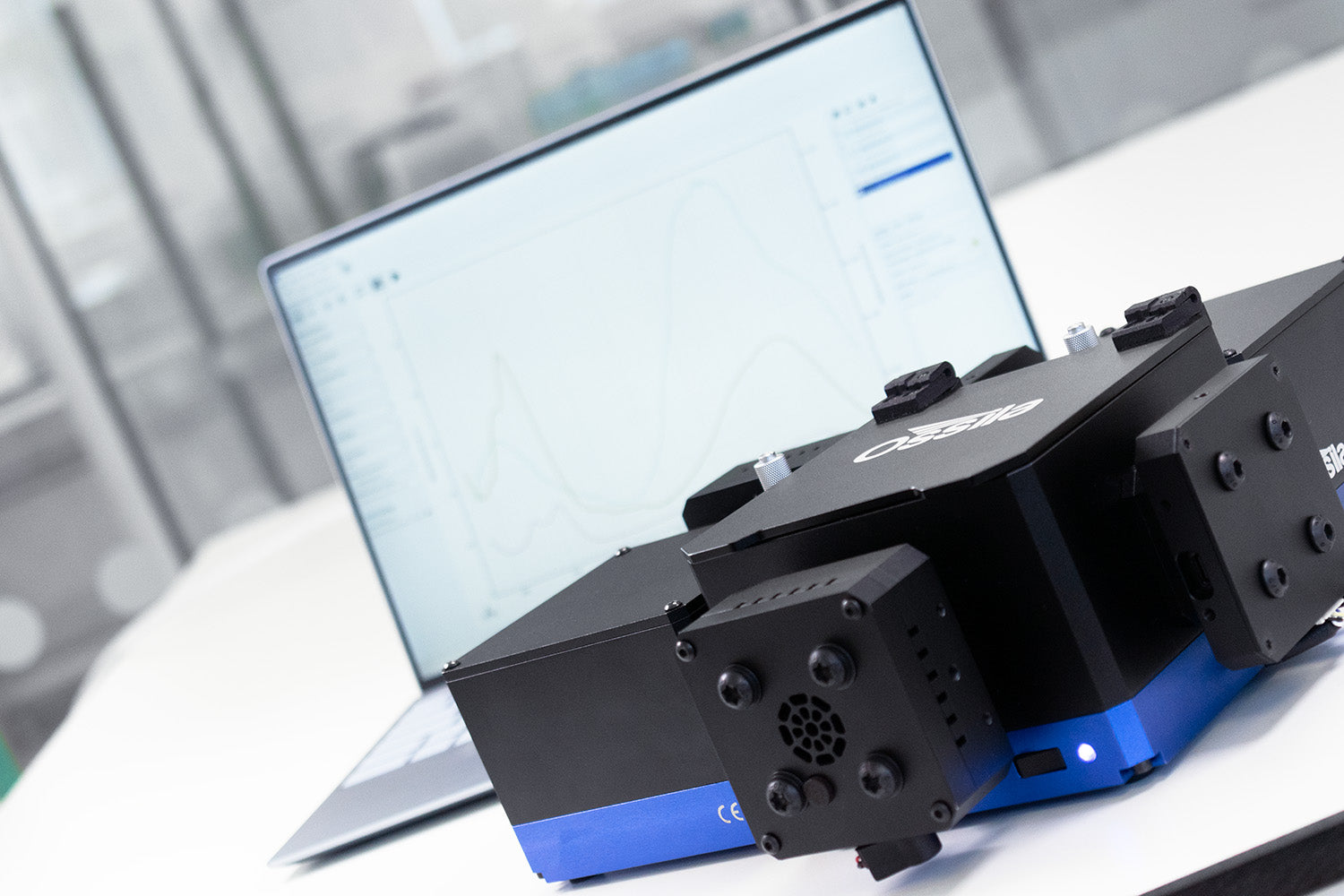
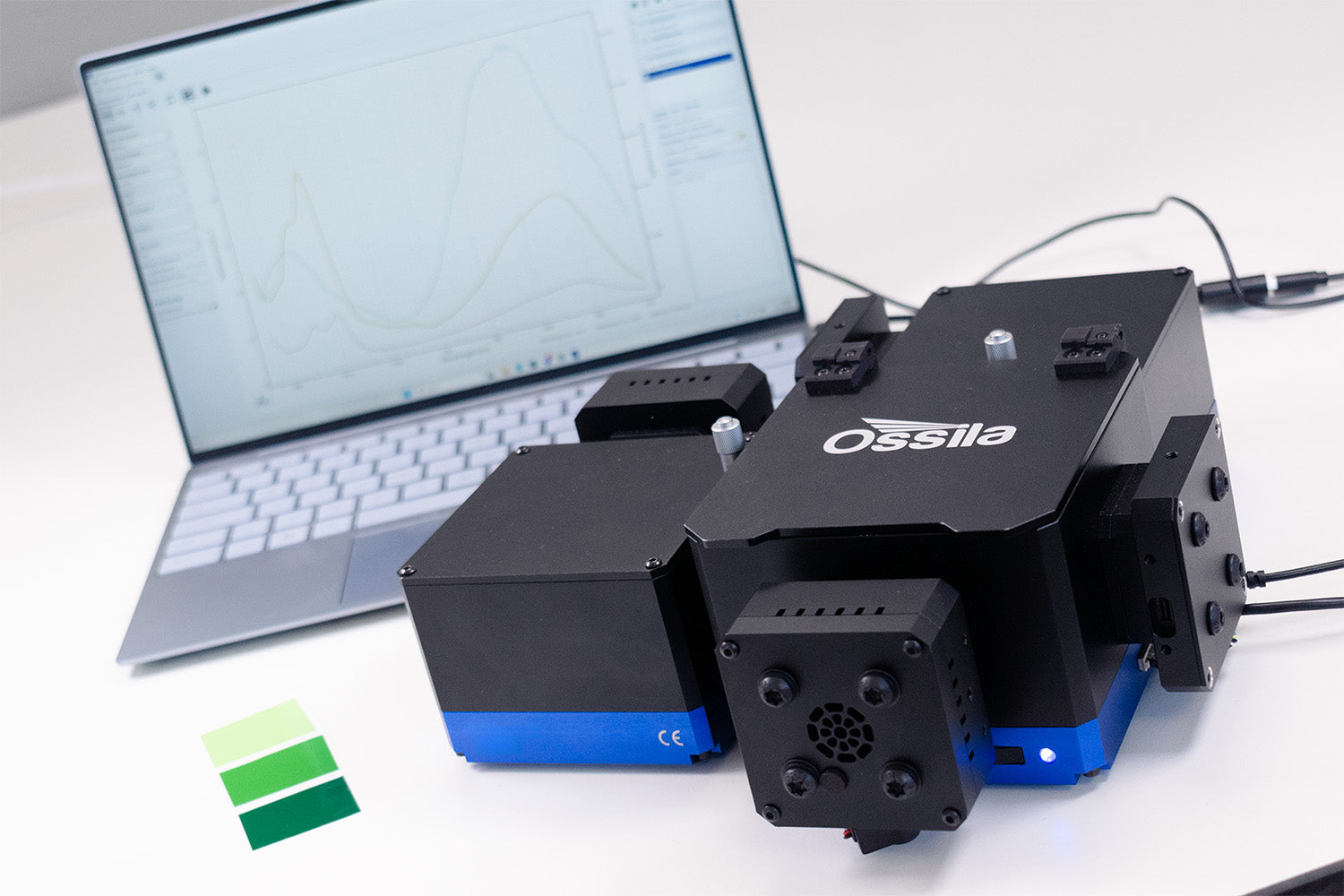
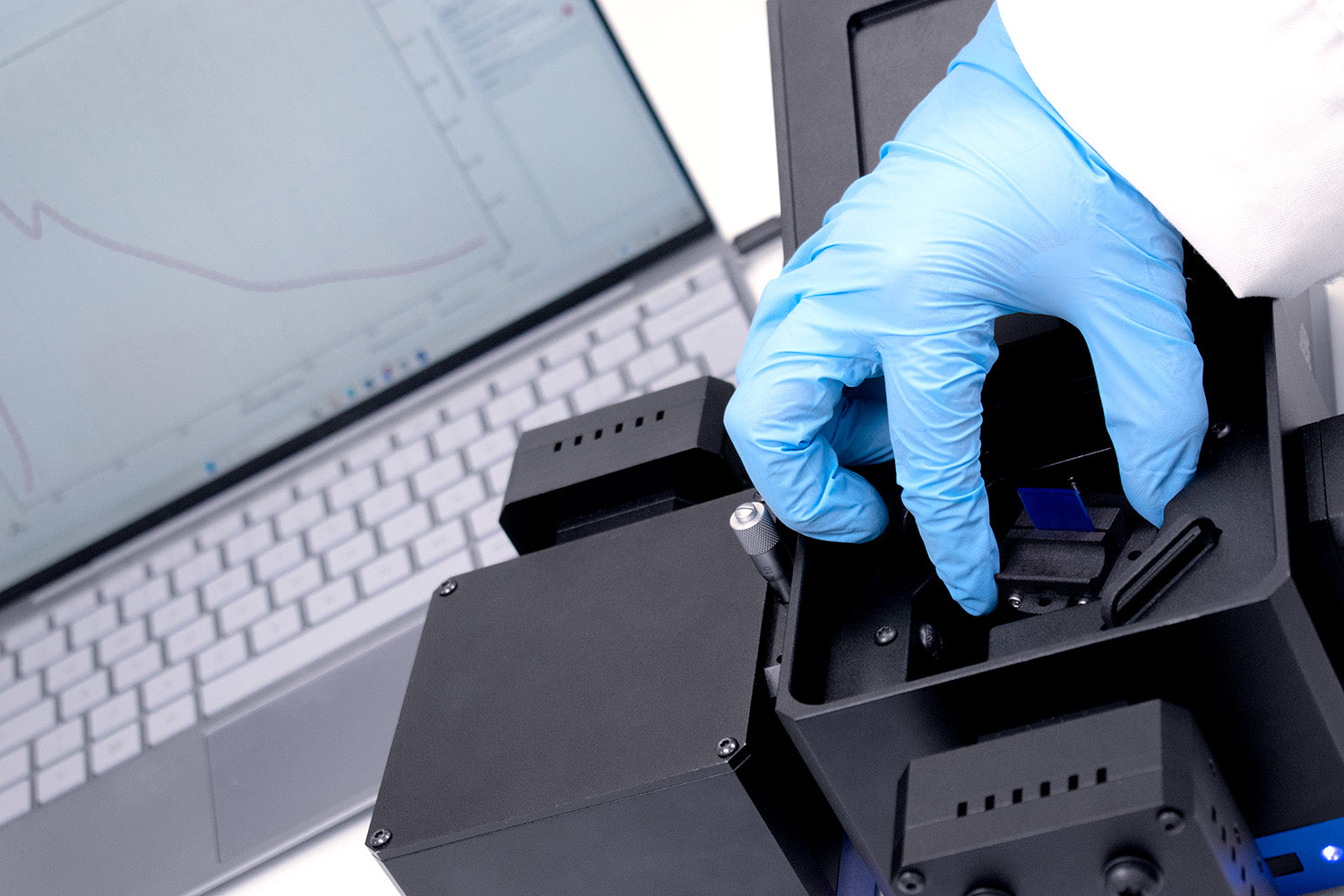
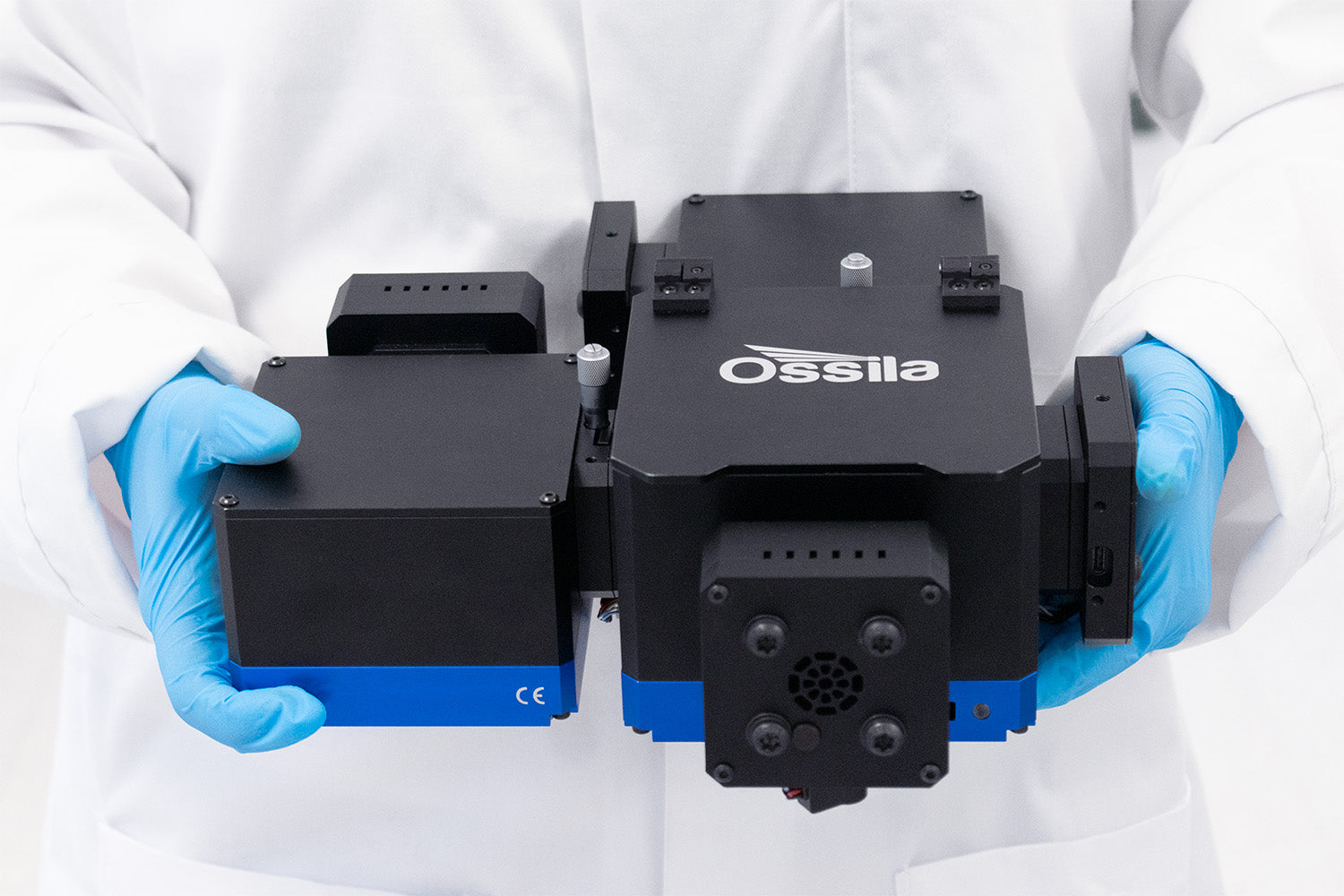
Spectrofluorometer Data


From our page on signal to noise ratio.
In the Box
- The Ossila Spectrofluorometer
- A hyperspectral 380 nm – 1000 nm white LED
- A high-power 365 nm UV light source
- 2 silicon photomultiplier detectors
- 2 ultra-fast monochromators
- A sample chamber with integrated filter holders
- Cuvette holder
- Thin film holder
- USB-C data cable
- USB drive with software & user manual
- 24V power supply
Related Products


Resources
 Ossila Spectrofluorometer Comparison
We’ve compared our specifications with one of the leading competitors to demonstrate how the Ossila Spectrofluorometers compares.
Read more...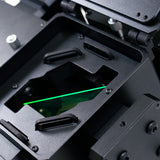 Measuring Fluorescence with a Spectrofluorometer
Learn how to take fluorescence emission and excitation measurements with the Ossila Spectrofluorometer.
Read more...