


Dual-Purpose Glassy Carbon Working Electrode
A dual purpose of electrochemical analysis and electron microscope study, Detachable glassy carbon electrode
Specifications | Resources and Support
A dual-purpose glassy carbon electrode is a working electrode with a detachable glassy carbon disc. The dual-purpose glassy carbon electrode has a dual purpose of both electrochemical analysis with the glassy carbon disc attached and electron microscope study with the glassy carbon disc detached, respectively, enabling a detailed study of electrochemical processes.
Glassy carbon is known for its wide potential window which allows for the measurement of a wide range of electrochemical reactions without interference. With high electrical conductivity, glassy carbon provides efficient electron transfer in electrochemical processes. Glassy carbon is also highly resistant to chemical attack and high temperature tolerant, offering great chemical and thermal stability. Glassy carbon working electrode is widely used in electrochemical analysis to determine the concentration of various analytes, electrochemical sensors to create highly sensitive electrochemical and biosensors. Glassy carbon electrode has also been employed for waste water treatment.

Removable Disc
For cross testing and post analysis (SEM/XPS/AFM/etc)

Highly Inert
Suitable for a wide range of EC experiments

Wide Potential Window
For use under a broad voltage range

Expert Support
From in-house scientists & our
customer care team
Glassy carbon is hard as glass, without gas or liquid permeability. Buy the glassy carbon working electrode together with our affordable reference electrode and counter electrode together with the Ossila potentiostat to start performing electrochemical experiments.
To keep you electrodes working at the highest standards we recommend using our electrode polishing kit.
Specifications
All dimensions are in millimeters.

| Disk Diameter | 3 mm |
|---|---|
| Conductive Copper Rod | φ2×20 mm |
| Electrode Head Length | 7 mm |
| Body Material | PTFE/PEEK |
| Body Diameter | 6 mm |
| Body Length | 80 mm |


Pricing and Options
| Product Name | Product Code | Price |
| Dual-Purpose Glassy Carbon Working Electrode - 3 mm diameter - PTFE Body | C2026G1 | £270 |
| Dual-Purpose Glassy Carbon Working Electrode - 3 mm diameter - PEEK Body | C2026H1 | £270 |
Literature and Reviews
- N. Zakaria et al. (2021), Effect of Supporting Background Electrolytes on the Nanostructure Morphologies and Electrochemical Behaviors of Electrodeposited Gold Nanoparticles on Glassy Carbon Electrode Surfaces, ACS Omega, 6, 24419−24431 ; DOI: 10.1021/acsomega.1c02670.
- R. Sun et al. (2025), Fabrication of catalyst layers of proton exchange membrane fuel cell via magnetron sputtering method, Int. J. Hydrog. Energy, 161, 150602; DOI: 10.1016/j.ijhydene.2025.150602.
Resources and Support
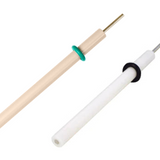 PEEK vs PTFE
The choice of whether to use PEEK (polyether ether ketone) or PTFE (polytetrafluoroethylene, Teflon) comes down to the conditions of your planned experiments. The key polymer properties to consider are:
Read more...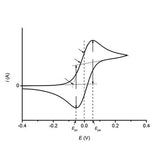 Cyclic Voltammetry Basics, Setup, and Applications
Cyclic voltammetry is an electrochemical technique for measuring the current response of a redox active solution to a linearly cycled potential sweep between two or more set values.
Read more...