


Ag/Ag+ Reference Electrodes
Non-aqueous Ag/Ag+ reference electrode
High-quality reference electrode for cyclic voltammetry experiments using non-aqueous or moisture-sensitive electrolytes.
Overview | Specifications | Pricing and Options | Resources and Support
Non-aqueous Ag/Ag+ reference electrodes are commonly used in cyclic voltammetry and other electrochemical studies, escpeicially in situations where water could contaminate the bulk reaction or be incompatible with the bulk electrolyte. These electrodes are a standard and reliable alternative to the our aqueous Ag/AgCl reference electrodes. Our low price non-aqueous Ag/Ag+ reference electrode are also sold sealed in a ceramic frit junction.
The non-aqueous Ag/Ag+ reference electrode features a silver wire to be used in direct contact with 0.01M silver nitrate in acetonitrile solution (not included). The Ag/Ag+ reference electrode is ideal for use if organic solvents such as acetonitrile are used in the electrolyte.
You can purchase these reference electrode as a multipack of 5 or 10 electrodes for an even better price. A non-aqueous electrode is also included in our non-aqueous electrochemical cell kits.
Specifications
All dimensions are in millimeters.
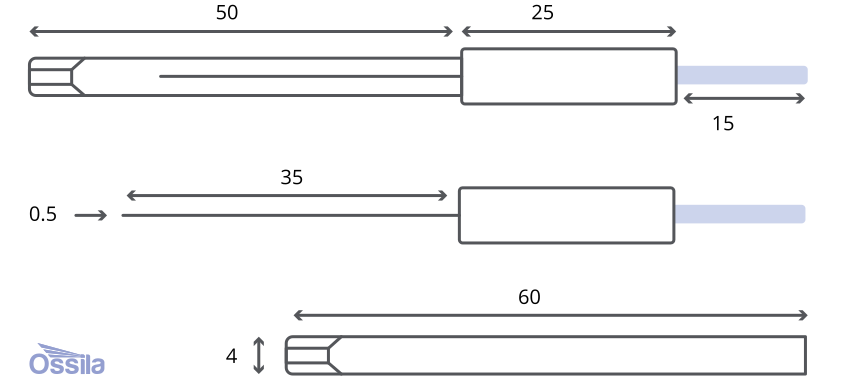
Recommended Reference Electrodes by Solution Type
| Solution Type | Recommended Reference Electrode |
| Neutral | Ag/AgCl reference electrode or saturated calomel electrode (SCE) |
| Basic | Hg/HgO |
| Acidic | Hg/Hg2SO4 |
| Non-aqueous | Ag/Ag+ reference electrode |
Pricing and Options
| Product Name | Product Code | Price |
| Non-aqueous Ag/Ag+ Reference Electrode | C2015A1 | £110 |
| Non-aqueous Ag/Ag+ Reference Electrode - Pack of 5 | C2015A10-5 | £520 |
| Non-aqueous Ag/Ag+ Reference Electrode - Pack of 10 | C2015A1-10 | £1000 |
| Electrochemical Cell Kit with Electrodes | C2016A1 | £560 |
| Luggin Capillary Electrochemical Cell Kit with Electrodes | C2016B1 | £620 |
Related Products


Resources and Support
 How To Prepare a Reference Electrode
The reference electrode has a white cap which holds the silver or silver/silver chloride wire. The cap is detachable with a gentle force. Hold the glass tube and twist the white cap gently and pull it away from the glass tube. The glass tube is delicate so do not apply a strong force while holding the glass tube.
Learn more...