Rigid, non-woven carbon paper GDL substrate (TGP-H series)
Available with or without PTFE wet-proofing treatment
Specifications | Gallery | Pricing and Options | Related Products | Untreated vs Wet-Proofed | Technical Support
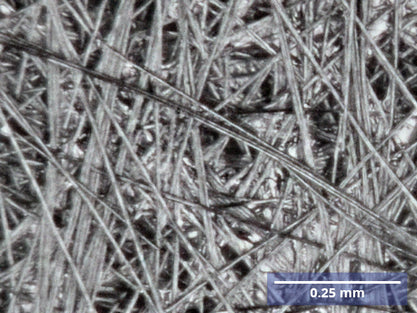
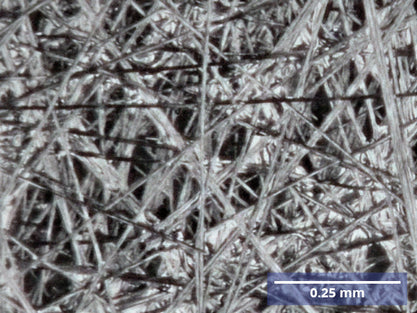
Toray carbon paper is a non-woven, porous sheet of carbonized fibres, available in two thicknesses: 0.19 mm (TGP-H-060) and 0.28 mm (TGP-H-090). A well-established reference grade for gas diffusion layer research, Toray Carbon Paper combines low electrical resistance with open porosity, perfect for gas and liquid transport.
Its fibrous structure (78% porosity) allows reactants and products to move through the sheet while the carbon network carries current across it. Making it a dependable substrate wherever your catalyst layer needs efficient mass transport.
Toray Carbon Paper Applications
- Fuel cells and water electrolyzers
- Batteries and supercapacitors
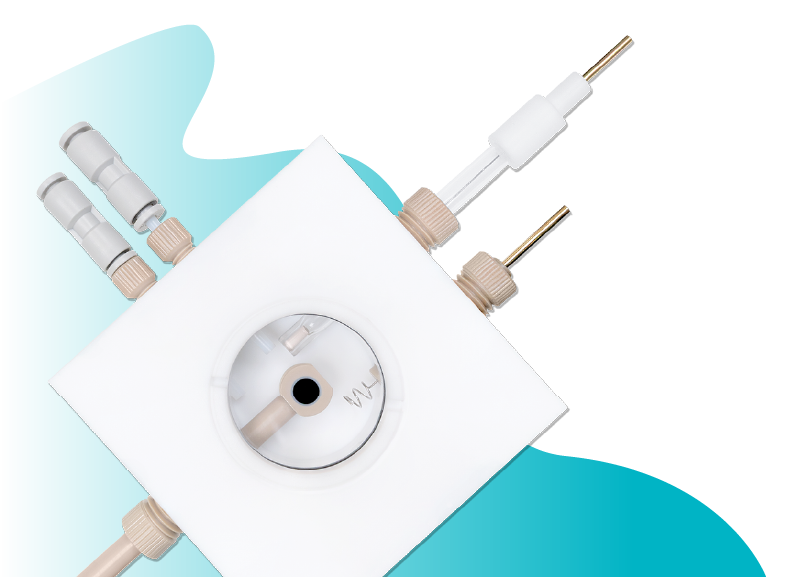
- Gas diffusion electrode (GDE flow cells)
- Standard Three-electrode Setups
- CO2 reduction reactors
- Sensors
Toray paper is made by forming a carbon fibre web, binding it with a thermoset resin, and heat treating it at a high temperature. Resulting in a flat, rigid sheet with low in-plane resistance (5.6–5.8 mΩ·cm), flexural strength of 40 MPa, and a smooth surface (8 µm roughness). That rigidity gives consistent, predictable behaviour in a clamped cell.
Important Note: Carbon paper is less compressible and more brittle than cloth-based substrates, so edges and corners require careful handling.
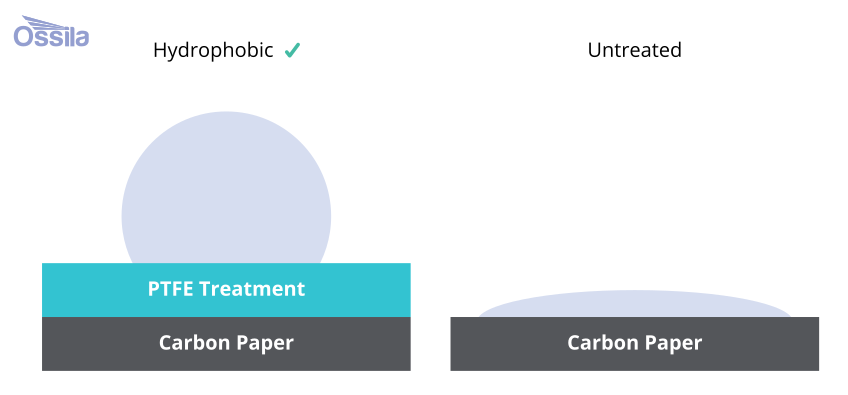
Toray Carbon Paper is available in two treatment options. Untreated (without PTFE wet-proofing and without a microporous layer), or treated (with 20% PTFE wet-proofing). This gives you the option of a clean starting point if you want to apply your own catalyst layer, coating, surface treatment, or if you plan to use the paper as a conductive and mechanical backing layer. For reference, adding PTFE makes the paper more hydrophobic and helps prevent flooding of the pores during operation, but higher PTFE loadings reduce conductivity.
Note: Porosity, compressibility, and handling behaviour differ between manufacturers and grades.

Highly Porous
78% void volume, allowing gas and liquid transport through

Electrically Conductive
High conductivity = Efficient Current Collector

Hydrophobic (PTFE-treated only)
Prevents flooding of the porous structure during operation

Thermal and Chemical Stability
Stable across a range operating temperatures and pH levels
Specifications
Toray Carbon Paper
| Product Code | C2061C20 | C2061C30 |
|---|---|---|
| Manufacturer Code | TGP-H-60 | TGP-H-90 |
| Thickness | 0.19 mm | 0.28 mm |
| Wet Proofing | No | No |
| Dimensions | 20 cm × 20 cm | 20 cm × 20 cm |
| Porosity | 78% | 78% |
| Gas Permeability | 1900 ml·mm / [cm2·hr·mmAq] | 1700 ml·mm / [cm2·hr·mmAq] |
| Resistance (in-plane) | 5.8 mΩ·cm | 5.6 mΩ·cm |
| Resistance (through-plane) | 80 mΩ·cm | 80 mΩ·cm |
| Flexural Strength | 40 MPa | 40 MPa |
| Surface Roughness | 8 µm | 8 µm |
| Thermal Conductivity: Through Plane (Room Temp) | 1.7 W /m.K | 1.7 W /m.K |
| Thermal Conductivity: In-plane (Room Temp) | 21 W /m.K | 21 W /m.K |
| Thermal Conductivity: In-plane (100°C) | 23 W /m.K | 23 W /m.K |
| In-plane Coefficient of Thermal Expansion | -0.8 × 10⁻⁶/°C | -0.8 × 10⁻⁶/°C |
Conductive Carbon Paper Gallery
Pricing and Options
Toray Carbon Paper Pricing
| Product Code | Thickness | Wet Proofing | Price |
|---|---|---|---|
| C2061C20 | 0.2 mm | 0% (Hydrophilic) | £80 |
| C2061M20 | 0.2 mm | 20% (Hydrophobic) | £150 |
Untreated vs Wet-Proofed
Without PTFE (Untreated)
- Custom catalyst layer coating: gives full control over the catalyst–substrate interface, which suits early-stage electrode development and catalyst ink deposition.
- Electrode backing / current collector: a rigid, conductive support behind a catalyst-coated membrane or active layer, particularly in benchtop and H-cell configurations.
- Surface functionalisation: electrodeposition, spray coating, or drop-casting onto a bare surface avoids interference from an existing PTFE layer.
- Operando and spectroelectrochemical setups: an untreated sheet gives more uniform optical and electrical behaviour before modification, which helps when you need optical or spectroscopic access to the working electrode..
With PTFE (Wet-Proofed)
- Fuel cell and electrolyser gas diffusion layers: PTFE manages water balance in the pores, preventing flooding while keeping gas pathways open to the catalyst layer..
- GDE flow cells for CO₂ reduction: wet-proofing helps hold a stable gas/liquid/solid boundary at the catalyst layer, which supports consistent CO₂RR performance and limits electrolyte breakthrough.
- Water electrolysis benchmarking: as a gas-side diffusion layer or inert current collector in PEM/AEM test cells, controlled hydrophobicity improves run-to-run reproducibility.