


Gas Diffusion In-situ Raman Electrochemical Cell

Operando Electrochemical Cell for Raman Spectroscopy & Infrared Microscopy
Three compartment structure designed for electrocatalysis of CO2RR, NNR, HERs, and fuel cells
Product Details | Gallery | Related Products
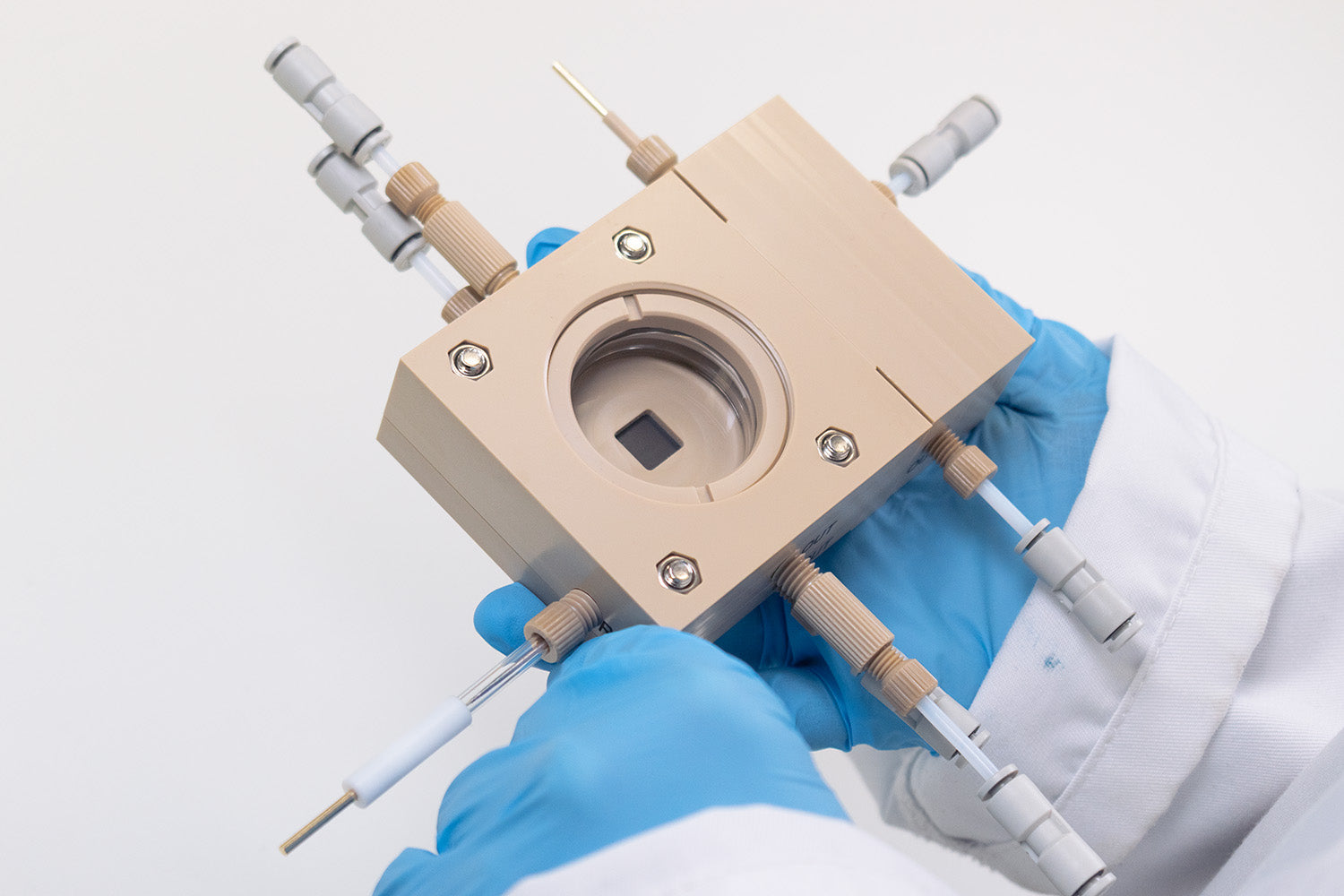
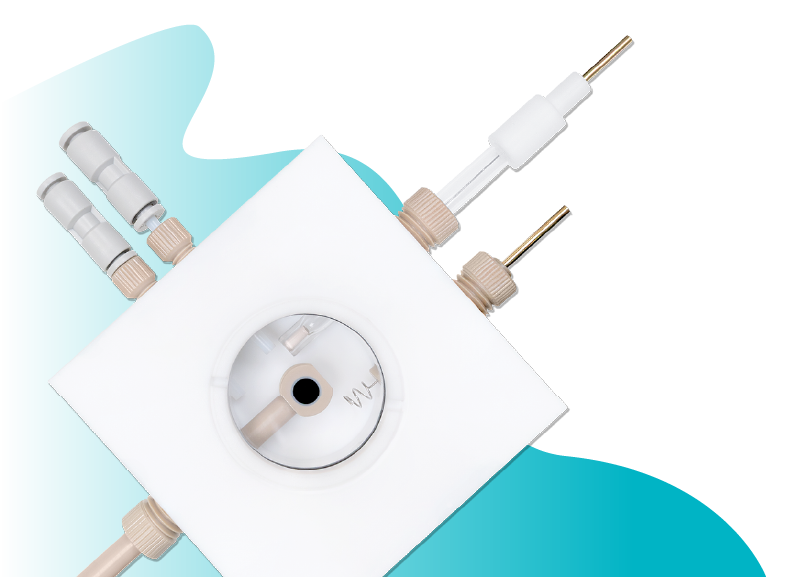
An in-situ and operando Raman electrochemical flow cell for optical observation of electrochemical reactions happening on the surface of the electrode in real-time. Raman laser light is directed through the transparent window onto the surface of the gas diffusion electrode (GDE), observing changes on the electrode surface and giving insights into the electrochemical reactions.
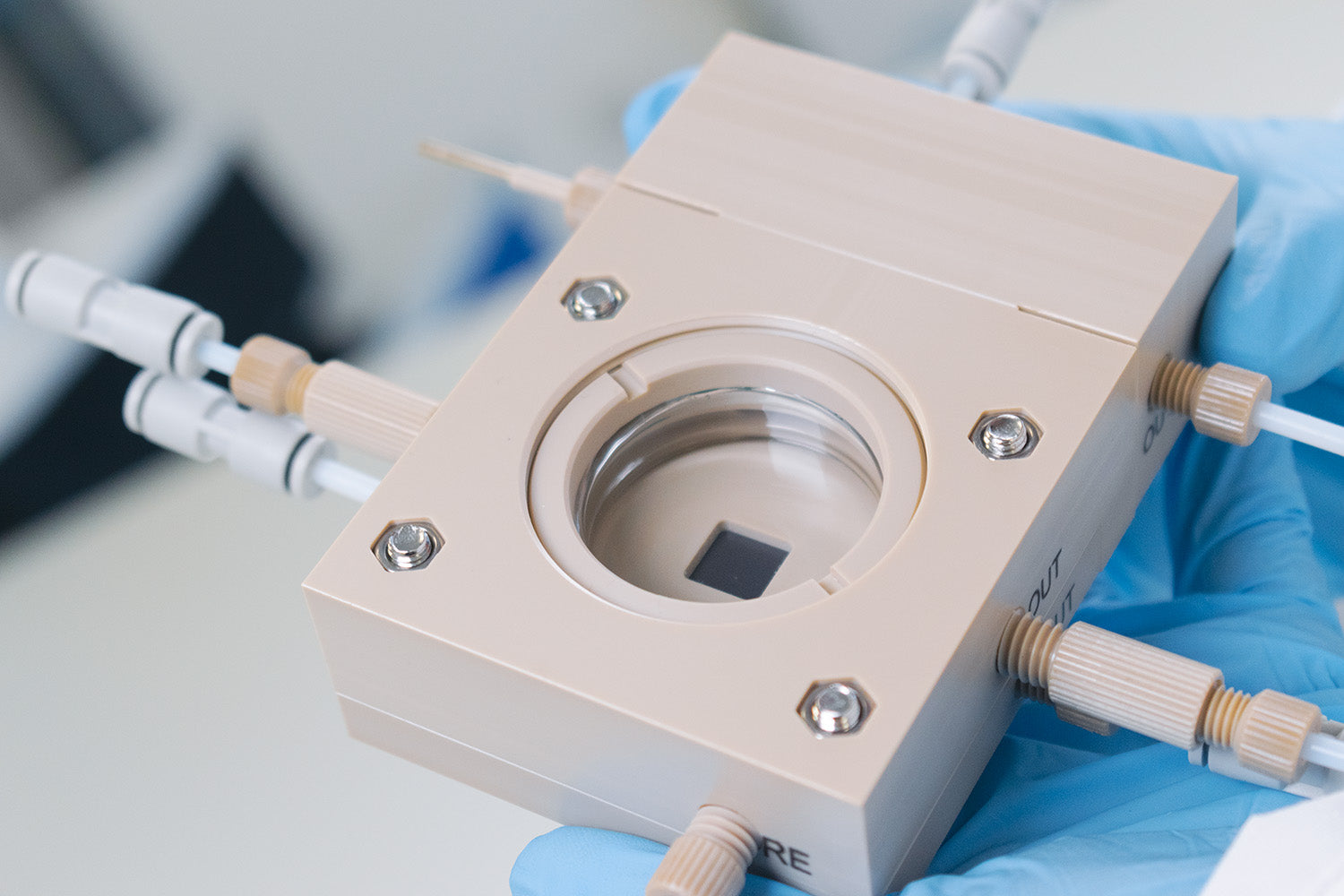
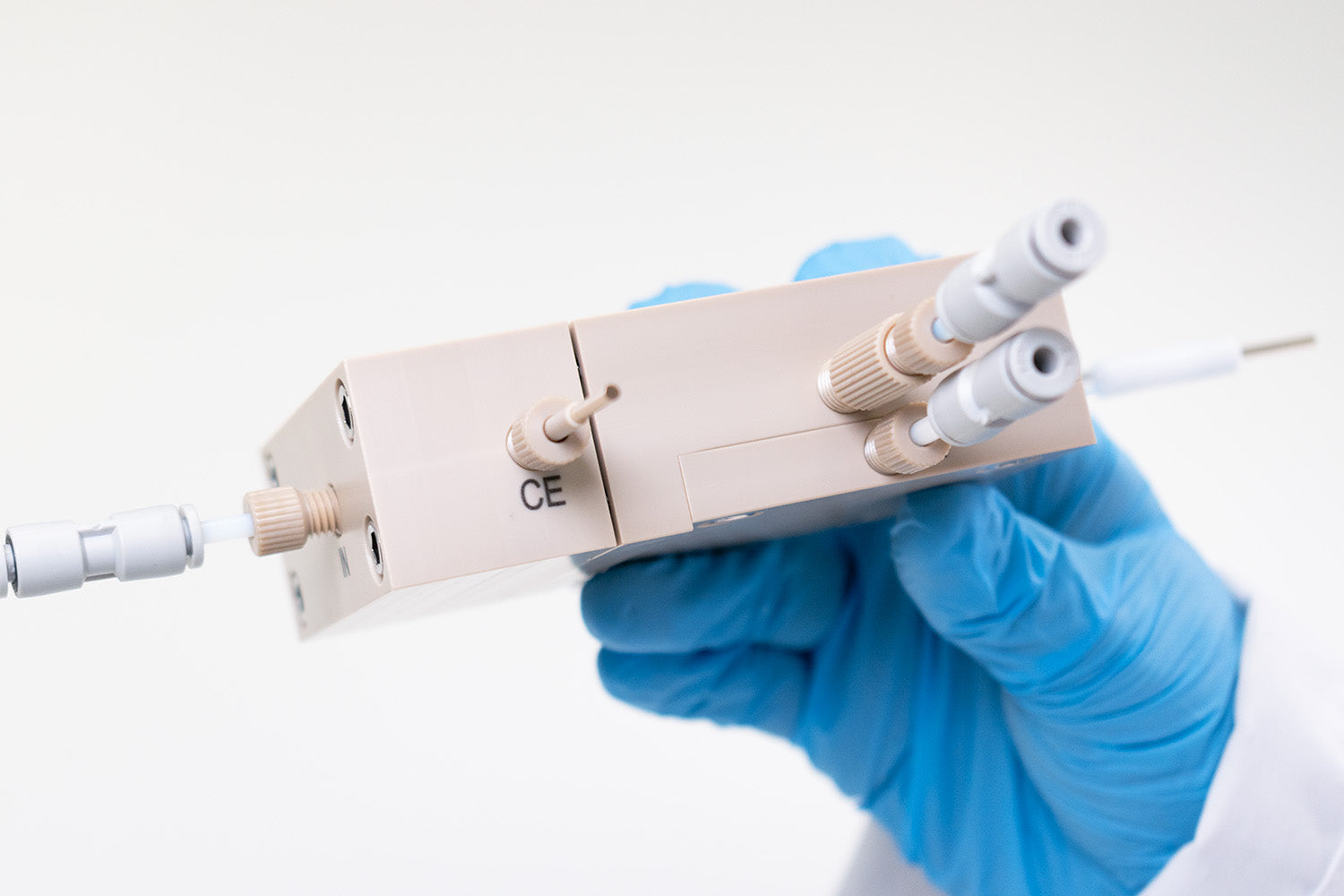
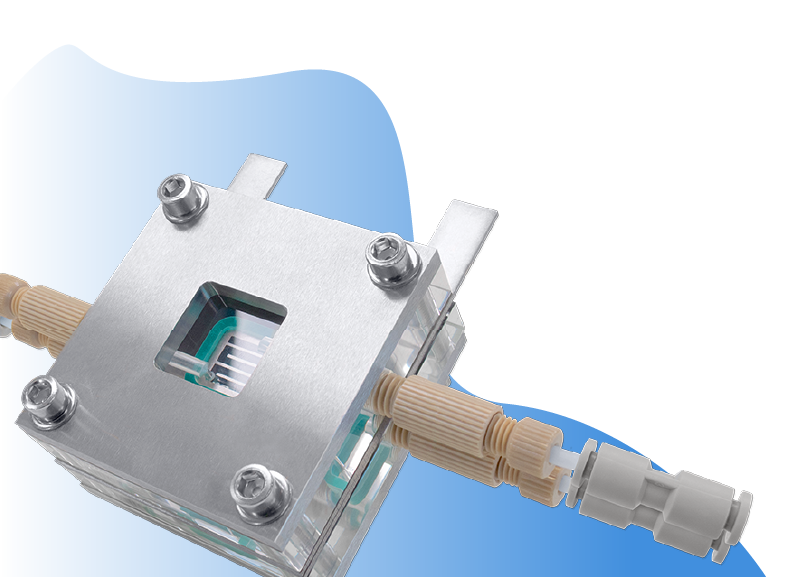
Featuring a three-compartment structure, this electrochemical cell includes a working electrode chamber, a gas chamber, and a counter electrode chamber. The H-cell configuration means the working electrode chamber stacks on top of the gas chamber, and the counter electrode chamber is separated from the working electrode GDE chamber by a membrane. The working electrode chamber is compatible with gas diffusion and planar electrodes and it accommodates both the GDE and reference electrode.
Electrochemical Cell Design
Our gas diffusion Raman electrochemical cells include:
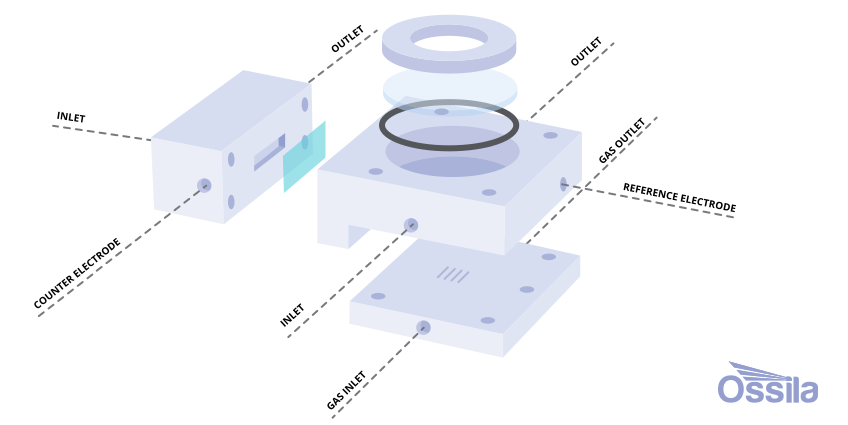
-
Quartz Window - Bowl Shaped
A transparent window placed directly above the GDE, allowing the Raman laser to focus on the electrode surface and the scattered light to be collected. The bowl-shaped optical window allows even closer Raman observation.
-
Three Chambers
A three-chamber design of gas chamber, working electrode and counter electrode chambers, separated by membranes or the GDE itself, creating realistic operating conditions
-
Inert body
Constructed from materials like PEEK to resist corrosive electrolytes
Also required for use:
- Gas Diffusion Electrode (GDE): A porous, conductive layer, i.e. carbon paper, that allows gases to reach the catalyst layer while also acting as the working electrode.
- Electrolyte: A liquid (aqueous or organic) that conducts ions, with channels for diffusion
- Electrodes: Platinum coil electrode (Φ 0.5 x 100 mm), and Ag/AgCl reference electrode (Φ 4mm)
Working Principles
Reactant gas is fed to the GDE working electrode, while electrolyte flows through the cell. The electrochemical reactions are carried out on the surface of the GDE while an electrical potential is applied. A Raman laser is directed through the quartz window to interact with the electrode/electrolyte interface, allowing real-time operando measurement of the unique vibrational fingerprints of molecules and gathering information about the dynamic reaction environment.
Specifications
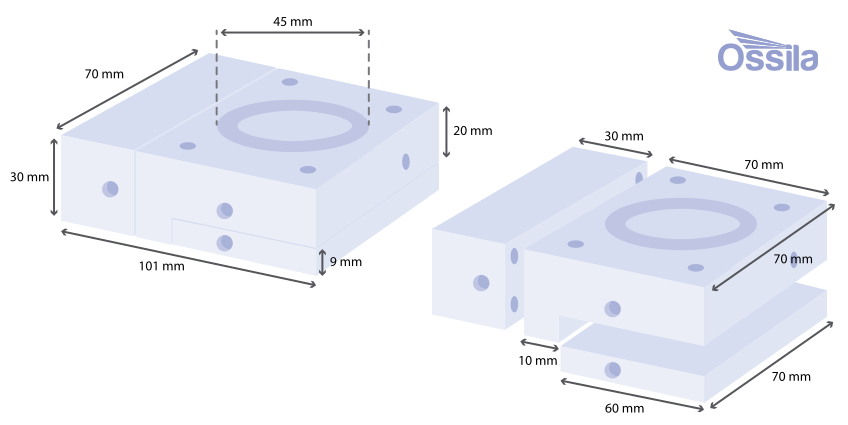
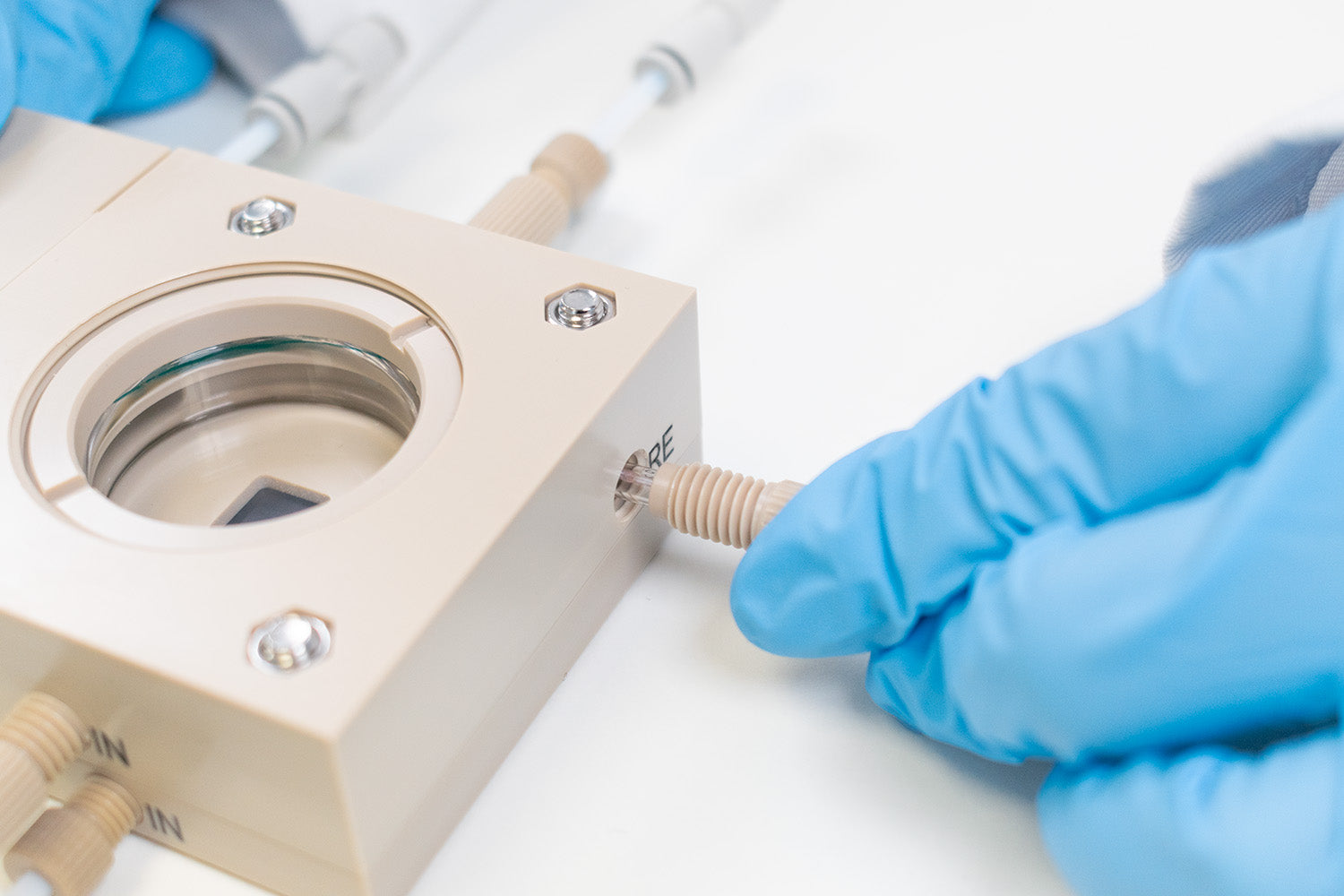
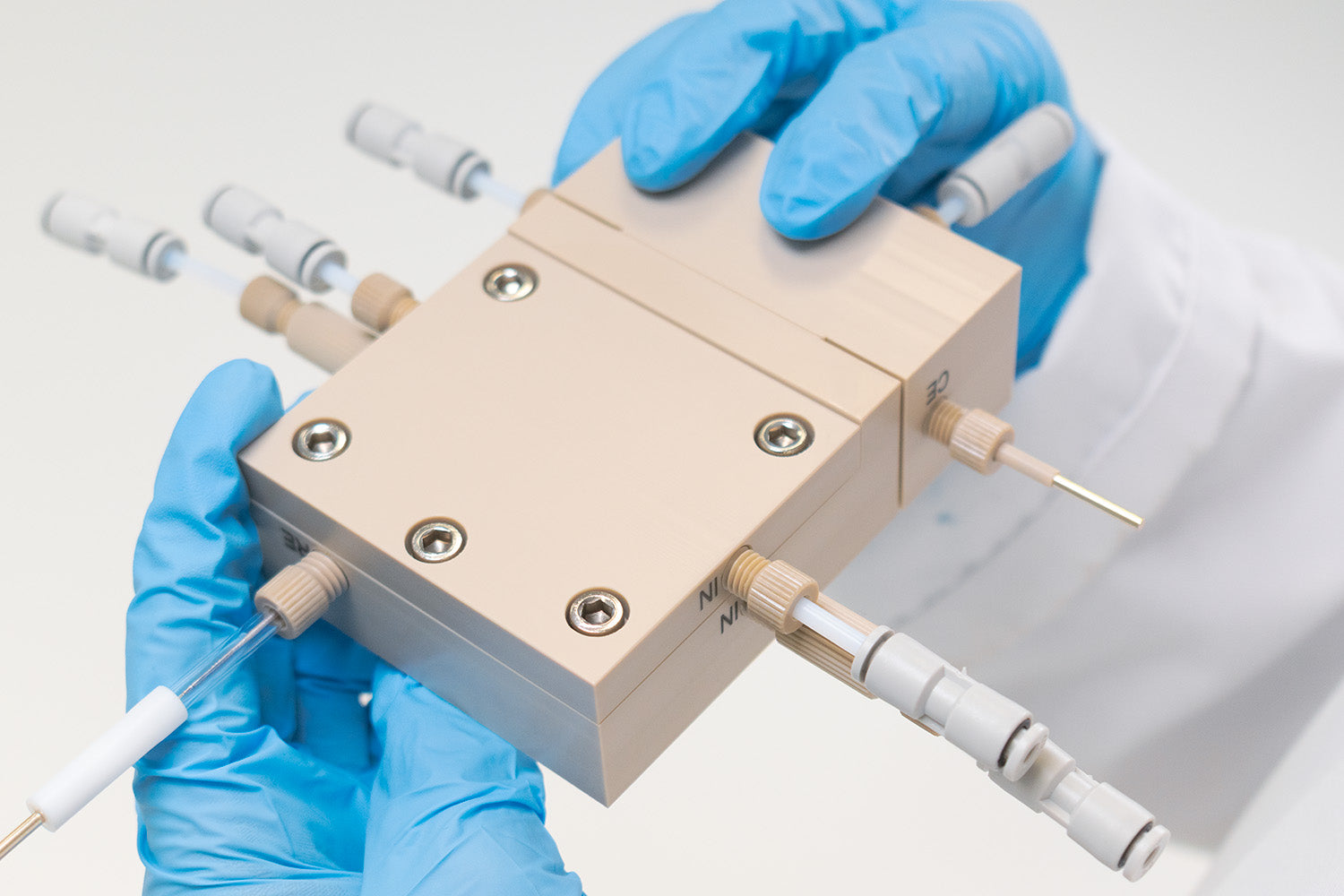
Gas Diffusion In-situ Raman Cell Gallery
Applications of Gas Diffusion Raman Electrochemical Cells
Gas diffusion Raman electrochemical cells have applications in the fields of fuel cells, battery electrode/electrolyte interfaces, electrocatalytic water splitting and hydrogen evolution reactions, oxygen reduction/evolution reactions, and carbon dioxide reduction reactions. Real-time in-situ and operando Raman spectroscopy is particularly helpful as a way of providing information on structural and morphological changes during operation.
Related Products
Literature and Reviews
- G. Wang et al. (2025), In-situ Raman observation on gas diffusion electrode/polyelectrolyte interface, Electrochim. Acta, 510, 145348; DOI: 10.1016/j.electacta.2024.145348.
- Q. Sun et al. (2025), Probing Inside the Catalyst Layer on Gas Diffusion Electrodes in Electrochemical Reduction of CO and CO2, Angew. Chem. Int. Ed., 64 (23), e202504715; DOI: 10.1002/anie.202504715.
- Z. Du et al. (2024), In Situ Raman Spectroscopic Studies of Electrochemical CO2 Reduction on Cu-Based Electrodes, J. Phys. Chem. C, 128 (28), 11741–11755; DOI: 10.1021/acs.jpcc.4c03596.