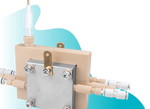
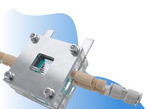
Porous Solid Electrolyte Reactor
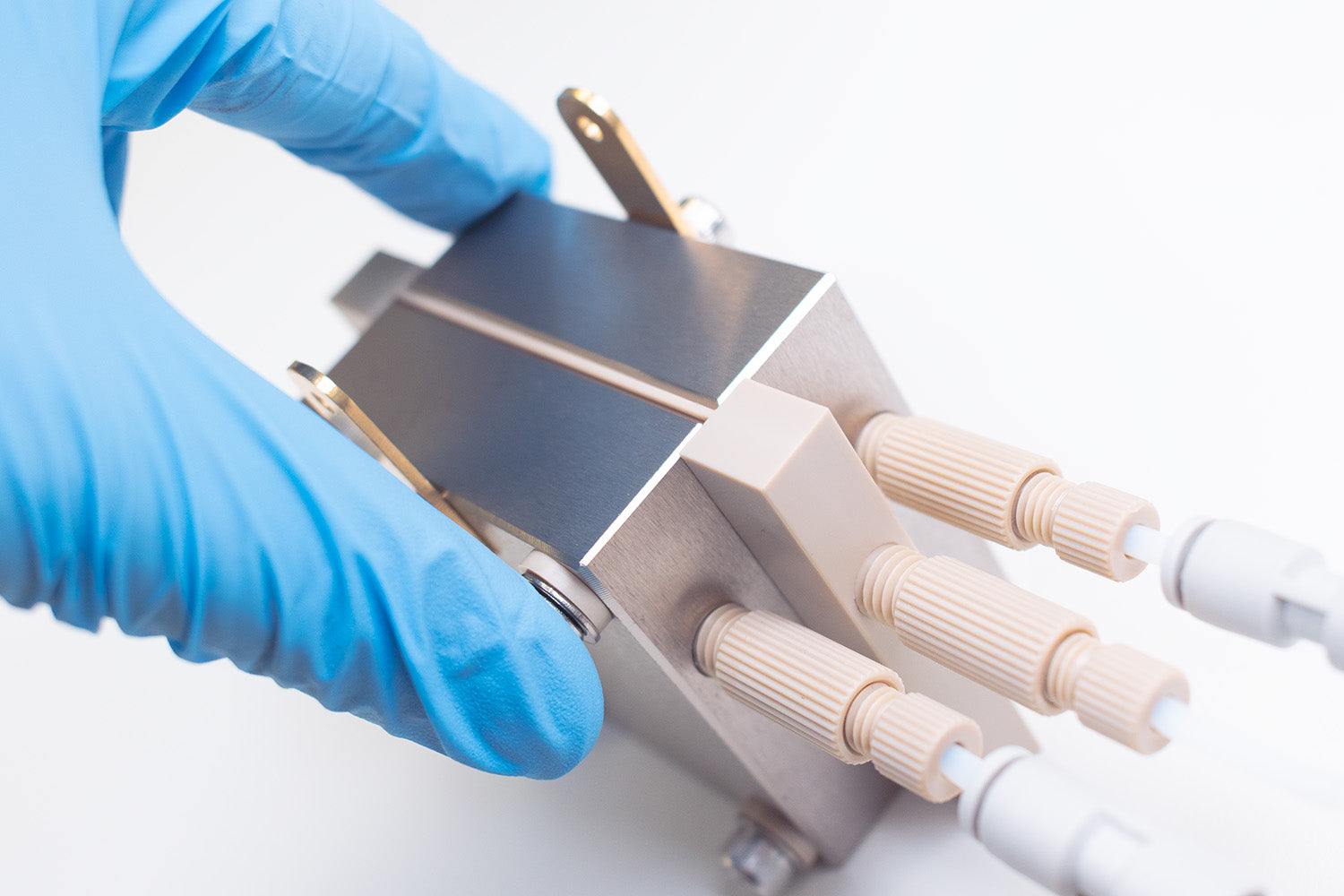
Three Chamber Solid-State Electrolyzer System
Replace traditional liquid electrolytes with a solid, permeable membrane for chemical synthesis
Specifications | In the Box | Gallery | Literature | Related Products | Technical Support
A porous solid electrolyte (PSE) reactor is a cutting-edge electrochemical device that replaces traditional liquid electrolytes with a solid, permeable membrane to perform chemical synthesis at the interface. It is elaborately designed to produce high-purity chemicals, clean fuels, and drinkable water directly at the point of reaction with great efficiency. This system is specifically designed for the highly selective synthesis of formic acid (HCOOH) via carbon dioxide reduction (CO2RR). This system effectively solves problems related to product separation, electrolyte cross-contamination, and system stability.
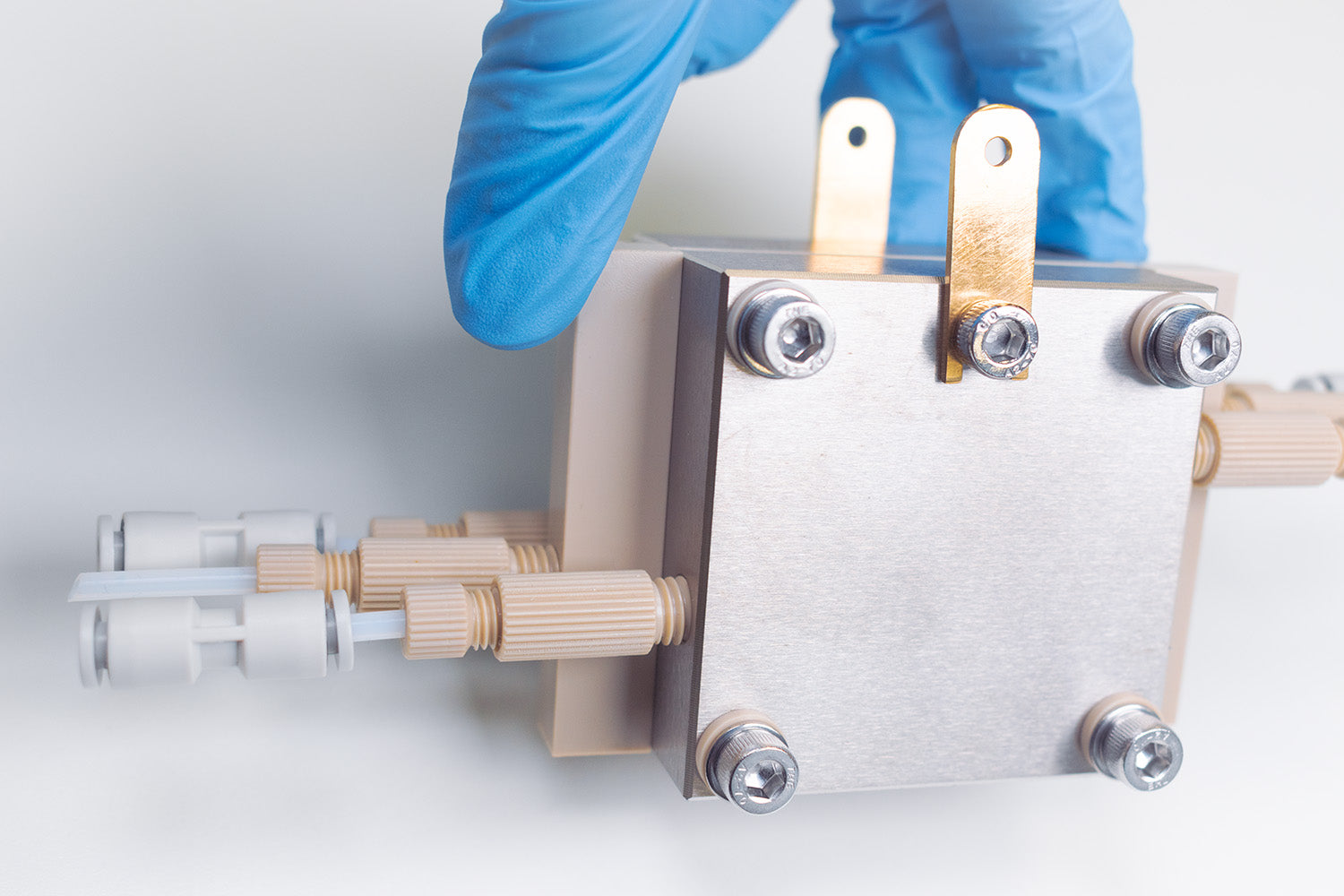
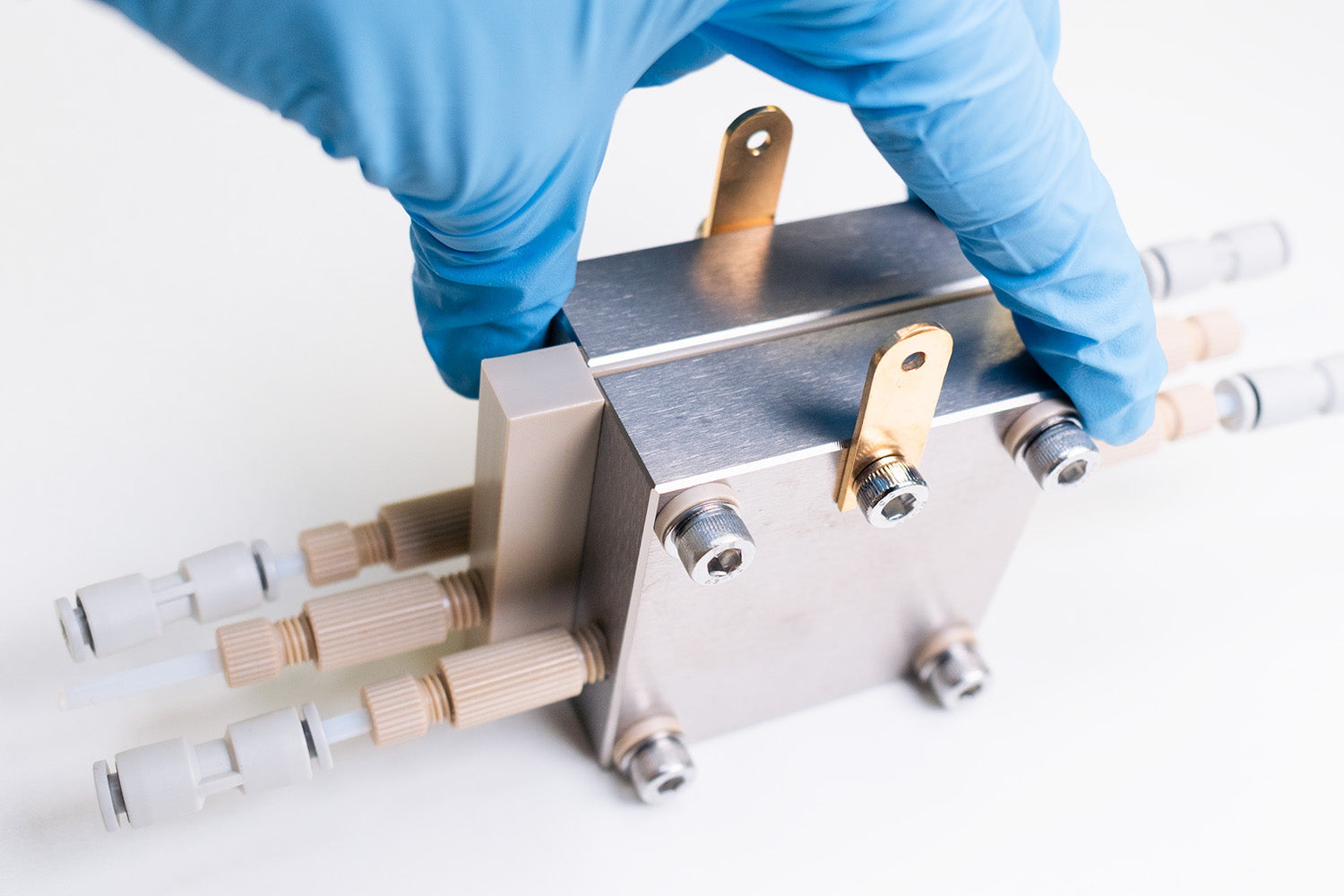
The three-chamber system holds the PSE chamber between the cathode and anode chambers, with an AEM and PEM separating the three chambers and supporting reactions in acidic or alkaline environments. Instead of pumping a liquid chemical solution past electrodes, reactants are directly fed through the porous solid electrolyte. The solid structure allows specific ions to pass through while keeping the products separated. It controls the boundary between gas, liquid, and solid phases, allowing gases to diffuse while isolating pure liquid products on the other side and removing the need for purification. The cathode chamber outlet is directly connected to a liquid product condensation and collection device, which can collect and quantify the generated formic acid aqueous solution in real time, facilitating offline analysis (such as HPLC, NMR) and yield calculation.
By eliminating highly acidic or corrosive liquid electrolytes, the system is safer to operate and highly modular, making it easier to stack for industrial-scale production. Advanced PSE configurations allow for simultaneous seawater desalination and hydrogen generation, producing potable water alongside green hydrogen without membrane degradation from salt.

Safer and Scalable
Easier to stack for industrial-scale production

Salt-Free Products
Eliminates the need of costly & complex purification processes

Built-in Desalination
Advanced porous solid electrolyte configurations

Expert Support
From in-house scientists & our
customer care team
Specifications
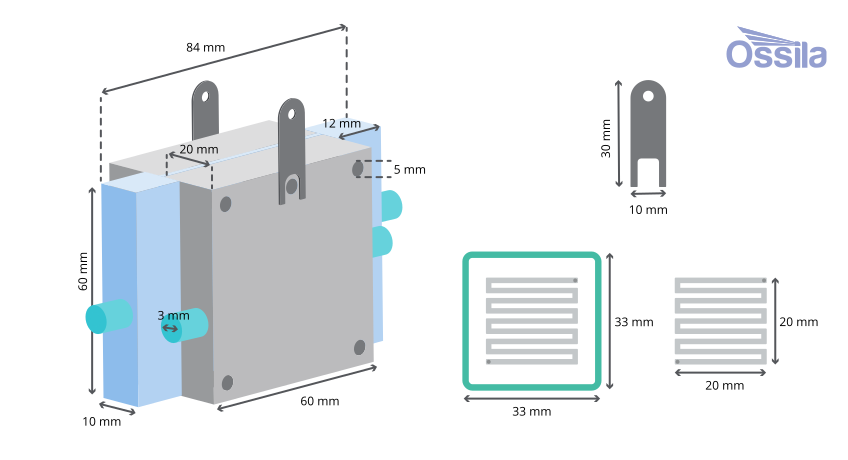
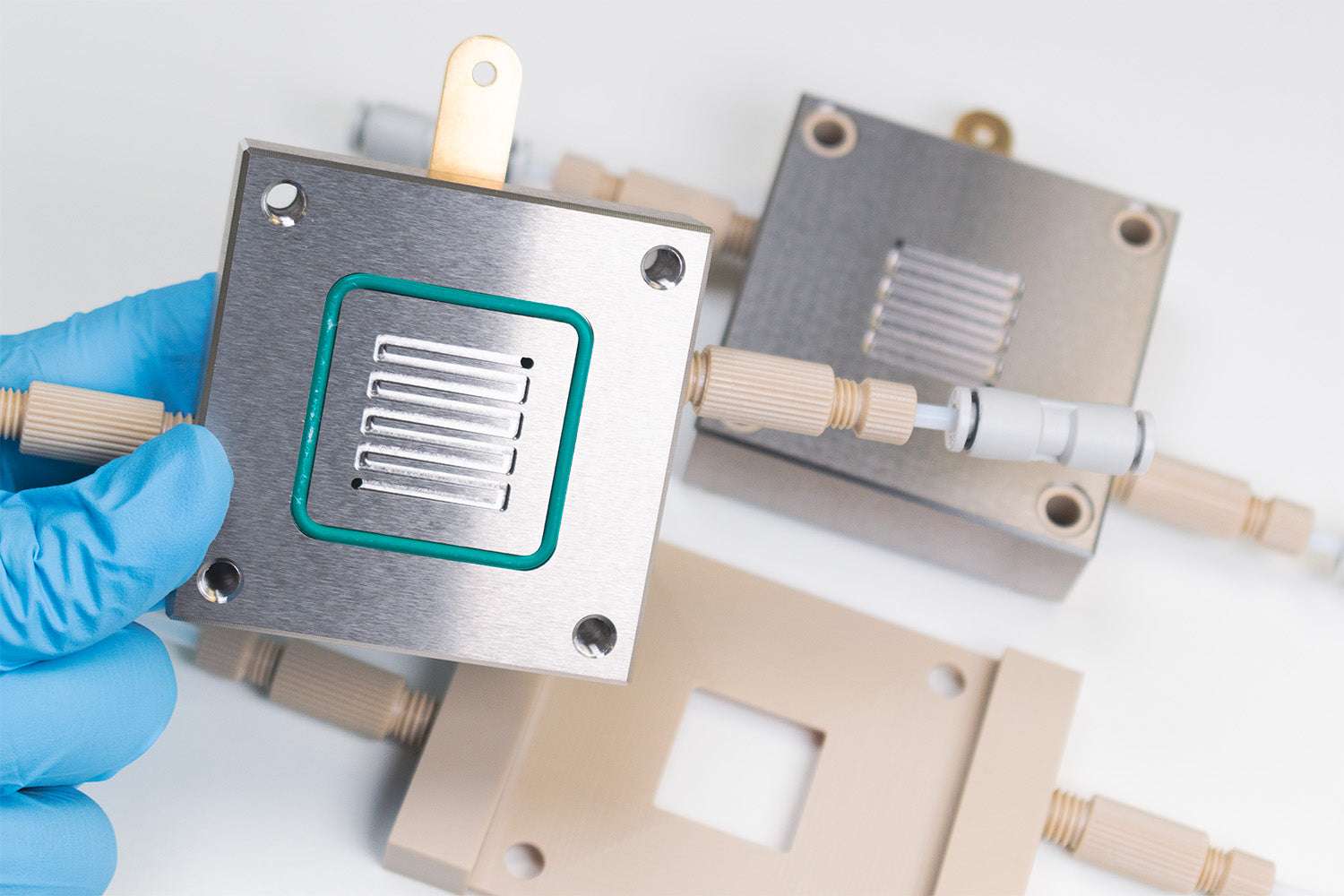
| Cathode and Anode Field Plate/ Chamber Material | Titanium -TA2 (with Serpent Flow Fields) |
|---|---|
| Cathode and Anode Field Plate/ Chamber Dimensions | 60 mm x 60 mm x 19 mm (H x W x T) |
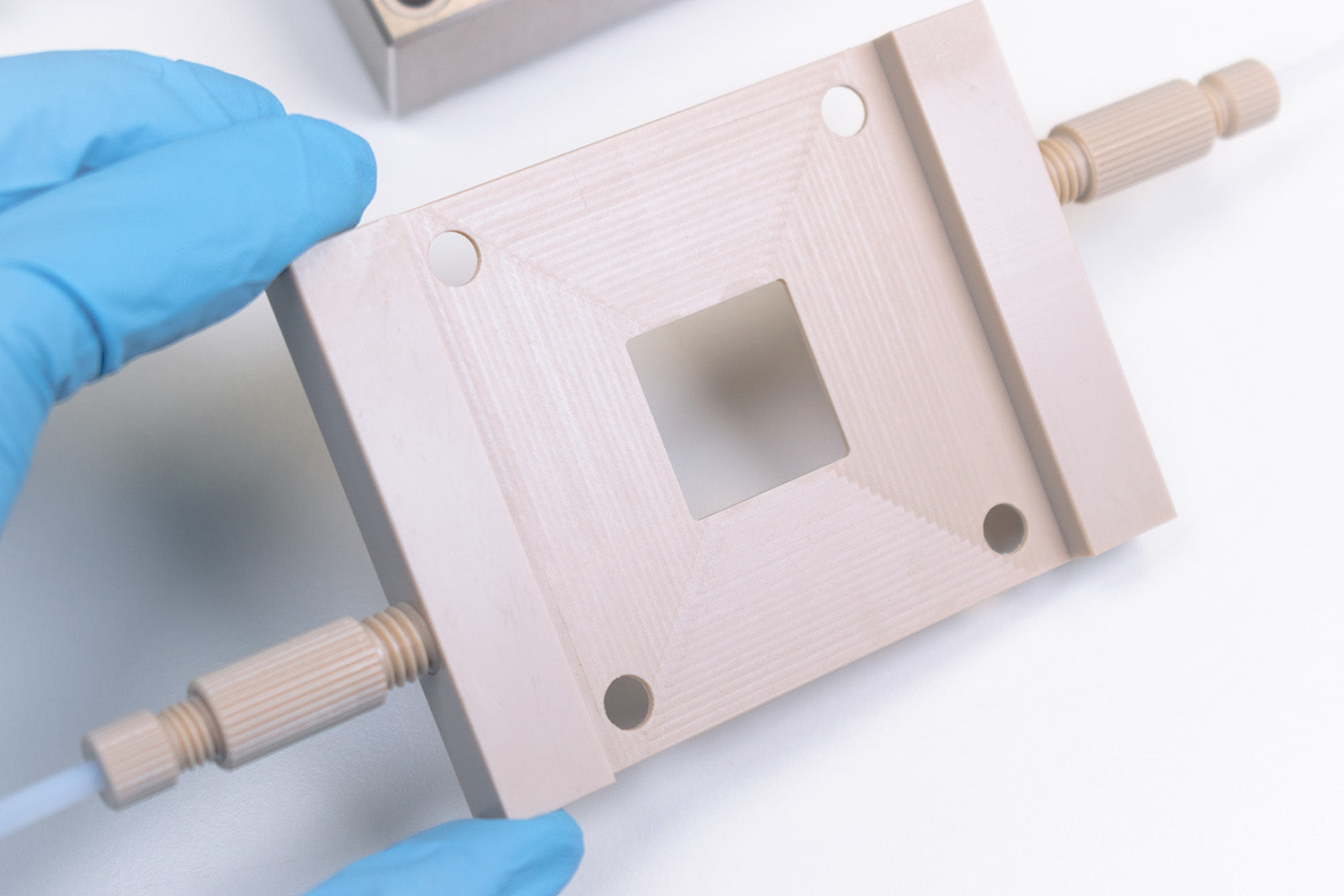
| PSE Middle Channel Material | PEEK |
| PSE Middle Channel Thickness | 1 mm |
| GDE Working Area | S-shaped, 2 cm x 2 cm, 1 mm width and depth |
| Gaskets | FKM and PTFE (52 mm x 52 mm, see thickness and window sizes below) |
| FKM Gasket Thickness (25 mm x 25 mm centre) | 0.2 mm, 0.3 mm, 0.4 mm |
| FKM Gasket Thickness (20 mm x 20 mm centre) | 0.2 mm |
| PTFE Gasket Thickness (25 mm x 25 mm centre) | 0.2 mm, 0.25 mm |
In the Box
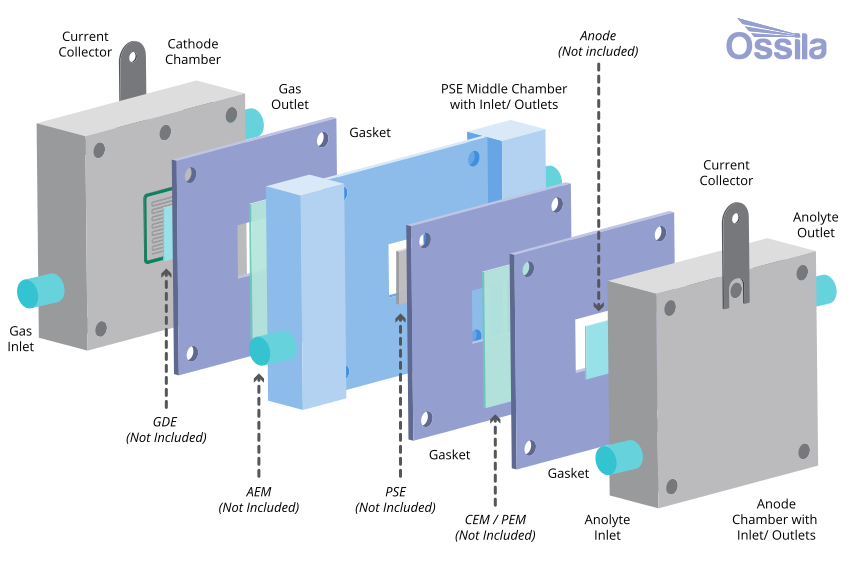
- Titanium cathode/anode chambers
- PEEK chamber
- Gaskets (PTFE & FKM)
- PTFE tube
- Tube cutter
- Contact collector leads
- Copper tape
- PTFE gas stoppers
- Gas secure screws
- Assorted O-rings
- Screws & washers
- Gas locks
- PTFE tape
- Acrylic electrode leveler
Product Gallery
Key Applications
- Formic Acid Production: Converts waste carbon dioxide into valuable feedstocks like formic acid (HCOOH) or carbon monoxide (CO)
- Hydrogen Peroxide Production: Enables direct, on-site, and decentralized electrosynthesis, avoiding the traditional, emission-heavy anthraquinone process
- Seawater Electrolysis: Produces clean drinking water and green hydrogen simultaneously, utilizing specialized bipolar membranes
Literature
- G. Jang et al. (2026), Anion-Exchange-Membrane-Free Electrolyzers via Interfacial Microenvironment Engineering for Stable Oxygen Reduction to Hydrogen Peroxide, J. Am. Chem. Soc., 148 (21), 22305–22312; DOI: 10.1021/jacs.6c06070.
- L. Cherniack et al. (2025), An Interfacial Engineering Approach toward Operation of a Porous Solid Electrolyte CO2 Electrolyzer, ACS Energy Lett., 10 (3), 1508–1516; DOI: 10.1021/acsenergylett.5c00079.
- E. Zhao et al. (2025), Optimization and scaling-up of porous solid electrolyte electrochemical reactors for hydrogen peroxide electrosynthesis, Nat. Commun., 16, 3212 (2025); DOI: 10.1038/s41467-025-58385-2.