In-situ Raman Electrochemical Cell

In-situ Electrochemical Cell for Raman Spectroscopy & Infrared Microscopes
Designed for real-time electrochemical studies including electrocatalysis, batteries, photoelectrochemistry, fuel cells, and interfacial reaction analysis
Overview | Specifications | In the Box | Gallery | Literature | Related Products | Technical Support
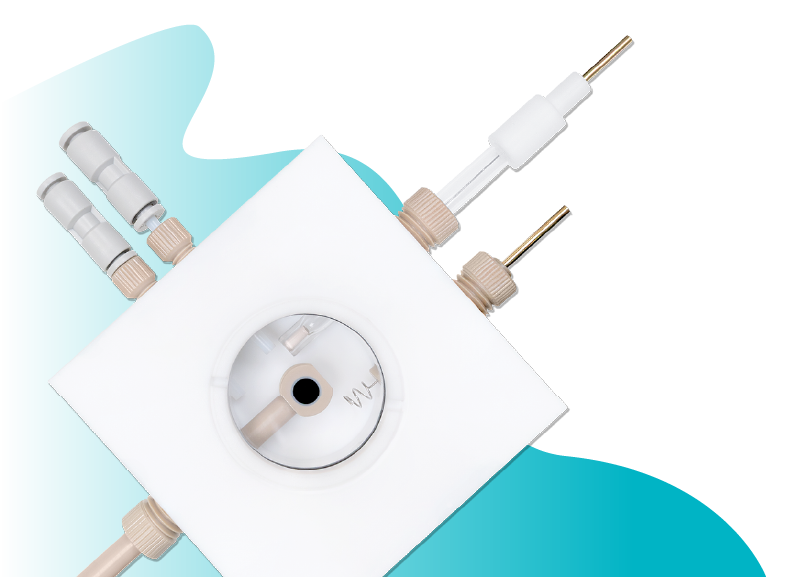
A compact cell designed to enable real-time investigation of chemical and structural transformations occurring at electrode-electrolyte interfaces during electrochemical operation. By combining electrochemical control with Raman spectroscopy, the system allows you to directly observe surface reactions as they occur under applied potential, providing molecular-level insight into dynamic electrochemical processes. Using a top-illumination configuration, the laser beam is directed through a quartz optical window onto the working electrode surface while electrochemical measurements are performed simultaneously. This enables monitor dynamic events as they occur, including transient reaction intermediates, molecular adsorption, catalyst restructuring, phase transformations, and surface chemical evolution during operation.
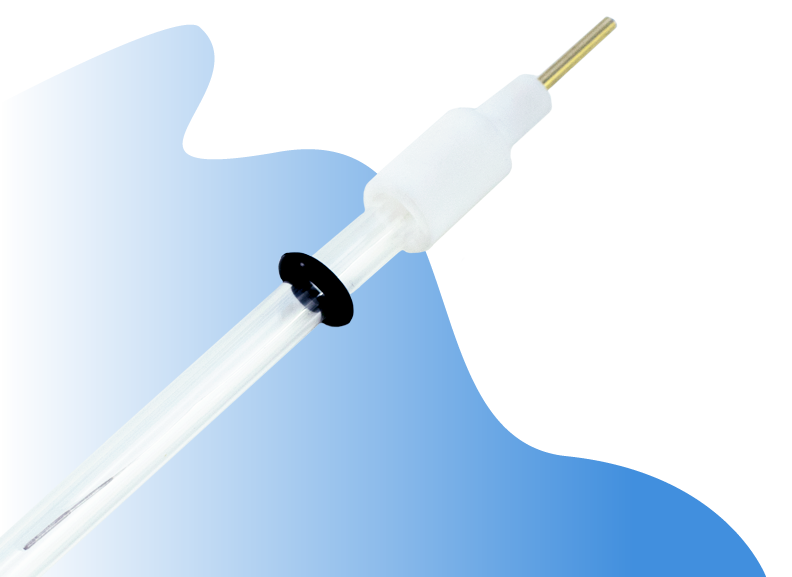
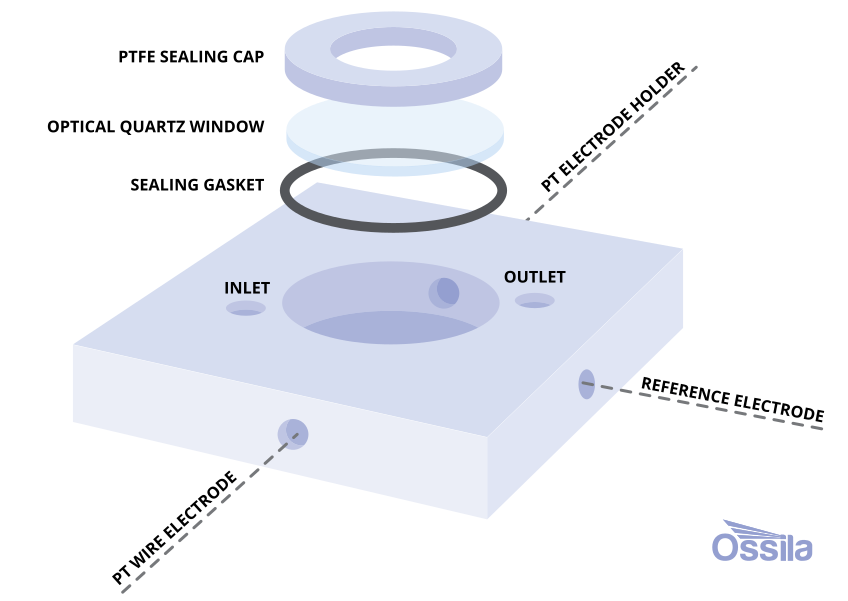
The in-situ Raman electrochemical cell comes with three electrodes: a platinum coil counter electrode, an Ag/AgCl reference electrode, and a platinum working electrode holder allowing rapid installation of a substrate or catalyst platform and close positioning to the optical window for efficient signal collection. The cell accommodates a wide range of working electrode formats including conductive carbon paper, catalyst-coated glassy carbon, metal foils, conductive glass, metal meshes, and porous electrodes. This flexibility supports both conventional electrochemical Raman measurements and enhanced methodologies including SERS and SHINERS-based studies. Detachable L-shaped glassy carbon electrodes can be used with the cell to reduce the distance between the working electrode and the window.
Specifications
| Body Material | PTFE |
|---|---|
| Electrode Holder Material | PEEK platinum sheet |
| Counter Electrode | φ 0.5 x 37 mm, platinum |
| Reference Electrode | φ6mm, Ag/AgCl |
| Window Material | JGS2 Quartz (contact us for other options) |
| Window Dimensions | φ 40 x 1 mm |
| Optical Transmission Range | 220 – 2500 nm |
| Electrode-Window Spacing | 0 – 3.5 mm (adjustable with provided gaskets) |
The working electrodes could be conductive carbon paper/cloth, metal sheet, metal mesh, nickel foam, catalyst-coated substrates (ex. glassy carbon), gold/silver/copper SERS electrodes, or SHINERS-supported catalyst systems
JGS2 quartz light window, φ 40 x 1 mm. The spectral application range of JGS2 optical quartz glass is 220 – 2500nm. The distance between the surface of the material and the optical quartz is adjustable 0 – 3.5 mm using the provided gaskets with thickness 0.2, 0.5, and 1 mm. The cell is compatible with other types of optical window materials as sapphire, ZnSe, and CaF2.
User Manual
 In-situ Raman Electrochemical Cell User Manual
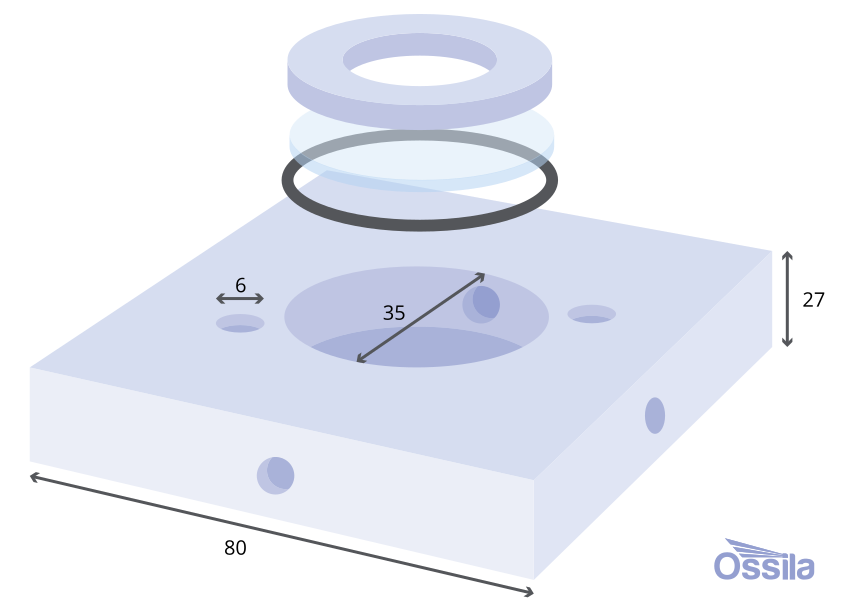
C2035R1 10 ml Assembly Dimensions and Assembly:
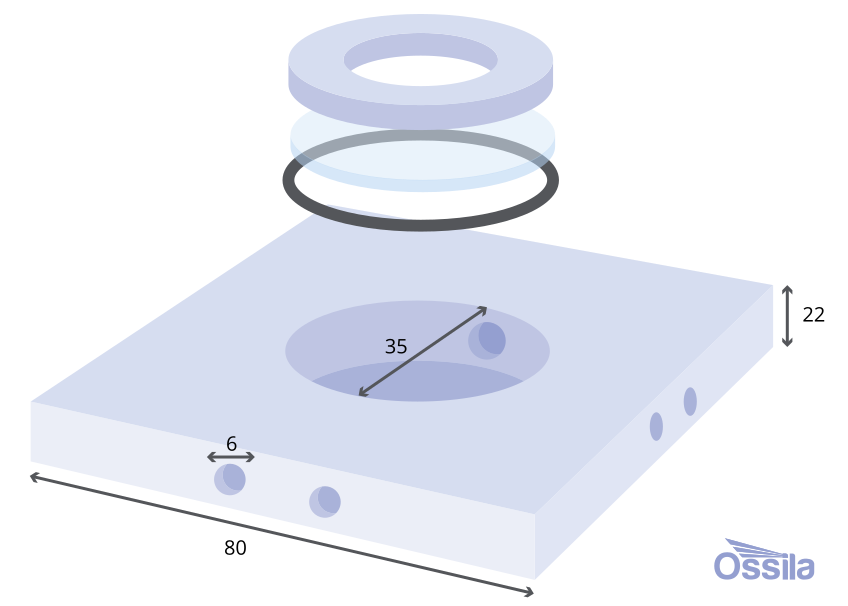
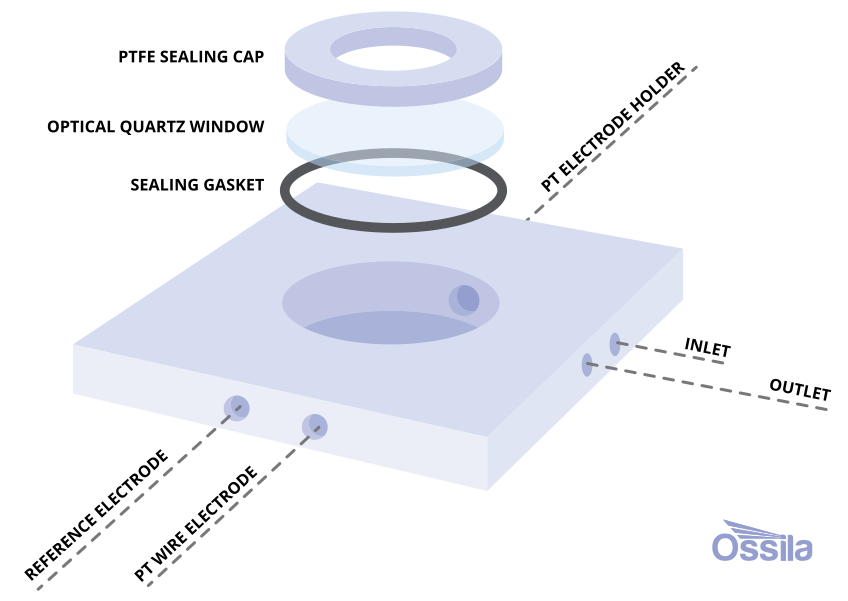
C2035T1 30 ml Assembly Dimensions and Assembly:
In the Box

- In-situ Raman Electrochemical Cell
- Platinum Plate Working Electrode Holder
- Platinum Coil Counter/ Auxiliary Electrode, φ0.5*37mm
- Ag/ AgCl Reference Electrode, φ6mm
- Suction Holder (Quartz Window Handling)
- Aditional Screws and Screw Drivers (for WE fastening)
- PTFE tube, φ3mm
- PU Push-Fit connectors, φ3mm x 2
- JS2 Quartz optical window, φ40*1mm x 3
- Gasket Sealing for Optical Window (0.2, 0.5, 1.0 mm) x 5
- PEEK Gas Inlet/ Outlet Secure Screws x 5
- PEEK Electrode Secure Screws x 6
- PEEK Gas Inlet/ Outlet Closed Ports x 2
- PTFE Gas Inlet/ Outlet Stopper Rods x 4
- PTFE Gas Electrode Stopper Rods x 3
- Fluoroelastomer O-rings for Electrodes and Gas Ports
- Optical Window Fastening Tool x 1
- PTFE Tape and Tube Cutter x 1
Please note: L-shaped detachable electrode is not included
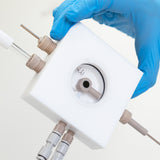 In-situ Raman Electrochemical Cell Assembly
Learn how to assemble the in-situ rama electrochemical cell with an easy-to-follow video and step-by-step instructions.
Read more...Product Gallery


Applications of Raman Electrochemical Cells
Raman electrochemical cells find versatile applications across electrocatalysis, energy storage, and interfacial electrochemistry research. They are widely used to investigate reaction mechanisms for hydrogen evolution and oxidation (HER/HOR), oxygen evolution and reduction (OER/ORR), carbon dioxide and nitrogen reduction (CO2RR/NRR), and fuel cell processes through real-time observation of catalyst evolution and reaction intermediates. In battery research, they enable studies of Li-ion and Na-ion intercalation/deintercalation, electrode phase transitions, and solid electrolyte interphase (SEI) formation. Additional applications include metal-air battery systems such as Zn-air chemistries, photoelectrochemical devices, corrosion and surface science studies, and investigations of molecular adsorption and surface interactions in sensing and functional materials.
Literature and Reviews
- J. wen et al. (2024), In Situ Raman Study of Layered Double Hydroxide Catalysts for Water Oxidation to Hydrogen Evolution: Recent Progress and Future Perspectives, Energies, 17(22), 5712; DOI: 10.3390/en17225712.
- Q. Fu et al. (2020), Phase-Junction Electrocatalysts towards Enhanced Hydrogen Evolution Reaction in Alkaline Media, Angew. Chem. Int. Ed., 60 (1), 259-267; DOI: 10.1002/anie.202011318.
- Y. Wang et al. (2023), In situ electrochemical Raman spectroscopy and ab initio molecular dynamics study of interfacial water on a single-crystal surface, Nat. Protoc., 18, 883–901; DOI: 10.1038/s41596-022-00782-8.
Related Products