Platinum Plate
Platinum Plate as Counter Electrode
Providing high conductivity, chemical inertness and facilitating auxiliary reactions
Specifications | Gallery | Literature | Related Products | Technical Support
Platinum plate, with exceptional chemical inertness, high electrical conductivity, and low charge-transfer resistance to balance current flow without contaminating the system, is mainly used as a counter electrode in a three-electrode system, i.e. GDE working electrode, Ag/AgCl reference electrode, and platinum counter electrode.
Platinum enjoys high conductivity and it resists oxidation and corrosion to make sure that measured currents and voltages come from the working electrode, rather than the breakdown of the counter electrode. Also, as an elite metal catalyst, platinum facilitates auxiliary reactions like hydrogen or oxygen evolution to match the current from the working electrode. It is worth pointing out that there could be Pt dissociation at high voltages especially in the case of oxygen reduction reaction (ORR), hydrogen evolution reaction (HER), or the CO2 reduction reaction (CO2RR).
Other shapes and sizes may also available, please contact us for further information.

High Quality
High Quality Materials

Highly Inert
Suitable for a wide range of EC experiments

High Conductivity
For fast electron transfer

Expert Support
From in-house scientists & our
customer care team
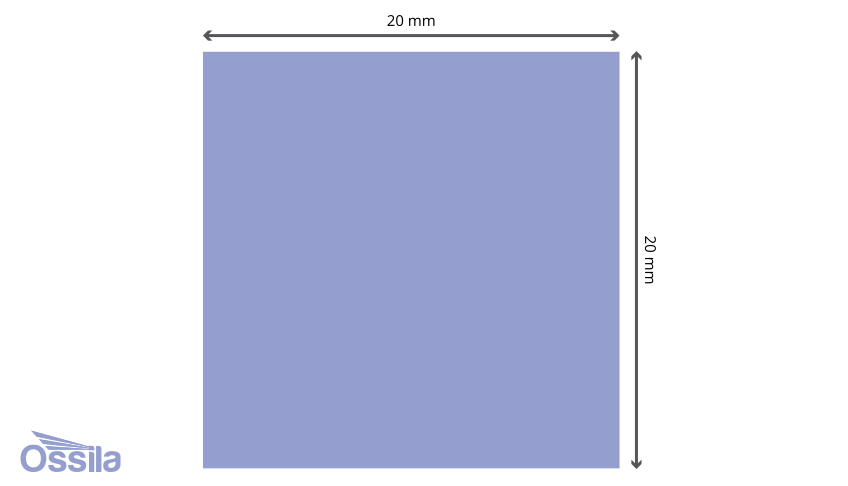
Specifications
Platinum Plate Gallery


Literature and Reviews
- G. Santos et al. (2026), Unveiling the influence of organic environments on H2O2 electrogeneration with gas diffusion electrodes in flow cells, Electrochim. Acta, 551, 148112; DOI: 10.1016/j.electacta.2026.148112.
- B. Zhou et al. (2025), Upcycling waste protein and heavy metal into single-atom catalytic gas diffusion electrode for CO2 reduction, Front. Environ. Sci. Eng., 19, 54; DOI: 10.1007/s11783-025-1974-y.
- T. Pham et al. (2026), Loosely packed catalyst layers promote gas transport and flooding resistance in gas diffusion electrodes for electrochemical CO2 reduction, J. Mater. Chem. A, 14 (29): 18891–18901; DOI: 10.1039/d6ta00347h.