Platinum Mesh as Counter Electrode
Providing high conductivity, chemical inertness and facilitating auxiliary reactions
Specifications | Gallery | Literature | Related Products | Technical Support
With relatively large surface area, platinum mesh has been a good choice of counter electrode (CE) material given its ability to promote oxidation and reduction reactions. As a ubiquitous CE choice, platinum mesh finds applications in fuel cells, membrane electrode assembly (MEA) electrolyzers, gas diffusion electrode (GDE) flow cells, and many other electrochemical technologies.
Being chemically inert, platinum mesh electrode has also been extensively employed in dye-sensitized solar cells (DSSCs), bulk electrolysis and electrosynthesis, facilitating high-current synthetic or analytical redox transformations without contaminating the electrolyte. Platinum mesh electrode acts as a stable current sink during potentiodynamic polarization (PDP) and electrochemical impedance spectroscopy (EIS) studies. Due to its high catalytic activity and stability, it has also been used in hydrogen and oxygen evolution or reduction reactions.
Other shapes and sizes may also available, please contact us for further information.

High Quality
High Quality Materials

Highly Inert
Suitable for a wide range of EC experiments

High Conductivity
For fast electron transfer

Expert Support
From in-house scientists & our
customer care team
Specifications
| Plate Thickness | 0.3 mm |
|---|---|
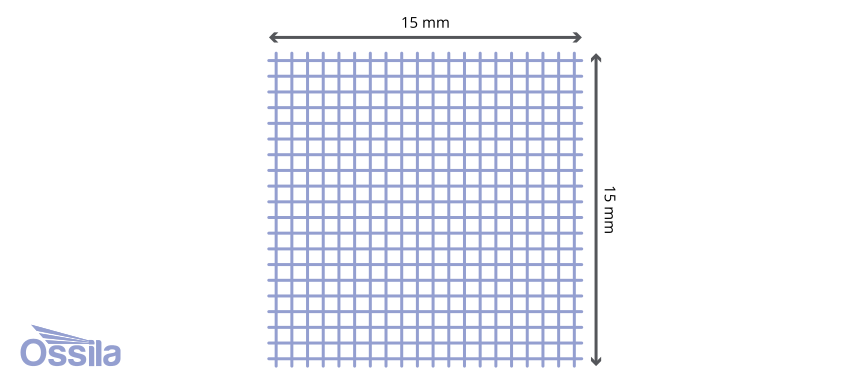
| Plate Dimensions | 15 x 15 mm |
| Mesh Material | Platinum |
Platinum Mesh Gallery


Literature and Reviews
- C. Williams et al. (2025), Implementing hydrogen oxidation reaction on Pt for controlling counter electrode processes, Electrochem. Commun., 175, 107917; DOI: 10.1016/j.elecom.2025.107917.
- S. Nösberger et al. (2026), Predicting MEA catalyst layer performance at 120 °C using a pressurized GDE testing platform and machine learning, J. Power Sources, 673, 239720; DOI: 10.1016/j.jpowsour.2026.239720.
- M. Hesse et al. (2026), Electrodeposited Ni–S cathodes on stainless steel nonwovens for PGM-free anion exchange membrane water electrolysis at high current density, J. Power Sources, 690, 240732; DOI: 10.1016/j.jpowsour.2026.240732.