


What is Green Hydrogen Production?
Green Hydrogen Applications | How is Green Hydrogen Produced? | GHP Technologies
Green Hydrogen Efficiency, LCOH & Carbon Intensity | Beyond Pure Water Electrolysis | Issues with Green Hydrogen Production

Green hydrogen production refers to the production of hydrogen through water electrolysis using entirely renewable (or "green") power sources. This hydrogen is produced without also creating harmful by-products like carbon dioxide.
This is opposed to current hydrogen generation methods. Most hydrogen is produced using natural gas (grey hydrogen) through a process called steam methane reforming which also produces CO2 as a by-product. Some processes include a carbon capture step to reduce the CO2 emissions (blue hydrogen). However, green hydrogen production eliminates CO2 emissions almost entirely.
There are four main types of electrolyzer used to produce green hydrogen:
- Alkaline Water Electrolyzers (AWE)
- Proton Exchange Membranes (PEM) Electrolyzers
- Anion Exchange Membranes (AEM) Electrolyzers
- Solid Oxide Electrolyzer Cells (SOEC) Electrolyzers
Green Hydrogen Applications
As all industries strive drastically to cut CO2 emissions and find alternative fuel sources, green hydrogen could provide some interesting solutions to specific energy problems. In fact, the International Renewable Energy Agency (IRENA) predict that by 2050, 12% of final energy demand could be met with hydrogen and hydrogen-based fuels.
The clean production of hydrogen could reduce CO2 emissions associated with some big emitting industries that also struggle connecting to a grid for charging or supply, such as transportation and long-distance shipping.
As well as its use as a fuel source, hydrogen can be combined with CO2 in thermochemical processes to create other valuable products, such as methanol or synthetic fuels. It can also be used to create ammonia which is extremely valuable both as a potential fuel source and in fertilizer production.

Green hydrogen could also help solve an issue with renewable electricity. As the cost of renewable energy is decreasing, more technology is needed to maximize and manage energy storage and distribution. The problem with some renewable sources is inconsistent supply (e.g. seasonal variation). Hydrogen production can help, as excess renewable energy can produce and be stored as hydrogen. This hydrogen can then be used in fuel cells to provide electricity when supply is lower. The benefit of using hydrogen for this process is that it can provide long term storage of this energy, covering seasonal variations in renewable energy production.
How is Green Hydrogen Produced?
Green hydrogen production relies on water electrolysis. An electrolysis set-up needs four basic components:
- An anode
- A cathode
- An electrolyte (a medium that conducts ions between the electrodes which can be a liquid, a polymer membrane or a ceramic)
- A power source.

To produce hydrogen, this set-up also requires two gas outlets (H2 and O2) and at least one liquid (H2O) inlet. Ideally, the H2 and O2 sides need to be separated using several membranes or barriers. By coating each side of these membranes in a different catalysts, a different half-reaction can be driven at each side, streamlining the electrolysis process.
Green hydrogen production techniques include alkaline water electrolysis (AWE), proton exchange membrane (PEM) electrolysis and anion exchange membrane (AEM) electrolysis. The materials used for the anode, cathode, membrane and electrolyte differ depending on which method you’re using.
Pure water is a very poor conductor, as it contains only about 10-7 M of both H+ and OH- at neutral pH. The electrolyte provides the ions that carry the current, for example OH- ions come from potassium hydroxide in AWE, H+ supplied from the acidic groups of the polymer membrane in PEM, and OH- from the anion exchange membrane in AEM.
When a voltage is applied, the ions move through the electrolyte towards the electrodes. Different reactions happen at the anode and cathode (the exact reactions depend on the type of electrolysis you are doing). In electrolysis, reduction always happens at the cathode and oxidation occurs at the anode.
The overall reaction of electrolysis can be written as:

This involves 2 half-reactions which both require energy input: a hydrogen evolution reaction and an oxygen evolution reaction. In theory, splitting water needs a minimum of 1.23 V, but real cells need roughly 1.8-2.2 V because of overpotentials and resistive losses.
Hydrogen evolution reactions take place at the cathode, and follow the following reactions (dependent on the conditions):


Whereas, oxygen evolution reactions take place at the anode, according to these reactions (dependent again on the conditions):


Green Hydrogen Production Technologies
To produce hydrogen through electrolysis requires a suitable electrolyzer, a renewable energy source and a pure water supply. Some renewable energy sources provide a more consistent output (e.g. geothermal), but the output from solar or wind power fluctuates. This may impact the efficiency and lifetime of the electrolyzer.
Therefore, for green hydrogen to be feasible, the technology needs to be:
- Cost-effective to run and inexpensive to produce (ideally not using rare materials or precious metal).
- Be designed for intermittent use (without damaging the cell).
- Run at a reasonably high efficiency.
- Last for 10 -20 years under operational conditions.
There are several technologies currently under investigation to achieve this, with each one largely developing due to a limitation of the one before:
- Alkaline Water Electrolyzers (AWE)
- Proton Exchange Membranes (PEM) Electrolyzers
- Anion Exchange Membranes (AEM) Electrolyzers
- Solid Oxide Electrolyzer Cells (SOEC) Electrolyzers
These technologies were not developed in parallel, and each one largely came out of a limitation of the one before it. Alkaline electrolyzers are the mature baseline, but their liquid electrolyte and porous separator limit the current density and how quickly the cell can follow a changing power supply. PEM electrolyzers solved this with a solid polymer membrane, at the price of an acidic environment that needs iridium and platinum. AEM electrolyzers try to keep the solid membrane while going back to an alkaline environment, so that cheaper non-precious catalysts can be used again. SOEC takes a different route, using high temperatures to reduce the electrical energy needed. As all of these need clean water, research is also looking beyond pure water splitting.

How To Quantify Green Hydrogen?
A key metric to evaluate and compare green hydrogen technology is its conversion efficiency.
Efficiency is usually quoted as the energy content of the hydrogen produced compared with the electrical energy put in. Splitting water needs a minimum voltage of 1.23 V. However, the thermoneutral voltage (which also covers the heat required for the reaction to take place) is 1.48 V. This value is based on a higher heating value (HHV) of 39.4 kWh needed to produce 1 kg of hydrogen.
A cell running at 2.0 V is therefore about 74% efficient (=1.48 ÷ 2.0). Efficiency has an inverse relationship with energy use, so a cell running at 2.0 V will actually require 1.35x as much energy to produce 1 kg of hydrogen compared to it's theoretical value. Therefore, an electrolyzer stack at 1.8-2.2 V uses roughly 48-59 kWh per kg of hydrogen, compared with a theoretical 39.4 kWh/kg.
System efficiency is lower once power electronics, compression and water treatment are included. When comparing numbers, it is worth checking whether they are based on the HHV or the lower heating value (LHV), as LHV-based efficiencies read about 18% higher for the same cell.
In hydrogen production, one of the metrics that matters most is CO2 equivalent per kg of hydrogen produced (kgCO2e/kgH2). There are several targets for this value in order to make green hydrogen production financially viable. The U.S Department of Energy has set a target of <4 kgCO2e/kgH2. These targets will achieve a much lower kgCO2e/kgH2 than those currently achieved for gray hydrogen (10 kgCO2e/kgH2) or blue hydrogen (4 kgCO2e/kgH2).
Levelized cost of hydrogen is another significant metric used to assess hydrogen production viability. This represents the cost per unit of hydrogen produced, and includes contributions from production methods, energy conversion efficiency and infrastructure requirements. This is important for technological viability as it represents the technology as a whole. For example, one study shows the cost of producing electricity itself is 64% of the overall LCOH for geothermal powered 10MW AWE PEM systems. This demonstrates the important of the levelized cost of electricity for a particular technology.
For solar and wind powered cells, the success of the electrolyzer depends on the availability of the power source i.e. how much sun or wind is available. For example, one study found AWE electrolyzer systems had vastly different LCOH depending on their location in Iraq. In Anbar, which has high and stable solar irradiance, AWE cells had a LCOH of $1.93/kg, whereas in Erbil, with relatively weak sunlight, the LCOH became $5.04.
Beyond Pure Water Electrolysis
The technologies above all split pure water, and the oxygen evolution reaction at the anode is the hardest part of the process. It needs the most energy, and its product, oxygen, has little commercial value. Pure water is also not available everywhere, and treating it adds to the cost. Research is therefore moving in two directions: changing the water that is fed to the cell and changing the reaction that takes place at the anode.
Seawater Electrolysis
Seawater is abundant and does not compete with drinking water, but it is far from a clean feed. The chloride ions can be oxidized to chlorine at the anode instead of water being oxidized to oxygen, and calcium and magnesium salts can precipitate on the electrodes and membrane. Current approaches either desalinate the seawater before it enters the cell, or develop chloride-tolerant catalysts and membranes that can split seawater directly.
Urea Oxidation (UOR)
In urea oxidation, the oxygen evolution reaction is replaced by the oxidation of urea at the anode. This needs a much lower voltage (the thermodynamic potential is about 0.37 V, compared with 1.23 V for water oxidation), so hydrogen can be produced with less electricity while urea-rich wastewater is treated at the same time. Nickel-based catalysts are the most widely studied.
Glucose Oxidation (EOG)
Electro-oxidation of glucose follows the same idea, with glucose, a biomass-derived feedstock, oxidized at the anode instead of water. This also lowers the cell voltage needed, and the anode produces useful chemicals such as gluconic acid instead of oxygen.
Issues To Overcome
- Cost: Electricity is the largest part of the cost of green hydrogen (see the LCOH discussion above), followed by the electrolyzer itself. The US DOE has set a goal of reducing the cost of clean hydrogen to $1 per kg by 2031 , compared with about $5 per kg that can be achieved at the moment.
- Durability and materials: PEM electrolyzers depend on iridium and platinum, and the supply of iridium is limited. Cheaper options such as AEM electrolyzers still need longer membrane and catalyst lifetimes, and all of the technologies need to cope with a fluctuating power supply.
- Water quality: PEM electrolyzers need high purity water, which adds treatment cost and limits where they can be used. This is one of the reasons research is moving towards seawater and wastewater feeds.
- Storage and transport: Hydrogen has a very low energy density by volume, so it has to be compressed or liquefied before it is stored or transported. Liquefaction in particular is energy intensive, and transporting liquid hydrogen is expensive. Converting hydrogen to carriers such as ammonia is another option.
Learn More
 Electrochemical CO2 Reduction: Cells and Membranes
Electrochemical CO2 reduction has moved decisively beyond proof-of-concept. As by mid-2026, a growing number of companies and national laboratories are operating continuous pilot-scale CO2RR systems, and the field has developed a reasonably clear picture of what needs to be solved at each level: catalyst, cell, stack, and system, before commercial deployment becomes viable.
Read more...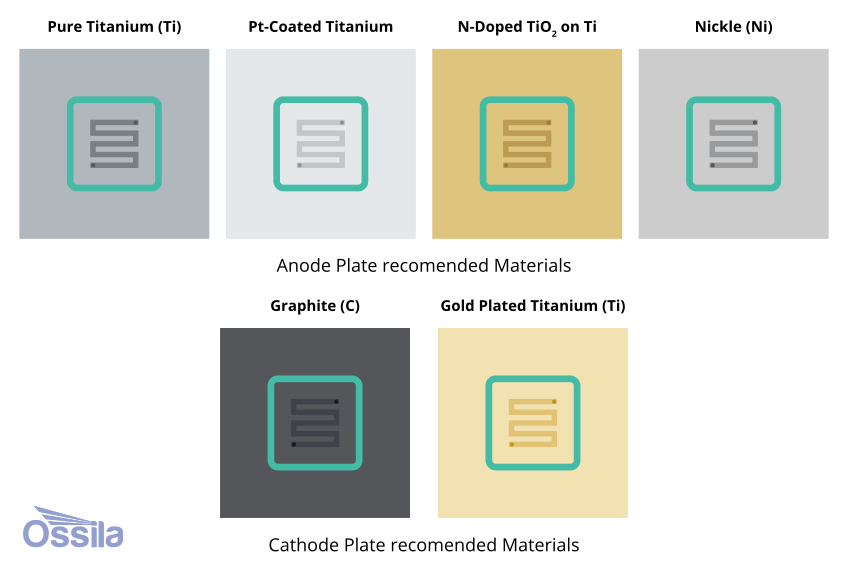 Troubleshooting CO2RR
Practical hardware decisions determine whether a CO2RR electrolyzer operates reliably at elevated current density. These include flow field plate material selection, flow field geometry, and the operational failure modes such as salt precipitation, GDE flooding, membrane degradation, and catalyst contamination that account for most lab-to-scale-up failures.
Read more...Contributing Authors
Written by
Application Scientist
Product Development Electrochemist
Diagrams by
Graphic Designer
References
- Geopolitics of the Energy Transformation: The Hydrogen Factor, IRENA 2022 (2022)
- Introduction to Green Hydrogen, S.W. Boettcher, Che. Rev. (2022)
- U.S. Department of Energy Clean Hydrogen Production Standard..., U.S. Department of Energy (2022)
- Advancements in hydrogen energy systems: A review of..., J. Nyangon and Ayesha Darekar, Innovation and Green Development (2024)
- Techno-economic assessments of electrolyzers for hydrogen production, E.N. Aminaho, N.S. Aminaho and F. Aminaho, Applied Energy (2025)