Visual Membrane Electrode Assembly Electrolyzer
Transparent Reactor for Additional Electrochemical Observations
Advanced electrochemical cell for electrocatalysis of CO2RR, HERs, and fuel cells
Specifications | Gallery | Literature | Related Products | Technical Support
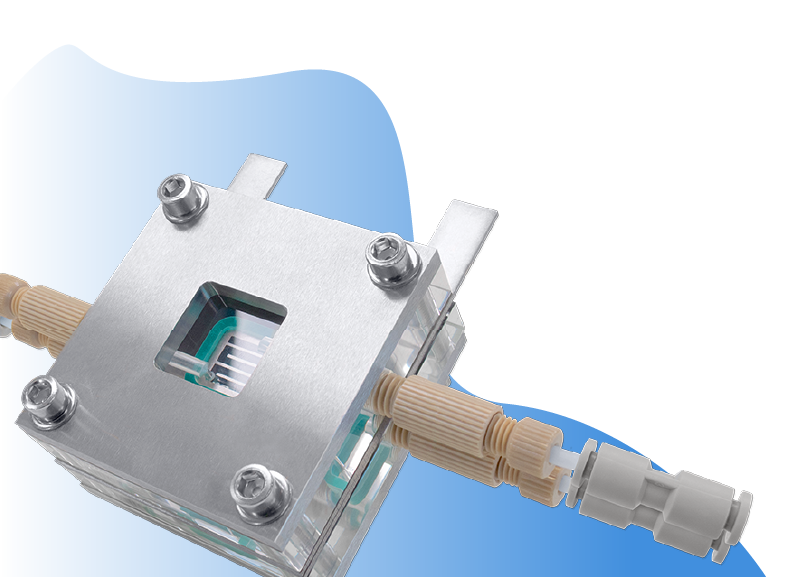
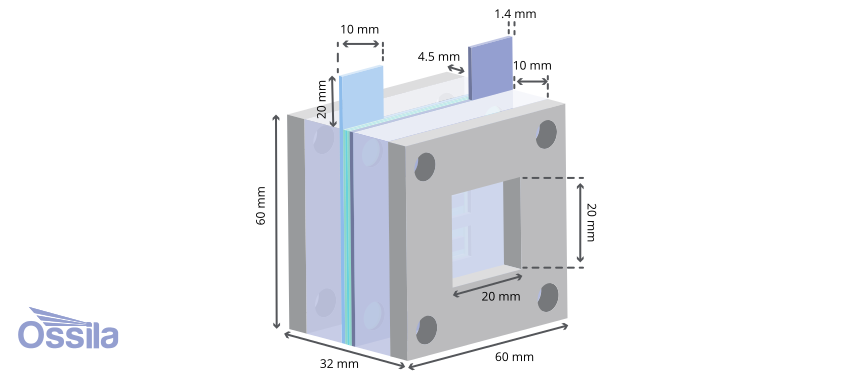
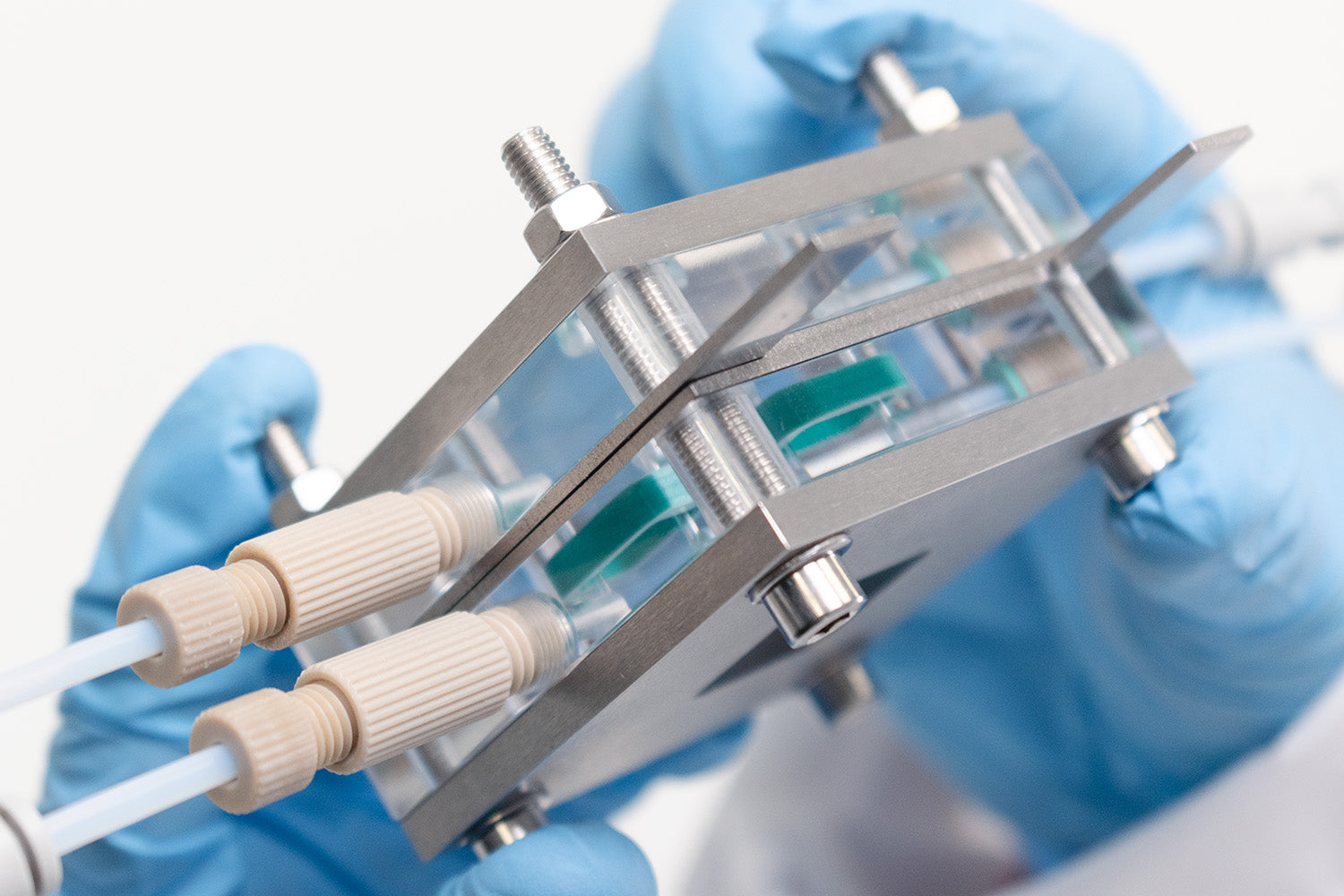
An observable MEA electrolytic cell in which a central ion-conducting membrane is sandwiched between a catalyst-loaded anode and cathode, sided by gas diffusion layers. The transparent sections are made of acrylic, and the outermost layers on the left and right are hollow metal pressure plates to secure the device and accommodate the observation windows. With a 'zero-gap' design, direct contact of the catalyst and membrane enhances the catalytic reaction performance by improving mass transfer and enabling high current densities.
The membrane electrode assembly is the core unit where catalytic electrochemical reactions happen. The ion-conducting membrane could be a proton exchange membrane (PEM) or anion exchange membrane (AEM) to allow exchange of proton or ions for efficient hydrogen production by AEM or PEM water electrolysis. The membrane allows ions to migrate while prevents the gas permeation and products to mix, which is critical for efficiency and safety in applications like fuel cells and water electrolysis. The membrane also separates the anode and cathode, providing electrical insulation between the two sides of the cell.
This electrochemical cell is an effective system for carbon dioxide reduction reaction, a process that uses electrical energy to convert carbon dioxide into other valuable chemical products. In additions, this MEA electrolytic cell can also be employed for seawater electrolysis, electrosynthesis of cyclohexanone coupled with hydrogen production, electrosynthesis of chlorine, lithium-mediated nitrogen reduction reaction, i.e. ammonia synthesis, electrochemical urea oxidation, and electrocatalytic waste polyethylene terephthalate recycling.

Flexible Cell Applications
Effective for CO2RR, HER,
and fuel cell research

Observation Window
Support additional analysis
where needed

Zero-gap Configuration
Reduce ohmic resistance,
eliminating catholyte layer

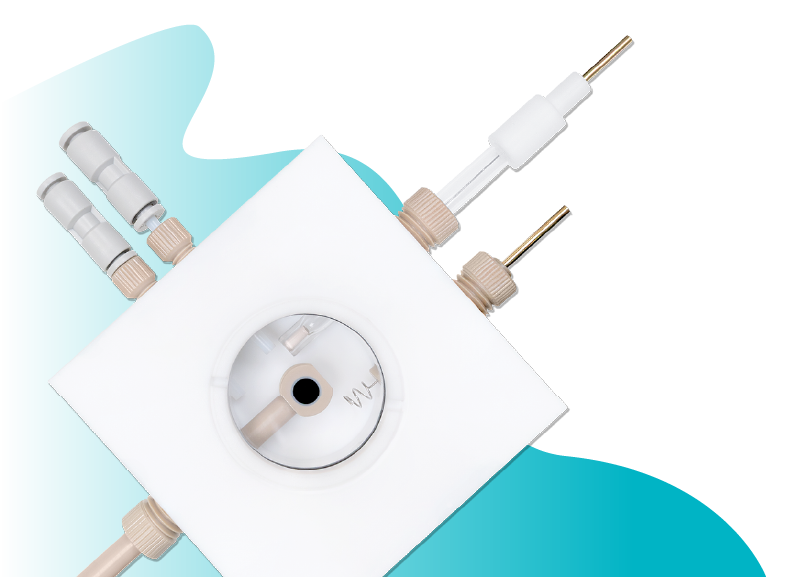
Serpentine Flow Field
Uniform gas distribution & efficient product removal

Specifications
| Product code | Channel Material | Channel Size | Channel Width | Channel Depth |
|---|---|---|---|---|
| C2038A1 | Titanium | 10 mm x 10 mm | 1.5 mm | 1.5 mm |
| C2038C1 | Titanium | 20 mm x 20 mm | 1.5 mm | 1.5 mm |
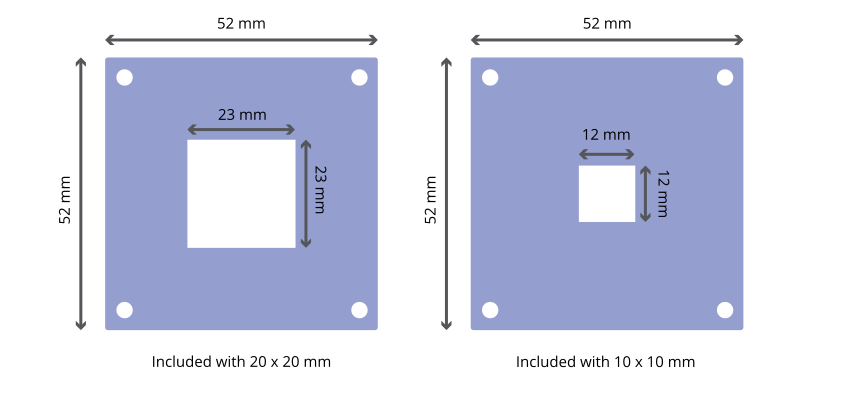
| FKM Gasket Thickness | 0.2 mm, 0.3 mm, 0.8 mm, 1.0 mm |
|---|---|
| PTFE Gasket Thickness | 0.25 mm |
Product Gallery



Literature
- Q. Ye et al. (2023), Advances and challenges in membrane electrode assembly electrolyzers for CO2 reduction, J. Mater. Chem. A, 11, 21498-21515; DOI: 10.1039/d3ta03757f.
- N. Zhu et al. (2023), Integration of MnO2 Nanosheets with Pd Nanoparticles for Efficient CO2 Electroreduction to Methanol in Membrane Electrode Assembly Electrolyzers, J. Am. Chem. Soc., 145 (45), 24852–24861; DOI: 10.1021/jacs.3c09307.
- Y. Sun et al. (2024), Anchoring Cs+ Ions on Carbon Vacancies for Selective CO2 Electroreduction to CO at High Current Densities in Membrane Electrode Assembly Electrolyzers, Angew. Chem. Int. Ed., 136 (40), e202410802; DOI: 10.1002/ange.202410802.