Photoelectrochemical H-Cell With Water Bath

Jacketed H-type Cell for Photoelectrochemical Studies
Easy temperature control, including in long-term stability testing
Overview | Specifications | In the Box | Gallery | Related Products | Technical Support
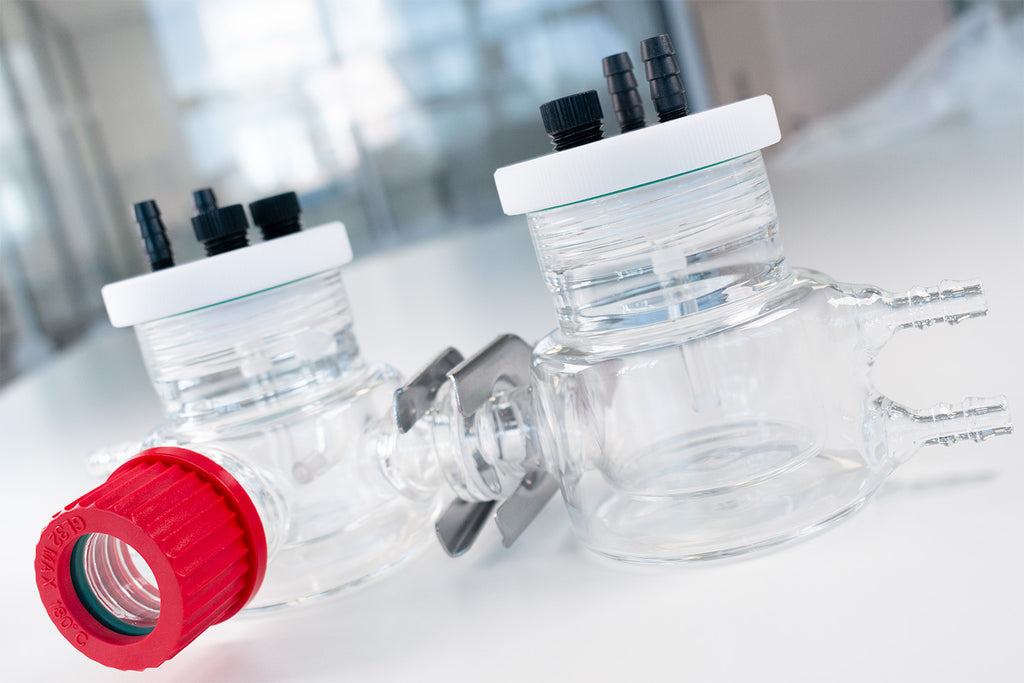
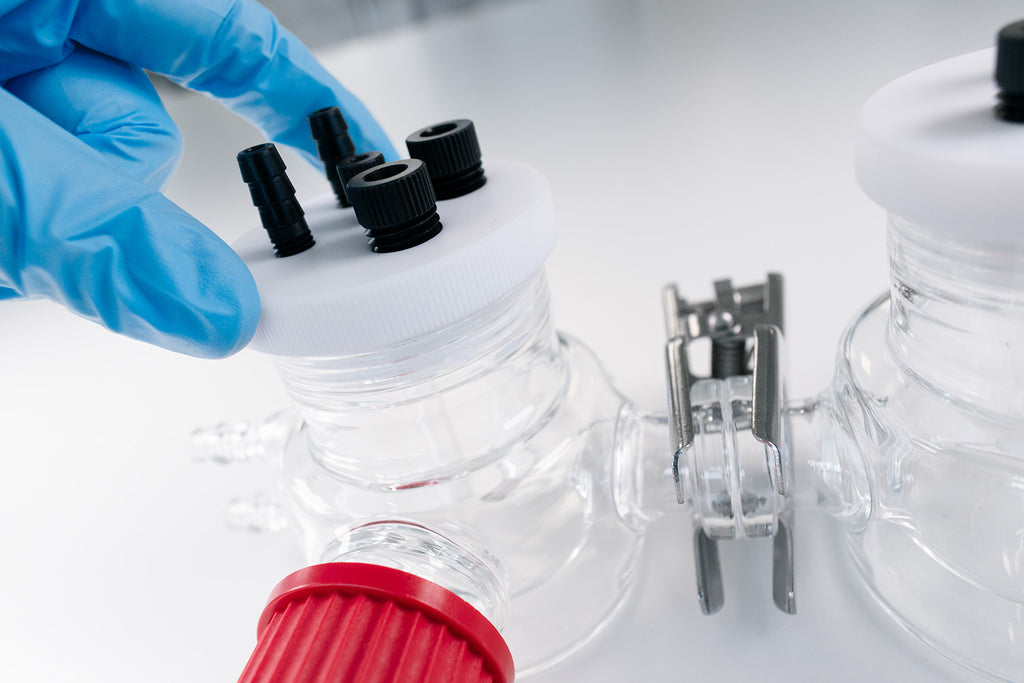
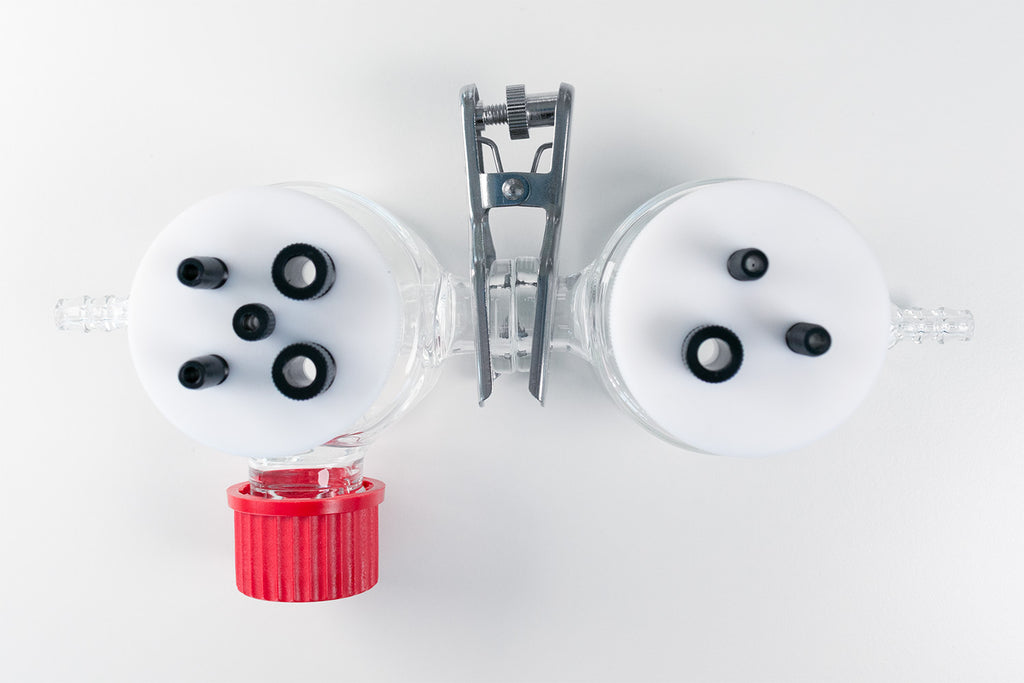
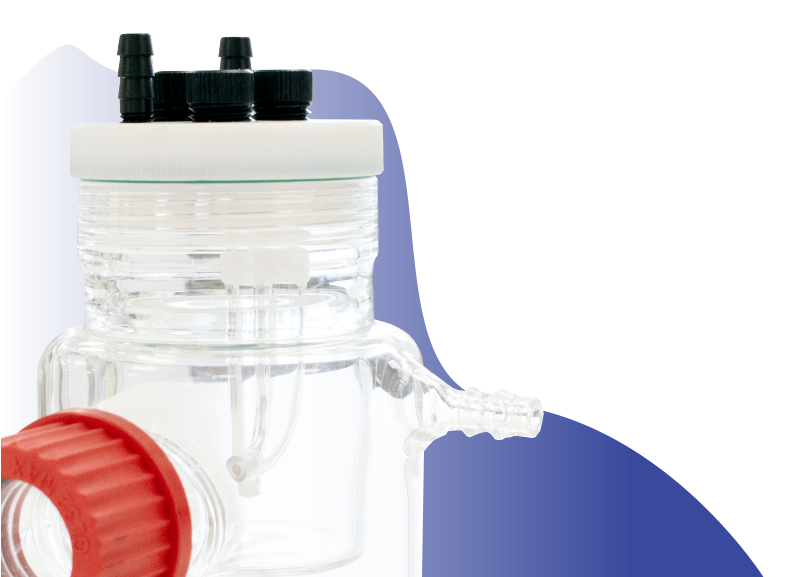
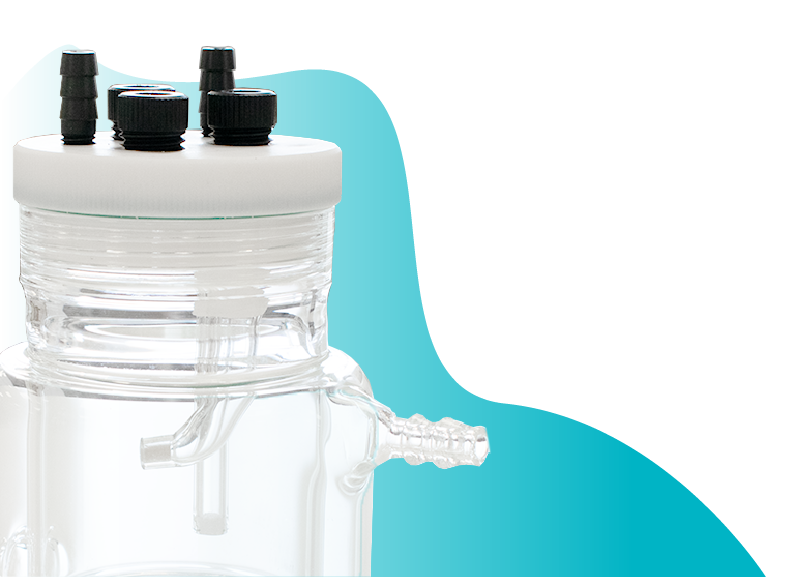
The cell features two independent, gas-tight high quality borosilicate glass chambers that are bridged and separated by an ion-exchange membrane to prevent the mixing of anodic and cathodic products from different chambers. Optical access with a quartz window enables uniform illumination of the photoelectrode, while the integrated water jacket enables connection to an external circulating water bath for reliable temperature control.
This cell configuration is useful during long-term stability testing where the long exposure to the light source may heat the apparatus altering the kinetics of the electrochemical reaction. Additionally, it is ideal when experiments must be conducted at elevated temperatures to increase the kinetics of the electrochemical reaction or to achieve a reasonable ion transport across the membrane.
Please note: The quoted volume (100 ml) is the total volume across the H-cell set up needs to fill up to the bridge, therefore each half-cell has a volume of about 50-60 ml.

Separate Electrodes
Avoid cross-contamination with ion-membrane diffusion

Temperature Control
Isolated water bath for sensitive experiments

Transparent Window
Enabling in-situ observation of photocatalytic reactions

Expert Support
From in-house scientists & our
customer care team
Specifications
| Gas Inlet/Outlet Ports | 3 mm diameter |
|---|---|
| Electrode Ports | 6.5 mm diameter |
| Sampling Window Diameter | 3 mm |
| Sampling Window Material | JGS2 quartz, 0.220-2.5 μm |
| Membrane | Inner diameter: 15.5 mm, Outer diameter: 40 mm |
| Optical Window | Inner diameter: 24 mm, Outer diameter: 40 mm |
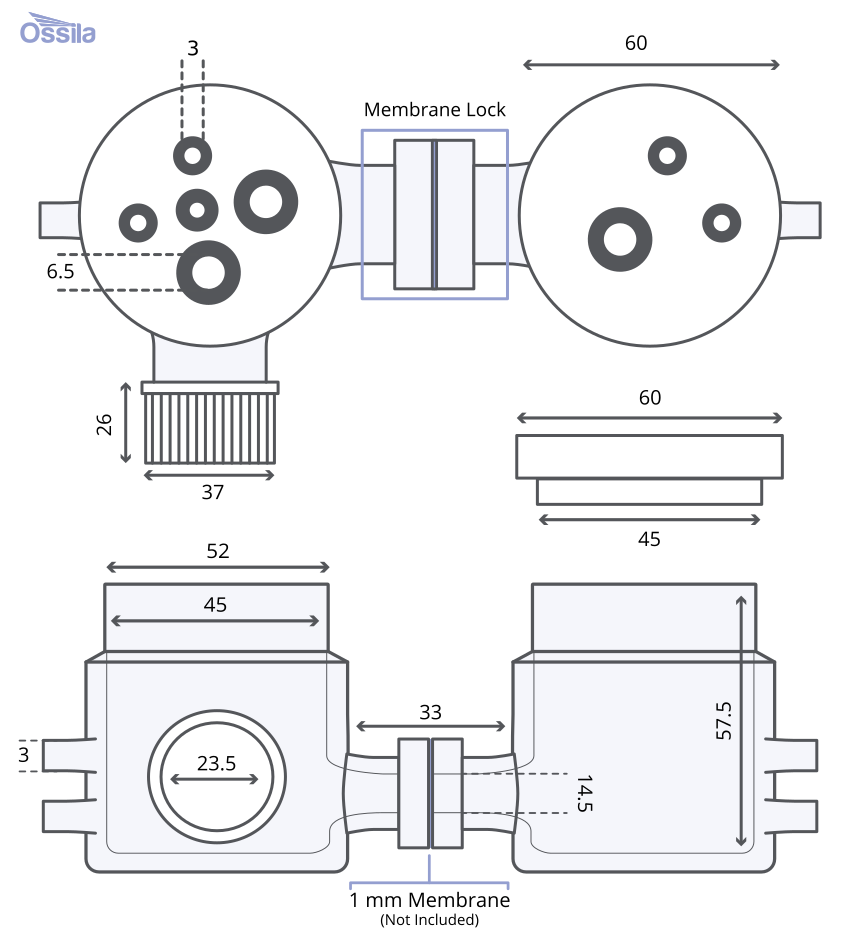
| Product Code | Half-cell Volume (Bridge*) | Half-cell Volume (Window*) | Half-cell Volume (Thread*) | Half-cell Volume (Full) |
|---|---|---|---|---|
| C2017W1 | 50 ml (left), 40 ml (right) | 70 ml (left), N/A (right) | 90 ml (left), 80 ml (right) | 105 ml (left), 90 ml (right) |
*The volume of the half-cell is measured with liquid filled above the H-cell bridge (notation: Bridge), filled above the optical window (notation: Window), filled till the thread (notation: Thread) and filled till the cell is full (notation: Full). Left refers to the half cell with an optical window; right refers to the half-cell without an optical window.
User Manual
 Photoelectrochemical H-Cell With Water Bath User Manual
In the Box
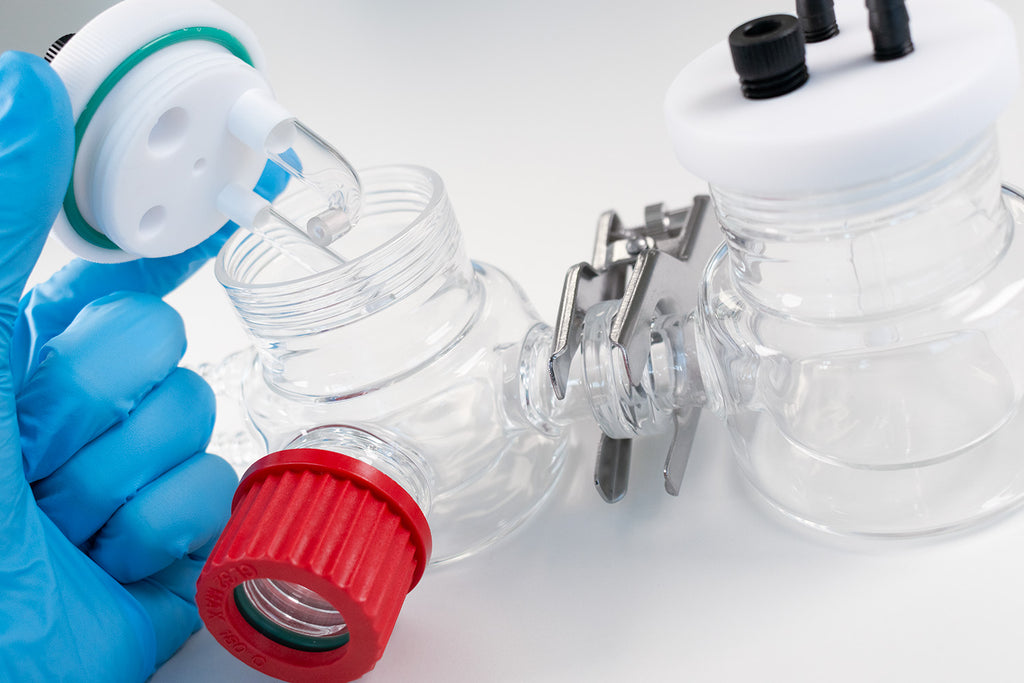
In the photoactive half cell, there are:
- Two electrode ports (6 mm) for working and reference electrode
- One sampling window
- Gas inlets/outlets tubes in both cells (3 mm)
In the other half cell, there are:
- One electrode port (6 mm) for counter electrode
- Gas inlets/outlets tubes in both cells (3 mm)
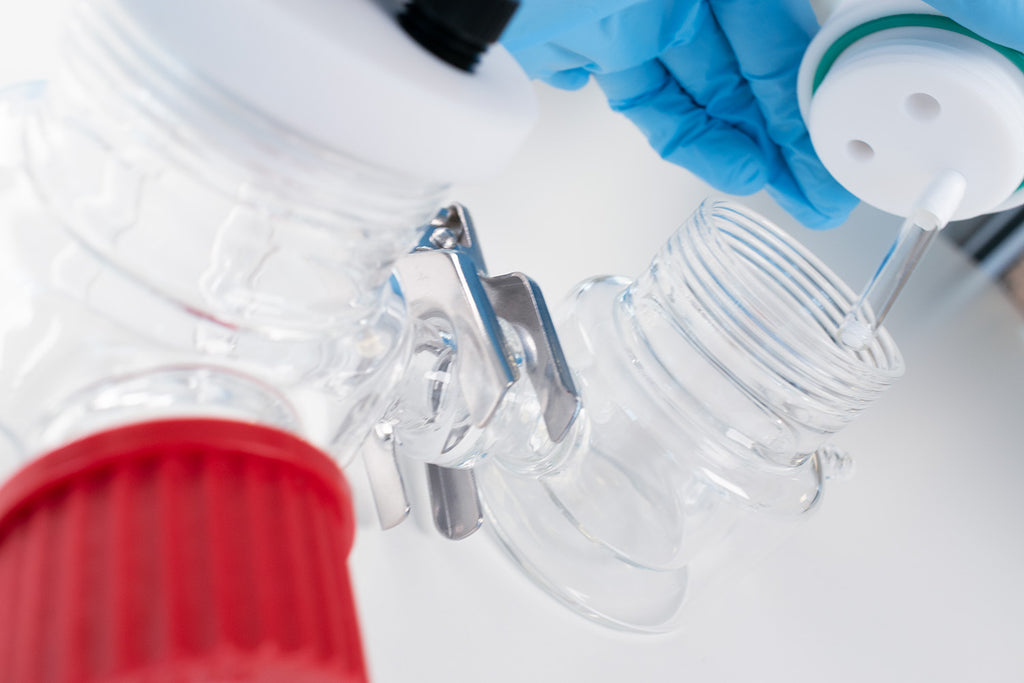
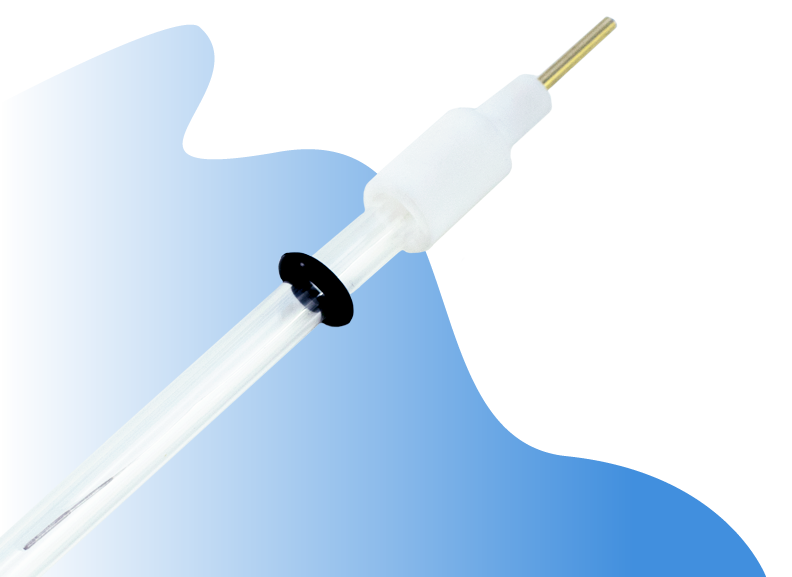
Screw fit lids, secure screws and O-ring seals for all ports to ensure an airtight operation. A luggin capillary is also provided with the cell along with a gas bubbler for both chambers, supporting accurate and stable measurements.