


Hydrogen as Fuel

Hydrogen is used as a fuel due to its ability to store, carry, and transport energy produced from other sources. Its key advantage is that during energy transfer it produces only water as a byproduct. When compared to the greenhouse gases (GHG) produced by fossil fuels, this makes hydrogen fuel highly attractive in the pursuit of tackling climate change. However, depending on the production method, greenhouse gases can still be released, which is why establishing hydrogen production methods that reduce the impact on the environment and improve energy security has been a huge driver of research across the globe.
Why Hydrogen Matters
Hydrogen fuel stands out as an ideal candidate to secure the future of sustainable energy. The key advantages of hydrogen as an energy carrier include:
- Most abundant element in the universe
- Lightest element with the highest energy content (high gravimetric energy density)
- Highly efficient and clean energy carrier
- Can be stored in a variety of states (e.g., gaseous, liquid)
Hydrogen has the potential to significantly enhance the use of renewable energy, due to its ability to allow flexible storage of renewable energy unlike electricity. Storing energy in hydrogen fuel form is particularly advantageous when long-term storage is the priority. Hydrogen is therefore considered to be crucial for mitigating global climate change.
Combating Climate Change
A key tactic in tackling climate change is to reduce the amount of GHG emissions. Current projections indicate a temperature rise of 3–6 °C by 2050. Hydrogen, with its high energy density and compatibility with current renewable energy systems, presents a promising clean energy solution to mitigate GHGs emissions. Compared to other forms of fuel, hydrogen has significantly higher gravimetric energy density. Therefore, governments must prioritize policies that highlight hydrogen’s role in achieving a sustainable energy transition. Research is focused on enhancing low-carbon hydrogen production at low cost and developing storage technologies.
Improving Energy Security
Another advantage is that hydrogen fuel production can help improve energy security. Countries can increase and diversify the use of domestic energy resources by using electrolysis rather than gas or coal for producing hydrogen-based products. Governments can support the development of new supply chains for low-emissions hydrogen and hydrogen-based products. The diversification of fuel supply means that countries are less reliant on global sources of oil and gas which can fluctuate with geopolitics.
Hydrogen Production Methods
There are many methods to produce hydrogen due to its availability in organic matter as well as water. Thermochemical reactions release hydrogen from hydrocarbons (such as fossil fuels and biomass) and water. Water can be split into hydrogen (H2) and oxygen (O2) using electrolysis or solar energy. Microorganisms such as bacteria and algae can also produce hydrogen through biological processes. The most common processes are described in colors, often representing the relative impact on the environment.
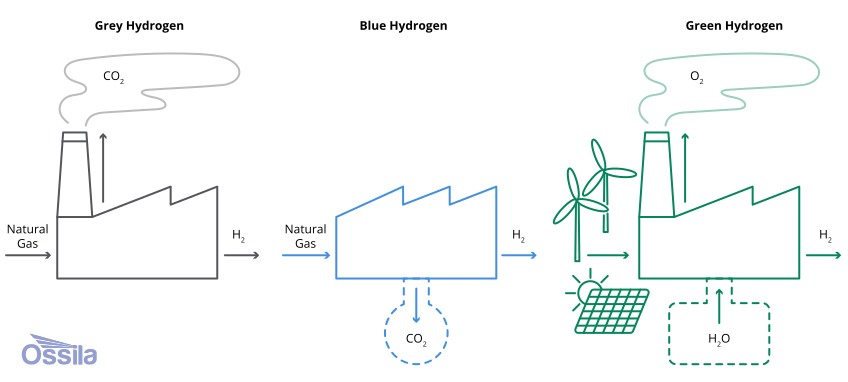
- Grey Hydrogen: Uses natural gas to form hydrogen through steam methane reforming (SMR).
- Blue Hydrogen: Process uses natural gas for SMR but unlike grey hydrogen it involves an additional step with carbon capture and storage, significantly reducing GHG emissions. Sometimes the CO2 used in industrial processes that require it as a reagent.
- Green Hydrogen: Process uses the electrolysis of water to split it into hydrogen and oxygen using renewable power (wind or solar electricity).
In steam methane reforming, high-temperature steam (H2O at 700°C–1,000°C) reacts with a methane (CH4) source under 3–25 bar pressure in the presence of a catalyst to produce hydrogen, carbon monoxide, and a relatively small amount of carbon dioxide. Steam reforming is endothermic therefore, for the reaction to proceed heat must be applied to the process.
Steam methane reforming reaction: CH4 + H2O + heat → CO + 3H2
Then carbon monoxide and steam are reacted using a catalyst to produce carbon dioxide and more hydrogen in the water-gas shift reaction. Carbon dioxide and other impurities are removed from the gas stream in a final processing step, leaving essentially pure hydrogen.
Water-gas shift reaction: CO + H2O → CO2 + H2 + small amount of heat
Steam reforming can also be used to produce hydrogen from other fuels, such as ethanol, propane, or even gasoline.
Black and brown hydrogen processes use either black coal or brown coal (lignite) and emit significant quantities of CO2 and CO into the atmosphere. Pink/purple hydrogen is generated via a similar electrolysis technique as green hydrogen, but the electrolysis is driven by nuclear energy rather than renewable electricity. Hydrogen that occurs naturally in underground deposits is referred to as white hydrogen.
Hydrogen Separation
Hydrogen can be separated using several techniques exploiting the various characteristics of hydrogen. Crude hydrogen is first pretreated to remove specific contaminants that are detrimental to subsequent separation processes. This is then followed by the common approaches used for hydrogen separation such as:
- Molecular adsorbing beds to adsorb impurities by subjecting the gas mixture to high pressures (∼410 MPa) in confined chambers (i.e. pressure swing adsorption; PSA)
- Freezing the gas mixture to condense the impurities and then using the difference in gas boiling points of the components to achieve the separation (by cryogenic distillation)
- Hydrogen-selective membranes to separate H2-enriched gas mixtures supplied under pressure, driven through the membrane by a potential gradient.
Key Applications of Hydrogen Fuel
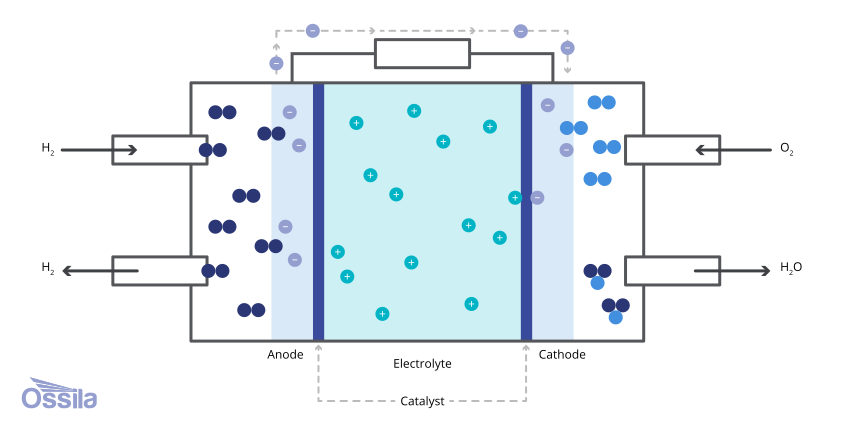
Hydrogen fuel cells use hydrogen to produce electricity. The hydrogen reacts with oxygen, with a catalyst, across an electrochemical cell to produce electricity, water, and small amounts of heat. Hydrogen is fed to the anode and air is fed to the cathode. The catalyst at the anode separates hydrogen molecules into protons and electrons, which take different paths to the cathode. The electrons go through an external circuit, creating a flow of electricity. The protons migrate through the electrolyte to the cathode, where they unite with oxygen and the electrons to produce water and heat.
Fuel cells vary in size and type depending on their application. Types of fuel cell include polymer electrolyte membrane (PEM), direct methanol, alkaline, phosphoric acid, molten carbonate, solid oxide, and microbial. They each use a different catalyst and have different advantages and disadvantages. Many are designed to work with not just pure hydrogen fuel but also natural gas and alcohols like ethanol and methanol. Fuel cell networks can even contribute to the grid. A 78.96MW fuel cell power plant powers 250,000 households in South Korea with new developments under construction looking to surpass this.
Energy Storage
Electrical energy is stored by electrolyzing water to produce hydrogen (which is stored) and oxygen. Large, stationary fuel cells can be used as primary or backup power for large facilities that cannot afford any interruption to their power supply, such as hospitals, grocery stores, and data centers. Energy storage is hugely important in the fight for energy security and climate change prevention. When it comes to energy density hydrogen wins by an order of magnitude compared to current battery technology. Per kilogram, hydrogen stores around 120–142 MJ/kg, compared to just 0.5–1 MJ/kg for lithium-ion batteries. Hydrogen is one of the most energy-dense fuels available, the energy density of methane at ambient pressure is 55.6 MJ/kg, while gasoline, diesel, and kerosene all have energy densities around 46 MJ/kg. Compared to traditional batteries, hydrogen storage is advantageous during extended or infrequent electrical loads. However, conversion of hydrogen back to electricity is currently significantly less efficient than batteries.
Transportation
Hydrogen fuel cells can power vehicles, including scooters, cars, buses, trucks, trains, aircraft, and boats. The main advantages of fuel cell electric vehicles are the zero emission of CO2 and pollutants, and the higher efficiency of fuel cells compared with internal combustion on engines. Hydrogen fuel is a good fit for transport requiring longer ranges and rapid refueling (3-5 mins routinely possible).
Rail vehicles, such as trams and trains, that use hydrogen as an energy store and energy source offer a strong alternative to traditional locomotives. Electrification upgrade options require overhead power lines which aren’t always feasible. Fuel cell-powered rail vehicles combine the advantage of pollutant-free operation with the advantage of low infrastructure costs, similar to those of classic diesel engines. Newer fuel cell buses now use only ~5 kg of hydrogen per 100 km (depending on conditions), giving them an energy efficiency advantage of >40 % as compared with diesel buses.
Heating & Cooling
Hydrogen fuel can replace natural gas used in heating and cooling systems, particularly if low-carbon hydrogen can be produced and delivered using existing gas networks. Residential, commercial, and industrial boilers and furnaces can function using hydrogen as the energy carrier. For cooling, hydrogen can also generate electricity for air conditioning systems and absorption chillers. The transition away from current systems faces challenges such as developing suitable appliances, ensuring safety, addressing low volumetric energy density, and adapting infrastructure.
Hydrogen is produced for various industrial applications including oil refining, ammonia and methanol synthesis and metal-containing ore restoration. As demand increases there is a greater chance of investment into global infrastructure which supports cleaner hydrogen production.
What's Next for Hydrogen Fuel?
The Hydrogen Economy
The "hydrogen economy" refers to a future energy system where hydrogen replaces traditional fossil fuels, providing a clean, sustainable, and flexible fuel for various sectors. A hydrogen-based energy system is a viable and advantageous option for delivering efficient, safe, and high-quality energy services in a wide range of applications while meeting sustainability goals. Hydrogen provides an ideal complement to electricity and can provide an advantage when energy storage is required.
Future Targets
Low-emissions hydrogen production globally reached close to 1 million tonnes (Mt) in 2025, compared with less than 0.6 Mt in 2020. However, growth has been far smaller than projected. The combined targets for low-emissions hydrogen production globally is 27 Mtpa by 2030, 30 times higher than the global production in 2025. Only China and the Netherlands are on track to meet their targets. China’s hydrogen production target is 300 ktpa but their projected production equates to more than six times this.
Policy Landscape
Policy momentum behind low-emissions hydrogen has been strong since the early 2020s. Numerous governments worldwide have announced strategies outlining a route for the widespread adoption of hydrogen fuel. Policy is important in creating demand, providing long-term clarity about demand and boosting investment probability.
Faster uptake of hydrogen has been hindered by the slow execution of key policies. Compared to hydrogen production, both the established strategy targets and funding provided have been much lower for demand. Regulations that encourage use of low-emissions hydrogen and hydrogen-based fuels can be complemented with support schemes such as end-user incentives. Governments can create more demand through:
- Public procurement of low-emissions hydrogen-based products
- Demand aggregation mechanisms
- Establishment of market intermediaries that absorb part of the risk taken by users and producers
- Provision of state-backed guarantees for offtake
Safety
Concern about the safety of hydrogen stems from historical incidents in the early 2000’s that highlighted its explosive nature. Nevertheless, hydrogen is a relatively secure energy carrier regarding fire safety. A container with compressed hydrogen is considered no more dangerous than one with gasoline or diesel fuel. Hydrogen is less dense than air and gasoline vapor, so it disperses quickly, reducing the risk of ignition. The heat generated by hydrogen flames is also lower than that of gasoline, which minimizes the chance of secondary fires. Hydrogen has a higher oxygen requirement to explode than other fuels, making it less prone to explosion in any given environment with oxygen.
Current Hydrogen Fuel Challenges
The current challenges limiting the widespread use of hydrogen fuel include:
Production costs
The hydrogen extraction processes require significant energy inputs, especially the use of renewable electricity and electrolysis. Electrolyzers are still extremely expensive pieces of specialized equipment. This combined with the lack of competitive pricing compared to fossil fuels limit the adoption of hydrogen fuel.
Storage
Hydrogen requires much larger storage volumes compared to conventional fuels like gasoline to store the same amount of energy due to its low volumetric energy density. There are many options for hydrogen storage, each with their own limitations, including:
- Compressed gas – High pressures (around 700 bar) are required to store enough hydrogen, raising concerns about material stability, leakage, and overall system safety.
- Liquid - Low temperatures (around −253 °C) are required to keep it in liquid form, leading to challenges in insulation, energy consumption for liquefaction, and boil-off losses during storage and transport.
- Cryo-compressed - Combines cryogenic temperatures and high-pressure compression, offering higher storage densities and reduced boil-off losses but posing challenges due to its complexity and cost.
- Physisorption - Hydrogen molecules are weakly adsorbed onto materials like metal-organic frameworks (MOFs) and zeolites. They provide rapid and reversible storage but do require cryogenic conditions for higher capacities. Material-based hydrogen storage solutions are safe, efficient, and compact.
- Chemisorption - Chemical bonding of hydrogen with materials like metal hydrides, enabling high-density storage at ambient conditions suitable for long-term use. It requires a higher activation energy and is limited by reactive site availability.
Transportation
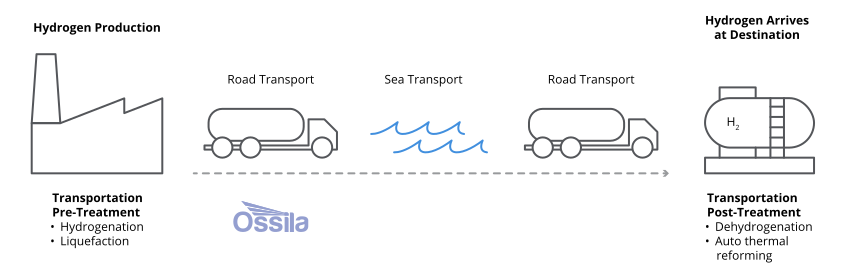
Hydrogen fuel must be transported from production sites to end-users. This is usually achieved via several methods based on factors including distance, quantity, and geography. The methods are generally classified as road, pipeline, and sea transport. For shorter distances, compressed hydrogen in pressurized tanks transported by trucks is effective for smaller-scale needs. Higher-density hydrogen carriers such as liquid hydrogen, liquid organic hydrogen carriers (LOHCs), and ammonia are used for longer distances. These solutions involve energy-intensive processes like cooling, pressurization, chemical conversion, and re-release. When it comes to large volumes of hydrogen over longer distances, sea transport becomes the most viable option.
Related Products




References
- Global Hydrogen Review 2026, Gül, T. et al., International Energy Agency (2026)
- Green and blue hydrogen production and purification technologies, Usman, M. et al., International Journal of Hydrogen Energy (2025)
- Hydrogen as an alternative fuel: A comprehensive review..., Bhuiyan, M. M. H. et al., International Journal of Hydrogen Energy (2025)
- The synergy between battery and hydrogen storage in..., Virah-Sawmy, D. et al., International Journal of Hydrogen Energy (2025)
- Electric vs. hydrogen fuel cell buses: A simulation-based..., Bai, Q. et al., Energy (2026)
Contributors
Written by
Application Scientist
Diagrams by
Graphic Designer