


Low Price H-Cell for Electrochemical Studies
High quality borosilicate H-type electrochemical cell available in different volumes
Specifications | H-Cells in Electrochemistry | In the Box | Gallery | Related Products | Technical Support
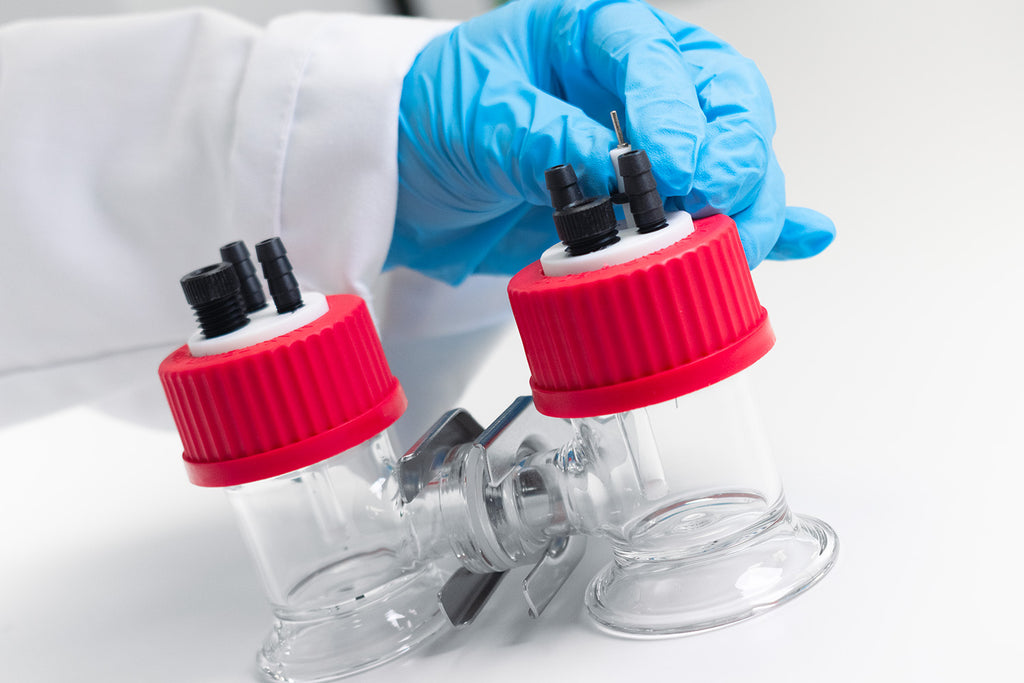
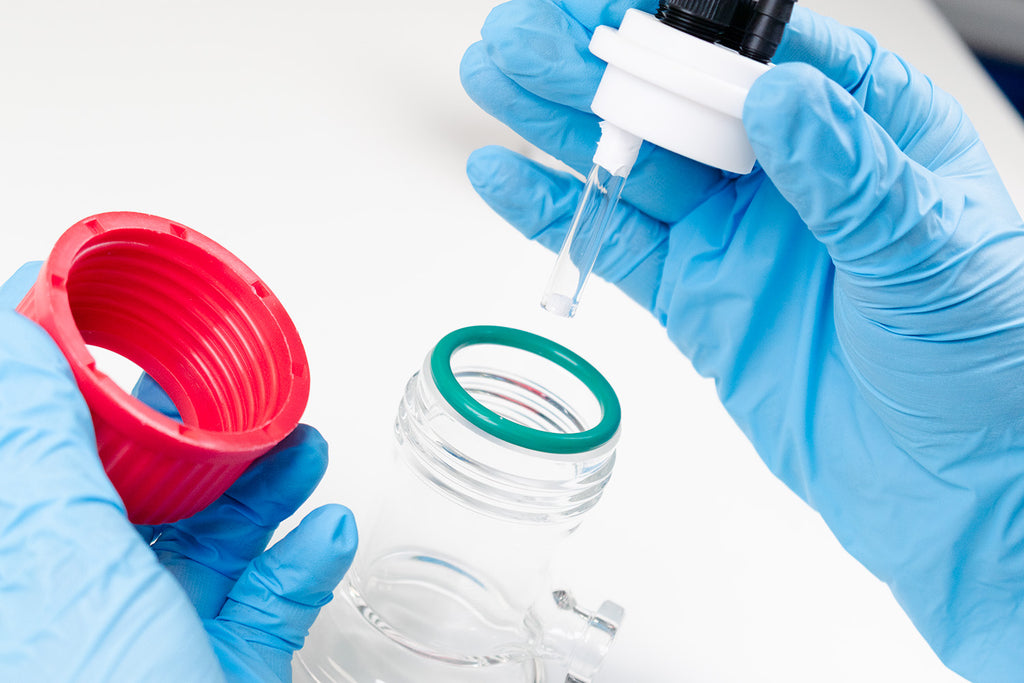
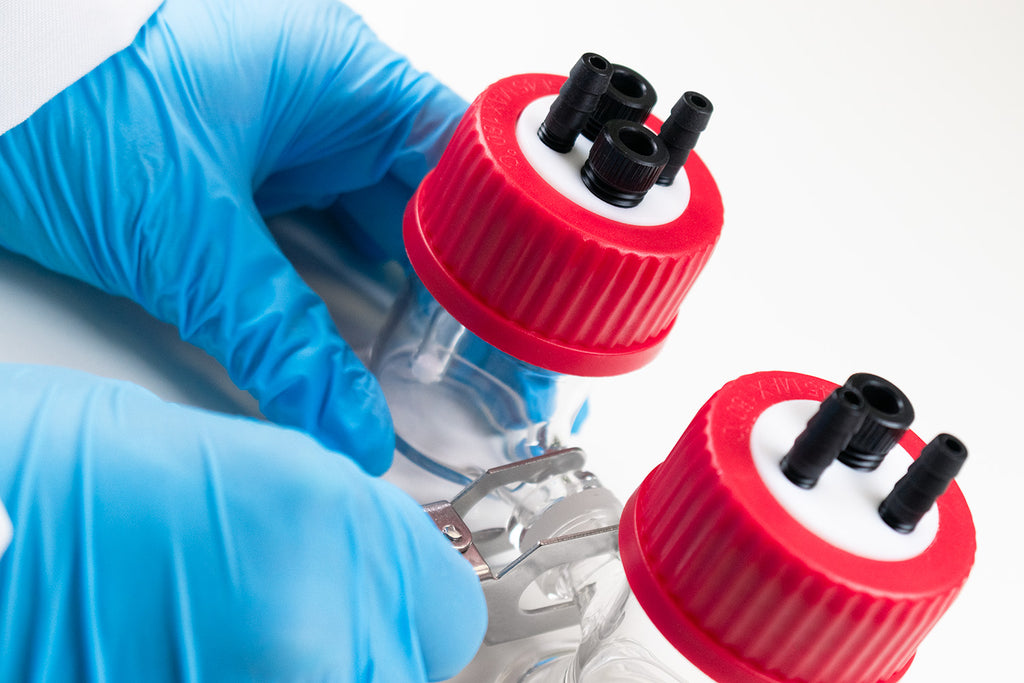
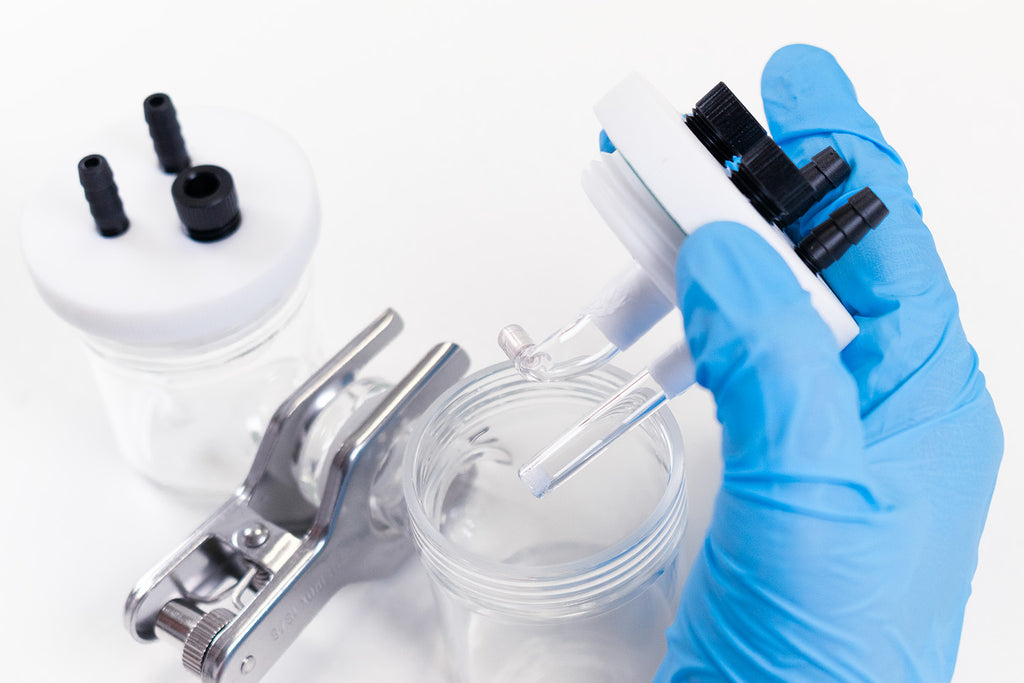
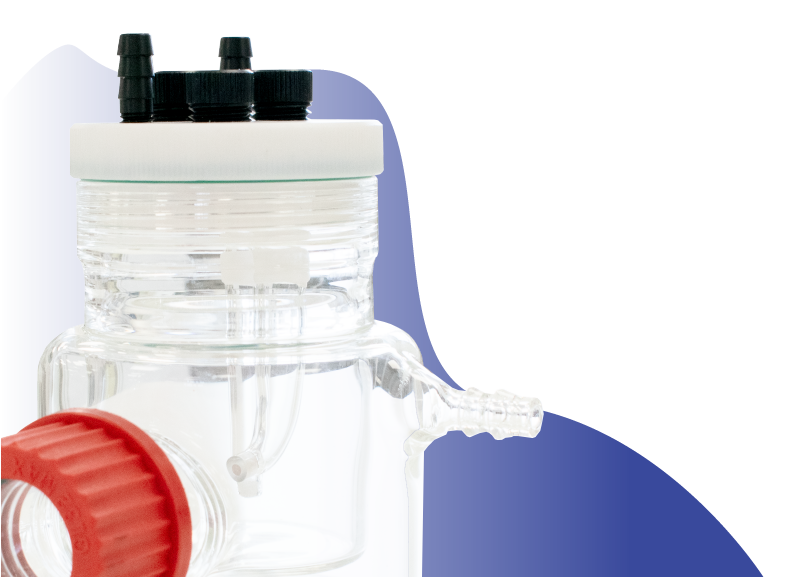
Available in various volumes, these electrochemical cells consist of two half-cells coupled together which can be separated by an ion-conductive membrane (not included). Each H-cell features a screw-fit PTFE lid, replaceable membrane seal, a gas inlet and outlet for easy degassing, and electrode feedthroughs for working electrodes, counter electrodes, and reference electrodes.
Plus, the gas inlet port comes with a bubble filter to control the intake of gas into the solution, reducing gas shock and bubbling effects. The 50 ml and 100 ml cells also come with a Luggin Capillary reference cell, to optimize the reference electrode position to the working electrode.
For efficient use of rare or expensive electrolytes, small volume H-cells of 5ml and 10ml are also available.

Range Of Sizes
Choose electrochemical cell to fit
your experiment

Designed To Last
Quality materials, spare parts and technical support

Separate Electrodes
Avoid cross-contamination with ion-membrane diffusion

Expert Support
From in-house scientists & our
customer care team
Please note: The Luggin capillary curved salt bridge tip may deteriorate in strong acid or basic electrolyte. Direct use of reference electrode without Luggin capillary is suggested in such conditions.
Specifications
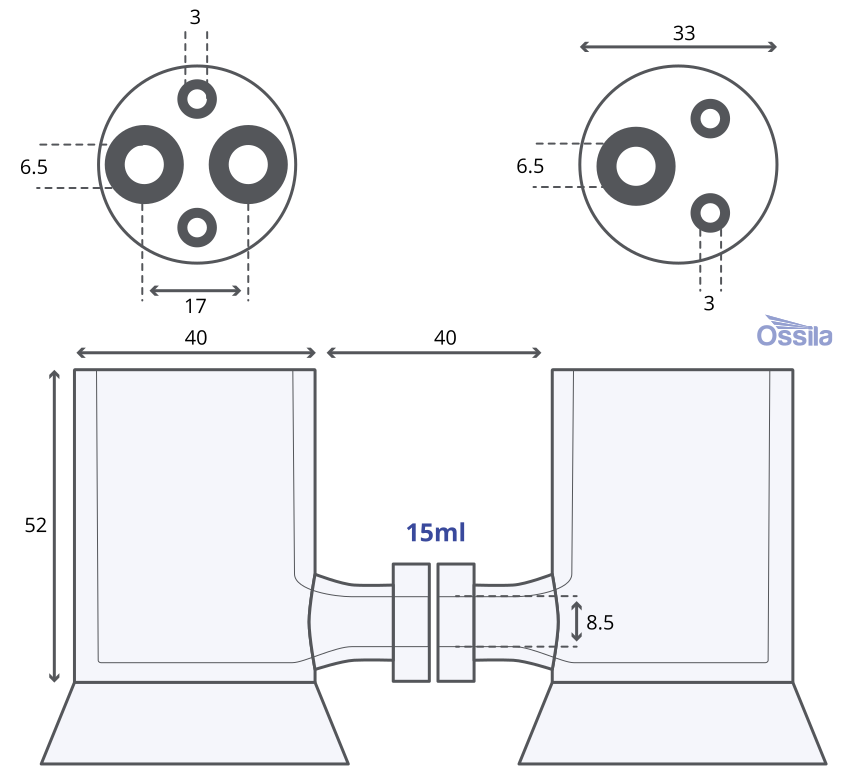
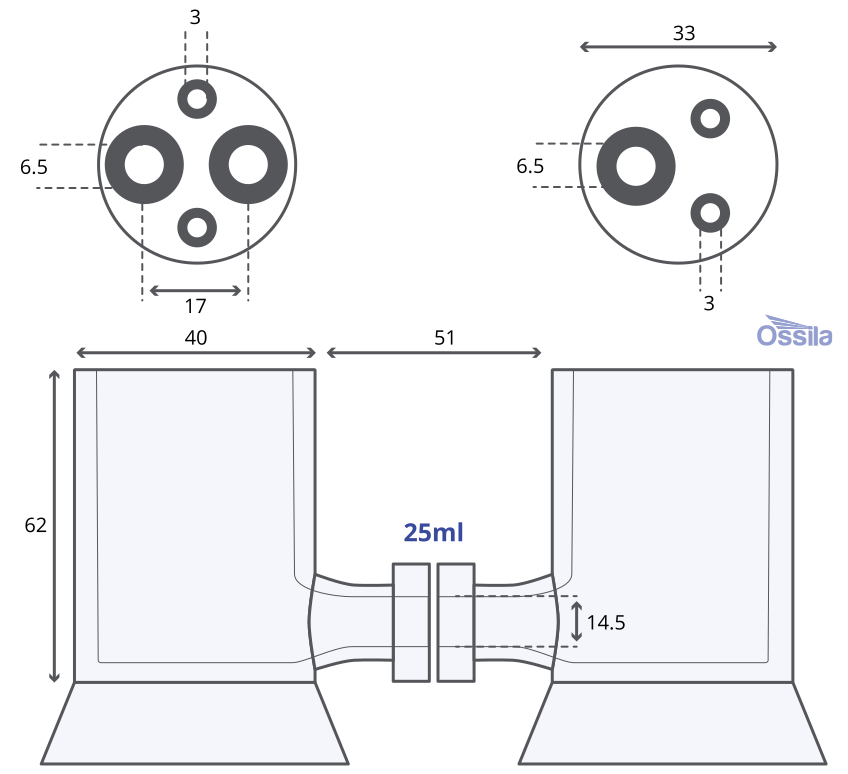
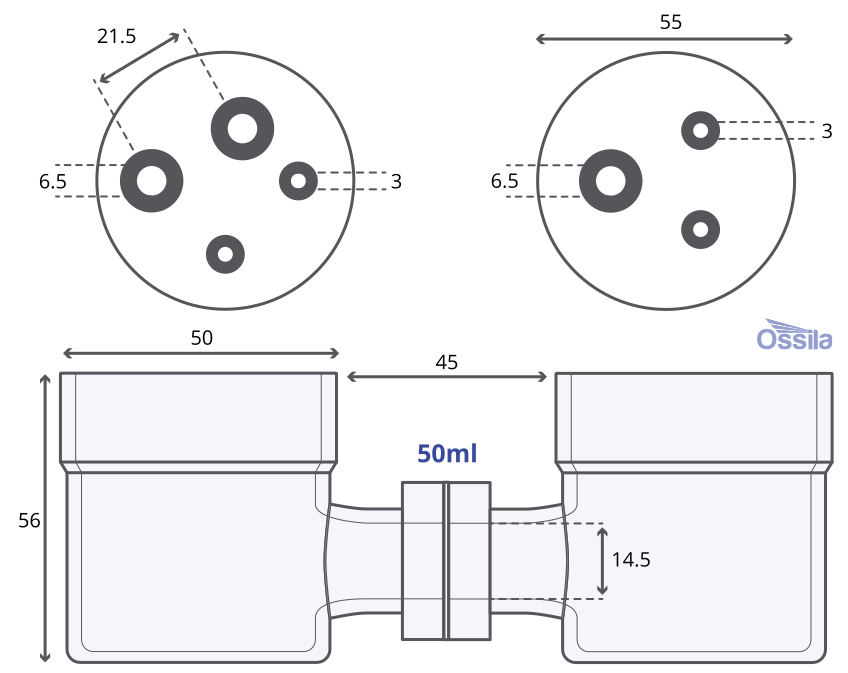
All dimensions are in millimeters. Click to expand the diagrams.

| Product Name | Product Code | Half-cell Bridge Volume* | Half-cell Thread Volume* |
|---|---|---|---|
| H-type sealed electrochemical cell - 15 ml | C2012C1 | 15 ml | 30 ml |
| H-type sealed electrochemical cell - 25 ml | C2012D1 | 25 ml | 35 ml |
| H-type sealed electrochemical cell - 50 ml | C2012E1 | 50 ml | 65 ml |
| H-type sealed electrochemical cell - 100 ml | C2012F1 | 65 ml | 100 ml |
*The volume of the half-cell is measured both with liquid filled above the H-cell bridge and filled till the thread.
User Manual
 H-Cell User Manual
What Are H-Cells Used for in Electrochemistry?
A H-cell consists of an electrochemical cell containing two separated compartments arranged in a H configuration. This cell design holds the reference and working electrode separate to the counter electrode, and these compartments are separated by a membrane or physical barrier.
H-cells facilitate ionic conductivity through the barrier, while ensuring products formed at the anode and cathode don’t mix. Any product formed at the counter electrode won’t affect the working electrode and vice versa. This helps ensure precise measurement of electrode reactions individually.

H-cells are incredibly useful in battery research, membrane testing, permeation experiments and CO2 reduction experiments.
*Luggin Capillary only included with 50 ml and 100 ml H-Cells. Not required for 15 ml and 25 ml cells.
In the Box
- Glasswear body x 2
- Internal seal
- Screw cap x 2
- Gas bubbler elements x 2
- Luggin capillary x 1 (only with 50 ml and 100 ml volumes)
- Cell electrode inlet screw in adapter x 3
- Cell gas inlet screw in adapter x 4
Additional accessories included:
- Silicone seals x 2
- Pinch clamp
- 1m potentiostat PTFE tubing
- White PTFE tape
- Cell electrode inlet blank
- PTFE rod 6.2 mm electrode inlet stopper x 3
- PTFE rod 3 mm air inlet stopper x 4
- Rubber O-ring OD 10mm extras
- Rubber O-ring OD 5.5mm extras
H-Cell Gallery
Related products


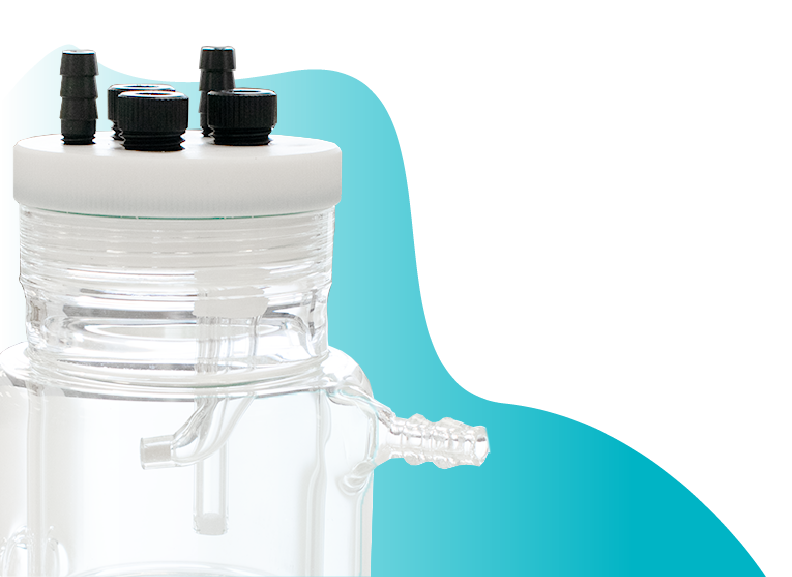
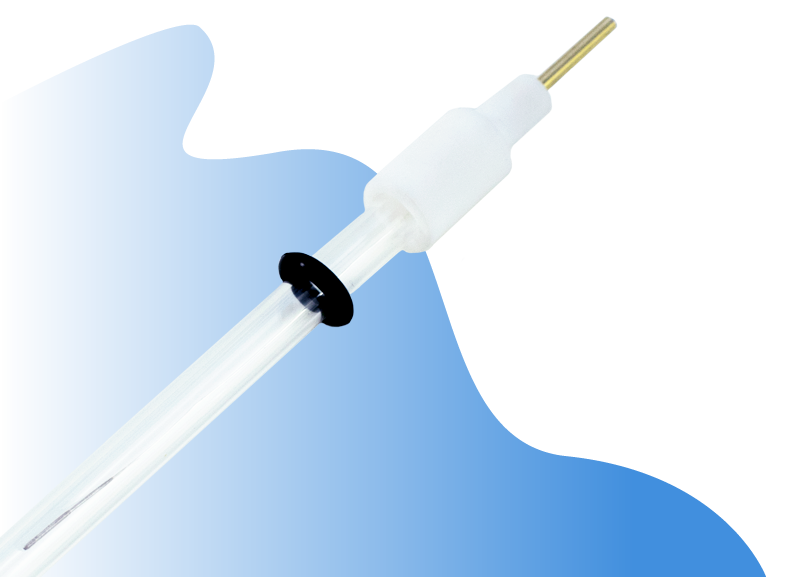
Our full electrochemistry collection includes luggin capillary, micro, and photoelectrochemical cells, and a range of working, reference, and counter electrodes:
Supporting Resources
 H-Type Electrochemistry Cell Assembly
Start by assembling H-Cell membrane. Peel the membrane seal rings apart and attach to the membrane ports. Place membrane between the membrane seals and secure together using the
Read more...