ePTFE H-Cell Gaskets
Chemically-Resistant Sealing for Acidic, Alkaline & Polar Electrolytes
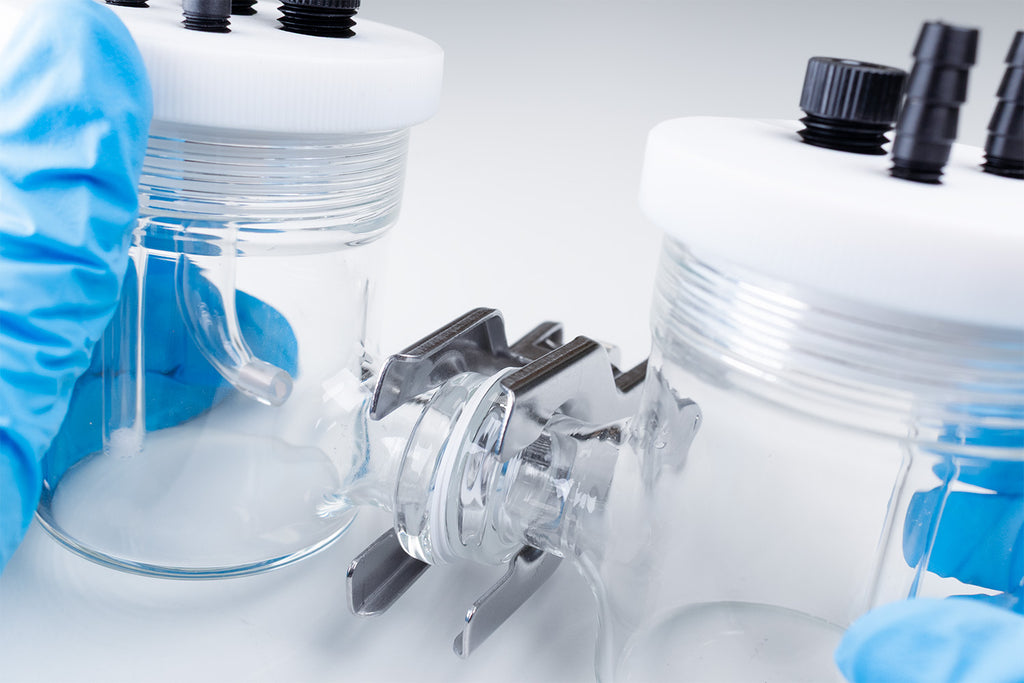
A reliable flange seal to create an airtight and leak-proof joint in H-cells
Specifications | Gallery | Related Products | Technical Support
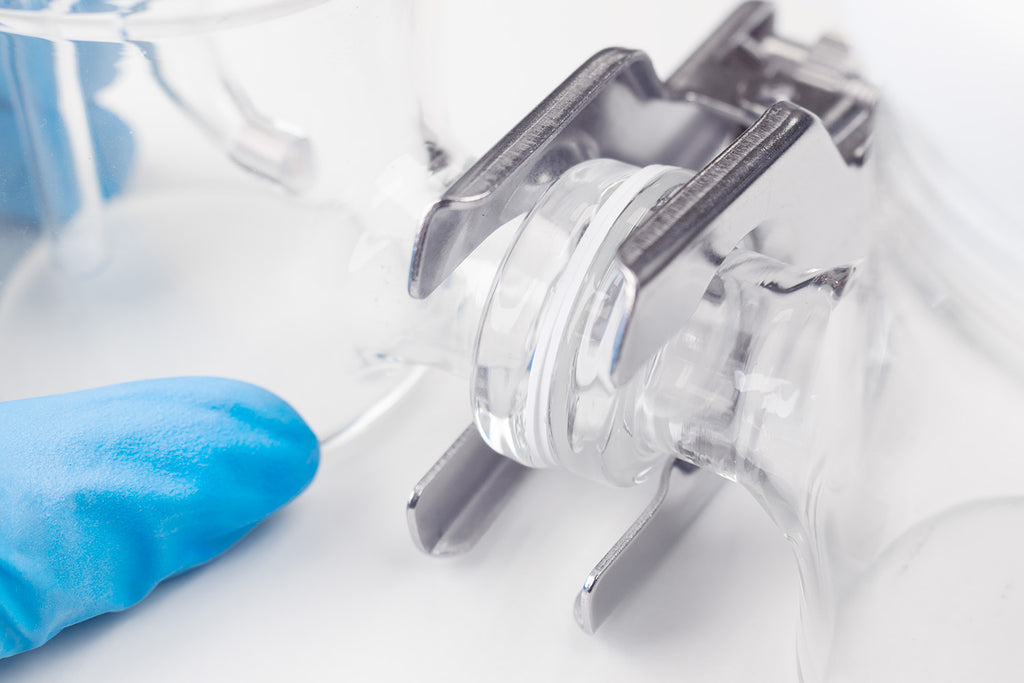
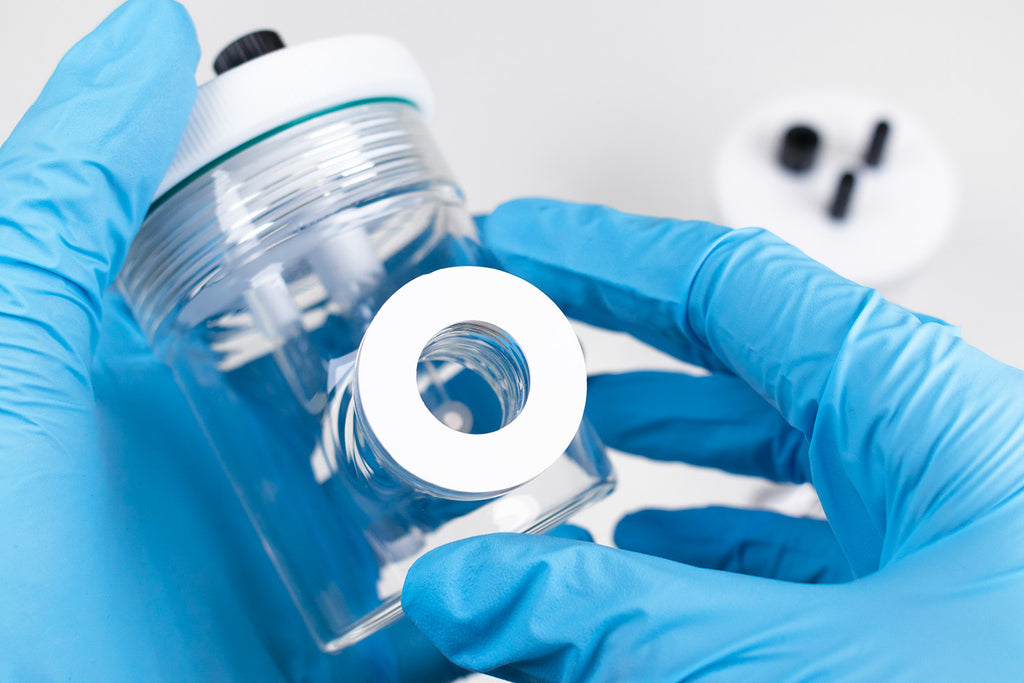
Expanded PTFE (ePTFE) flange gaskets provide an airtight and leak-proof joint between the chambers or glass flanges of your H-type electrochemical cell. This seal can be used across the full pH range, from strongly acidic to strongly caustic electrolytes, and under highly polar conditions under which standard silicone and fluoroelastomer seals degrade over time.
ePTFE is manufactured by stretching solid PTFE to create a porous, fibrous microstructure. This gives it excellent compressibility and conformability, allowing the gasket to fill surface irregularities at the cell flange interface and maintain a fluid-tight seal even under moderate clamping force. Unlike solid PTFE, which can be too rigid to seal uneven or lightly compressed joints, ePTFE conforms readily while retaining the chemical inertness PTFE is known for.
The near-universal chemical resistance stems from the strong carbon-fluorine bonds in the PTFE backbone, which shield the material from chemical attack, so it withstands against swelling, softening, or degradation for longer duration regardless of electrolyte pH. This makes ePTFE gaskets suitable for a broad range of H-cell applications, including acidic electrolytes, alkaline water electrolysis, and KOH-based systems. Crucially, ePTFE also holds up well against polar solvents, an environment where elastomeric gaskets such as FKM can swell or lose integrity, making it a reliable choice for non-aqueous electrochemistry using solvents like acetonitrile or DMF.
Since ePTFE is chemically inert rather than simply resistant, it does not leach plasticizers, curing residues, or degradation byproducts into the electrolyte. This is particularly valuable for contamination-sensitive work such as trace-level electroanalysis, spectroelectrochemistry, or long-duration stability testing, where even minor leaching can introduce background signal or compromise data integrity.

Near-universal Chemical Resistance
Across the full pH range, from acids to strong bases, and polar solvants

Effective, Fluid-tight Sealing
Supports uneven or lightly compressed flange surfaces

No Contamination Leaching
Suitable for contamination-sensitive electrochemical work

Popular Size
Fits standard dual-chamber electrochemical setups
Specifications
| Material | Expandable PTFE |
|---|---|
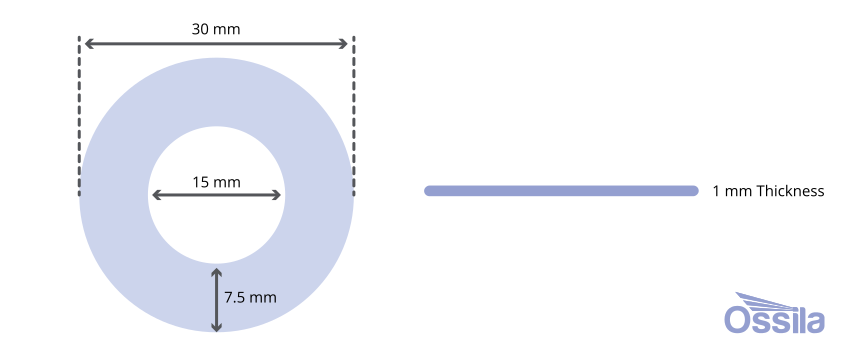
| Window Diameter | 15 mm |
| Outer Diameter | 30 mm |
| Thickness | 1.0 mm |
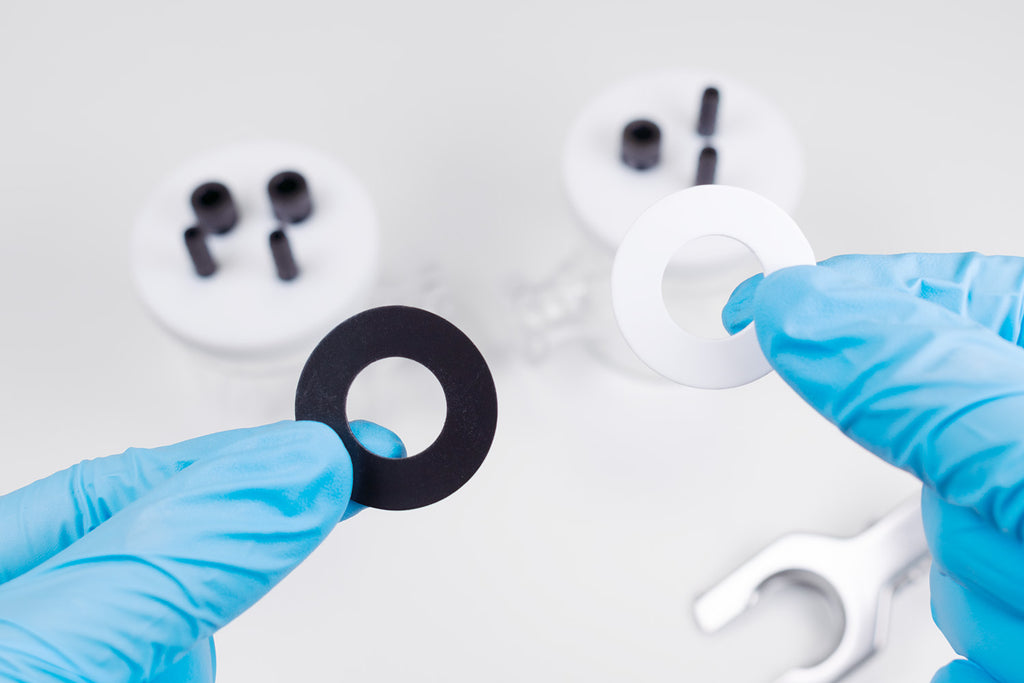
| Color | White |
| Pack Size | 10 |