


Lithium-Sulfur Batteries
Working Principles | Limitations | Advantages | Applications
A lithium-sulfur (Li-S) battery is a type of rechargeable battery with lithium metal and elemental sulfur electrodes. Their high theoretical specific capacity of ~1600 mAh g−1 and high theoretical energy density of 2600 Wh kg−1 make them attractive alternatives to traditional lithium-ion batteries (LIBs). However, the actual values achieved using this technology are yet to reach such highs due to a variety of issues with the associated chemistry.
Li-S batteries are more cost effective and environmentally friendly than LIBs. This is due to the availability of sulfur compared to transition metals such as nickel, cobalt and manganese typically found in lithium-ion battery materials such as NMC. However, sulfur is far less conductive than traditional electrode materials. Therefore, it is typically used in a composite form such as sulfur-carbon composite where carbon is used as a host to impart a conductive surface and ion/electron transport channels.
How Do Lithium-Sulfur Batteries Work?
Lithium-sulfur batteries rely on the movement of lithium ions through the battery cell, driven by a chemical difference between the electrodes. The battery cells typically contain current collectors, an elemental sulfur (S8) composite cathode, a lithium metal anode, a separator and electrolyte. The lithium metal anode is the source of lithium ions which react with sulfur in the cathode via a multi-step "conversion mechanism".
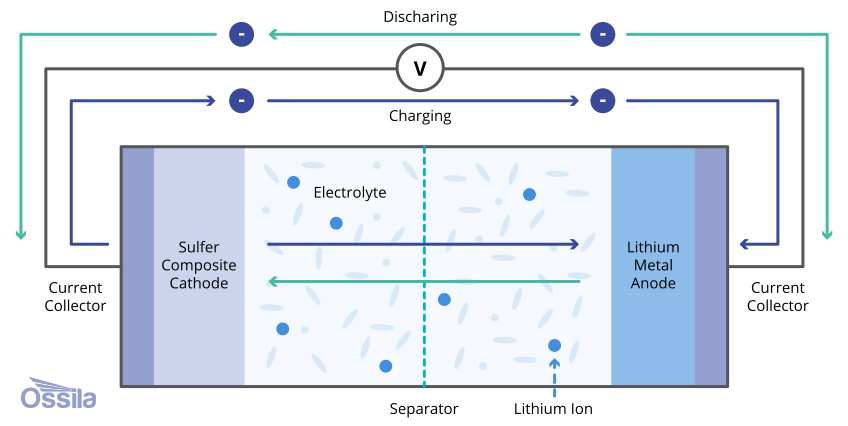
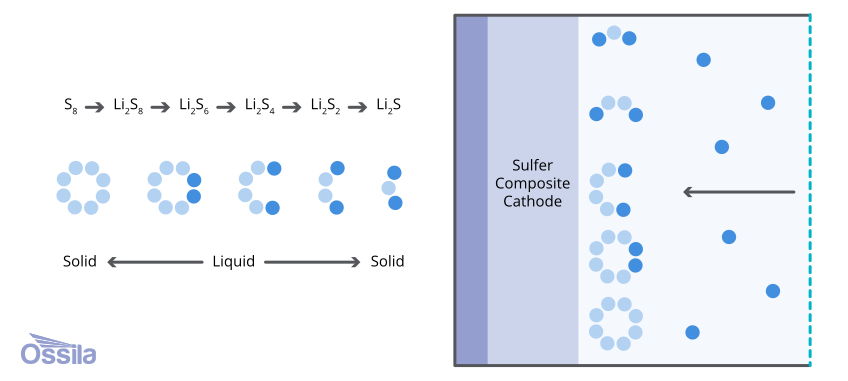
Discharging: The lithium metal anode is oxidized to generate electrons and lithium ions. The lithium ions diffuse to the cathode through the electrolyte and separator towards the positive sulfur electrode. The lithium ions react with sulfur to form polysulfide ions in a process referred to as lithiation. This process continues, increasing the ratio of lithium to sulfur within the lithium polysulfide (LiPSs) where the sulfur cathode is reduced to lithium sulfide (Li2S):
Charging: Lithium sulfide decomposes and the lithium ions are released, flowing back to the anode where they recombine with an electron to form lithium metal.
The electrolyte facilitates lithium ion transport between the electrodes and must have good interfacial contact with both. It is also involved in the formation of protective layers on both electrodes, often referred to as the solid electrolyte interface. Both the electrolyte and separator play crucial roles in limiting the dissolution and movement of lithium polysulfides through the battery cell to the lithium anode.
Lithium Polysulfide Chemistry
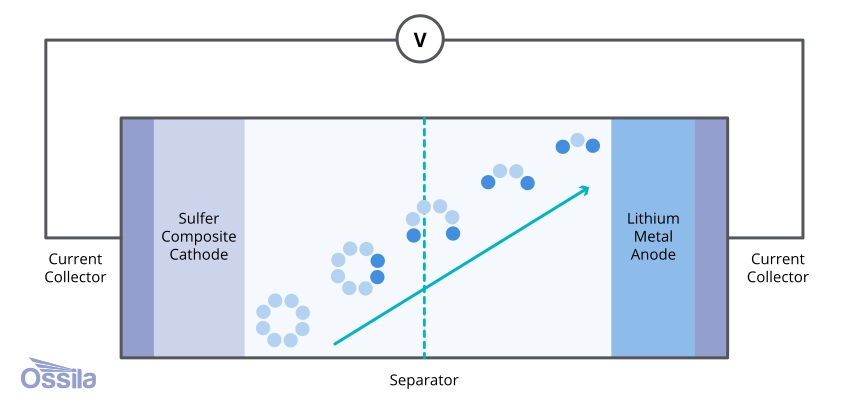
The solubility of the lithium polysulfide ions is lowered as the ratio of lithium increases. Li2S and Li2S2 separate out from the solution and form a solid precipitate on the surface of the electrodes. The precipitates act as insulating layer that impedes charge transport and as a result reduce battery capacity. The soluble lithium polysulfide ions move to the lithium electrode to cause unwanted discharge and shorten the lifetime of the battery. During charging, instead of being fully oxidized back to solid S8 often the lithium polysulfides undergo parasitic redox reactions between themselves.
Shuttle effect: The continuous dissolution, migration between electrodes, and parasitic reaction of lithium polysulfides during cycling.
Challenges and Limitations
Whilst there is a huge amount of theoretical potential for lithium-sulfur batteries, commercialization has been impeded by key challenges including:
- Low electrical and ionic conductivity of elemental sulfur (~ 5×10-30S cm-1)
- Insulating nature of the discharge products (Li2S and Li2S2)
- Solubility of long-chain polysulfides which cause the "shuttle effect"
- Volume changes of the sulfur cathode upon cycling (~80)
- Lithium-metal anode contamination/corrosion and dendrite formation
Investigations into potential solutions for these challenges have been reported at the coin or <1000 mAh cell level. Key strategies in lithium-sulfur battery design in order to tackle these challenges are:
Conductive host for sulfur cathode
Facilitates the fast transport of Li ions and stabilizes the polysulfides by physical adsorption. The host also provides a stable framework to help ease the stress of volume changes upon cycling. Carbon materials such as microporous carbon, mesoporous carbon, graphene, graphene oxide and carbon nanotubes (CNTs) are often employed as the hosting structures. Other effective sulfur hosting materials include the 2D inorganic materials MoS2/g-C3N4, WS2/C, and metal oxide nanomaterials.
Modified sulfur cathode
The specific capacity and rate responses of the sulfur cathode have been improved through the incorporation of adsorbents and catalysts, as well as other chemical modifications. Transition metal compounds, heteroatom-doped carbons, and MXene-based materials have catalysed faster conversion between polysulfide intermediates and Li2S, improving sulfur use and cycling stability.
Functional electrolytes
High-concentration electrolytes, gel-state electrolytes and solid-state electrolytes help suppress the side reactions on both cathode and lithium metal anode surfaces. Sparingly and highly solvating electrolytes promise lower electrolyte-to-sulfur ratios. This is a critical design metric because achieving a commercially viable energy density requires only small electrolyte/sulfur (E/S) ratios of ≤3:1 (≤ 3 μL mg-1).
Functional separators
Separators have been designed for blocking polysulfide shuffling, inhibiting self-discharging, the prevention of lithium-dendrite formation, and thermal stability. Examples include; carbon modified separators, inorganic nanoscale separators and metal-organic frameworks (MOFs)-based separators.
Modified lithium metal anode
To prevent lithium dendrite formation, techniques are employed to modify the anode structures including the addition of an interlayer, artificial film and sandwich method.
Formulated electrode binders
Binders must ensure long-term electrode cycling performance with high capacity and high sulfur loading. Functionalized branched polymers have been used as an option but suffer from low conductivity and are often soluble in the organic solvents used for the electrolyte. One key barrier to commercialization is the lack of collaboration between academia and industrial Li-S development. There is limited research discussing energy density at higher capacities of >1 Ah cell levels. We need sufficient integration of new materials and technologies, characteristic ideas and challenges, theoretical analyses, total cell designs, and cell-assembly techniques.
Advantages of Lithium-Sulfur vs Lithium-Ion Batteries
The key advantage of lithium-sulfur batteries compared to traditional lithium-ion batteries is their higher energy density. Sulfur itself offers multiple advantages including high theoretical specific capacity, outstanding elemental abundance, low cost, and low environmental impact. Having more energy dense materials is key in the drive for more lightweight batteries for high energy efficiency.
Energy Density
Lithium-sulfur batteries function via the "conversion mechanism" whereas lithium-ion batteries typically function via the "intercalation mechanism". During discharge, elemental sulfur reacts with lithium ions to break its bonds and form entirely new chemical compounds. Instead of storing one Li-ion per host molecule, every single sulfur atom can bond with two lithium ions yielding a much larger theoretical energy density than LIBs. This allows the use of a lithium metal anode, the lightest solid element which gives rise to the lightweight nature of Li-S batteries.
Specific Capacity
The elemental sulfur cathode offers very high theoretical specific capacity (~1600 mAh g−1) which is ~ 6 times greater than typical LIB cathode materials such as lithium cobalt oxide. However, in practice this capacity has reached 1102 mAh g−1 for sulfurized polyacrylonitrile (SPAN) based cathode observed under the 0.05C-rate after ten cycles at 30°C.
Safety
Cathodes: Li-S batteries have safer cathodes than traditional LIBs due to the fully lithiated product Li2S being more thermally stable than the oxygen-rich metal oxide cathode materials. There is much lower risk of thermal runaway as a result of cathode breakdown due to overcharging or in high temperatures. Sulfur is also non-toxic whereas LIB cathodes often contain toxic metals that can be environmentally hazardous.
Electrolyte: Both types of battery technology often use flammable organic electrolytes which can impact battery safety, but alternative electrolytes can be used.
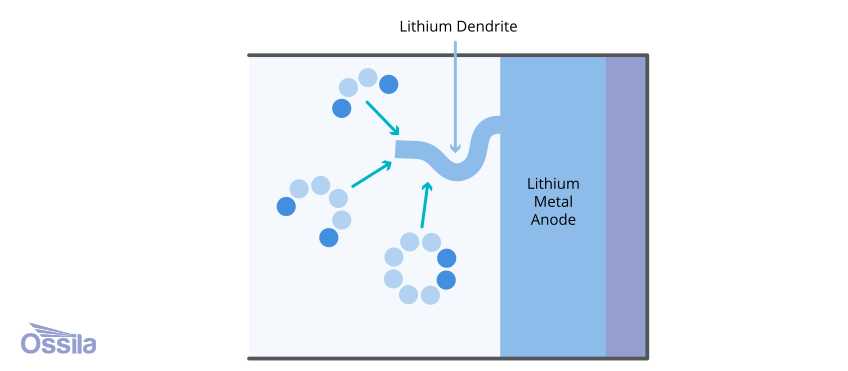
Anodes: The key safety concern for Li-S batteries is the lithium metal electrode which is highly reactive. When exposed to moisture or under poor handling it can ignite spontaneously. Lithium dendrite formation can also lead to internal short circuits which in turn can trigger thermal runaway. However the "shuttle effect" of polysulfides actually improves stability here. When those dissolved polysulfides hit the lithium metal anode, they chemically corrode it. If a sharp lithium dendrite needle starts growing out of the anode, the polysulfides attack it first because the tip of the needle has high surface area and electrical charge. The polysulfides essentially "dissolve" the dangerous sharp needles before they can grow long enough to pierce the separator.
Applications of Lithium-Sulfur Batteries
Applications where weight and energy density are more crucial than other performance factors are most suited to current lithium-sulfur battery technology. Whilst most battery applications would benefit from a higher energy density those with that particular priority include:

- Electrical vehicles
- Mobile scooters
- Energy storage systems and battery stations
- Portable battery packs
- Drones
- Electrical vehical take-off and landing (eVTOL)
- High-altitude long-endurance (HALE) aircraft
- Hig-altitude platform stations (HAPS)
Learn More
 An Introduction to the Solid Electrolyte Interphase
A solid electrolyte interphase forms on the negative electrode in lithium-ion batteries due to the decomposition of electrolyte. The decomposition by-products build up on the surface of the anode and form an independent phase of material, different to the electrode and electrolyte.
Read more... What is Lithium Plating?
Lithium plating is a mechanism of degradation in lithium-ion batteries. It describes the accumulation of metallic lithium on the surface of the anode (usually graphite powder). Lithium ions gather at the anode surface and form metallic deposits.
Learn more...
References
- 21 - Electrochemical energy storage part II: hybrid..., Bhattacharjee, U. et al., Emerging Trends in Energy Storage Systems and Industrial Applications (2023)
- Breaking the Barrier: Strategies for Mitigating Shuttle Effect..., Zhu, Y. et al., Polymers (Basel) (2023)
- Li‑S Batteries: Challenges, Achievements and Opportunities, Raza, H. et al., Electrochemical Energy Reviews (2023)
- Suppression strategies for the polysulfide shuttle effect in..., Ke, J. et al., Communications Materials (2025)
- Li-S Batteries: Challenges, Achievements and Opportunities, Raza, H. et al. (2023)
Contributors
Written by
Application Scientist
Diagrams by
Graphic Designer