


Colony Counter
Purpose of Colony Counter | Principle of Colony Counter | Applications of Colony Counter | Benefits and Challenges of Colony Counter | Best Practices
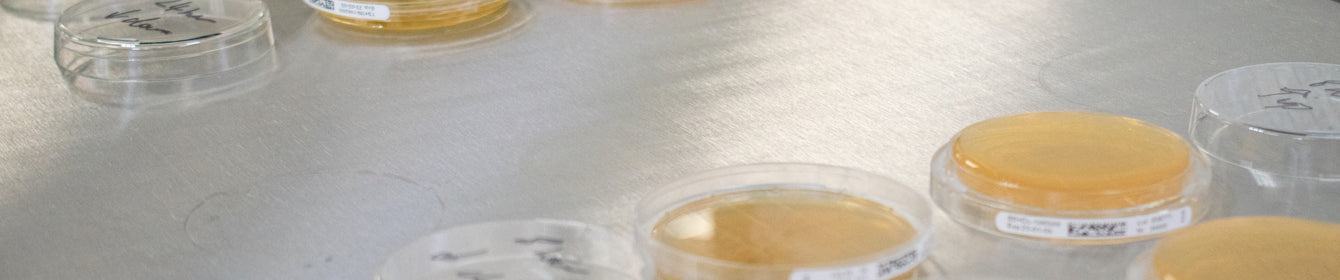
Colony counter is a device used to count bacterial, fungal, or other microorganism colonies that grow on solid culture plates. Thanks to the design, colony counter plays a crucial role in biological procedures, as accurate colony counts are needed to obtain important results about the infecting organisms.
Colony counter helps connect the raw microbial growth with actionable insights, which directly influence microbiological research by allowing scientists to estimate microbial concentrations in various samples. Colony counter is a specialized laboratory tool designed to count and assess microbial colonies grown on agar plates. While colony counting is a straight forward method, the implications are vast, as each count could determine either the antibiotic resistance or reveal the presence of pathogens. Therefore, it is important to conduct this accurately and in a replicable fashion.
Purpose of Colony Counter

Quantification: The number of colonies allows researchers to determine the population size of the sample. This is an important step in understanding the growth characteristics and behavior of the microorganisms.
Microbial viability: The colony count highlights the viability of the microorganisms within a sample, as only viable cells have the ability to proliferate and form colonies. This indicates their potential to either cause infections or carry out specific functions, such as fermentation.
Microbial growth: By counting colonies at different times, researchers can monitor the growth of the microorganisms. Analyzing the speed at which the microbes grow allows researchers to evaluate specific factors, such as growth-promoting and antimicrobial agents.
Quality control: Colony counting allows manufacturers to monitor contamination levels in products as well as ensuring safety standards.
Principle of Colony Counter
Colony counter lets researchers study the growth pattern and the ability to form colonies of microbes by converting the disordered growth into precise, measurable data. Microorganisms growing on solid agar plates are generally counted using colony-forming units (CFU). CFUs represent an estimate of viable cells that can reproduce under controlled conditions. Colony counters assist in obtaining these vital CFU counts with a high degree of reliability and precision. This allows researchers to estimate the number of cells in the sample, providing valuable information for various applications.
Two colony counter types are currently available: manual and automatic. Manual counting of colonies can often lead to inaccuracies and can be subjective. Automated colony counters provide a reliable solution to this problem, offering a more efficient and standardized way to count colonies accurately.
Applications of Colony Counter
Microbial detection: in food, water, soil, air, and pharmaceutical samples
Antibiotic susceptibility testing
Microbial ecology: studying microbial diversity and ecosystems
Research and development: exploring microbial behavior, genetic studies, and new treatments
Biotechnology: screening genetically modified organisms and testing antimicrobial agents
Accurate colony counting underpins all of these applications. It ensures products are safe before discharge, maintains reproducibility of experimental results, and enables meaningful comparisons across studies. Precision matters because errors, whether from poor technique or faulty equipment, can lead to incorrect conclusions.
Benefits and Challenges of Colony Counter
Benefits
- Colony counter allows researchers to gain more dependable results, improve experimental techniques, and ensure better-informed decision-making
- Automated colony counter provides a reliable solution to manual inaccuracies offering a more efficient and standardised way to count colonies accurately
- Reduces errors: colony counts directly influence the interpretation of biological phenomena; imprecise counting can lead to incorrect conclusions and distorted statistical analysis
- More reproducible data: using colony counters and standardised protocols means multiple laboratories performing the same experiment can achieve consistent, comparable results
Challenges
- Colonies may overlap or merge; very small colonies may be overlooked; colonies at the edge of the plate may be hard to count
- Different shapes, sizes, and colors can create confusion
- Background "noise" such as impurities may be mistaken for colonies
Best Practices
The ideal range of colonies per plate is 25-300, as too many colonies affect the accuracy, while too few colonies lack statistical relevance. On top of that, when plating the sample it is important to consider the origin and the research question you want answered. Therefore, deciding whether you use a spread plate method, pour plate method or streak plate method is an important step.
Maintaining a clean and organized workspace is essential for reducing contamination risks, ensuring that benches, tools, and consumables remain sterile and properly arranged. Using positive and negative controls whenever possible helps validate techniques, media quality, and dilution accuracy. To minimize human error, work methodically, clearly label tubes and plates, and double-check dilution calculations before proceeding. Use aseptic techniques and properly calibrated micropipettes when performing serial dilution. To strengthen the confidence in the results, carry out biological and technical replicates. This also helps in identifying any outliers. It is also important to evaluate data critically by reviewing the plate counts, growth patterns, and recorded conditions for inconsistencies before finalizing results. Lastly, following safety guidelines, such as using appropriate PPE, disposing of biological waste correctly, and adhering to biosafety requirements, ensures a safe and compliant laboratory environment.
Learn More
 Troubleshooting Colony Counting
Colony counters are an important part of the microbiological laboratory. They play an essential role in counting bacterial and fungal colonies on agar plates. While colony counters enhance efficiency and precision, they can present challenges impacting the accuracy and workflow of the experiments. Understanding common issues of colony counters and how to solve them aids in reliable results.
Read more... How to Set Up a Microbiology Laboratory
Microbiological laboratories have undergone modernization in the last decade. Through automation and advanced technology, the field has been transformed. Designing and setting up a microbiology laboratory requires careful planning, proper equipment, and adherence to safety standards. Well-structured microbiology laboratory can enhance research capabilities, improve efficiency and have an impact on scientific advancements.