


What is MnO2?
Structure & Properties | Tunnels | Applications | MnO2 in Batteries | Limitations | Renewed Interest
MnO2, also known as manganese dioxide, is an inorganic metal oxide compound. It has a ratio of one manganese atom for every two oxygen atoms. The oxidation state of manganese is most commonly 4+ to balance the 2- charge from the two oxygen atoms.
The properties of MnO2 crystals depend on arrangement of manganese and oxygen atoms. There are a variety of MnO2 crystal structures with different properties, making this an interesting material to use for a range of applications from energy storage to catalysis. Scientists are exploring the ability to combine interesting properties through controlled growth of MnO2 with specific crystal structures.
Other names: Pyrolusite, dioxomanganese, hyperoxide of manganese, black oxide of manganese, manganic oxide
Metal Oxides

Structure and Properties
MnO2 crystals exist as several different morphologies, making it a polymorph like many other metal oxides. All MnO2 polymorphs are made up of interlinked MnO6 octahedra as the building block.
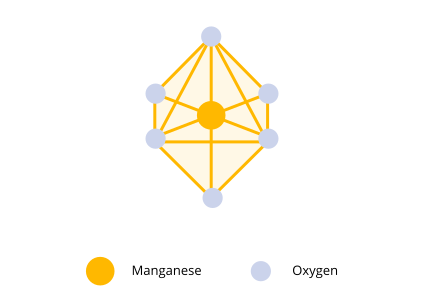
The crystallographic arrangement of bonded manganese and oxygen atoms dictates the structural, thermodynamic, and kinetic properties of each MnO2 polymorph. The morphology, specific surface area, pore size, intrinsic conductivity, crystal structure, interlayer bound water and crystal form of MnO2 will affect its electrochemical performance. Their earth-abundant, environmentally friendly nature and low manufacturing cost makes them an attractive material in lots of areas of research including catalysis, energy storage and ion-sieving.
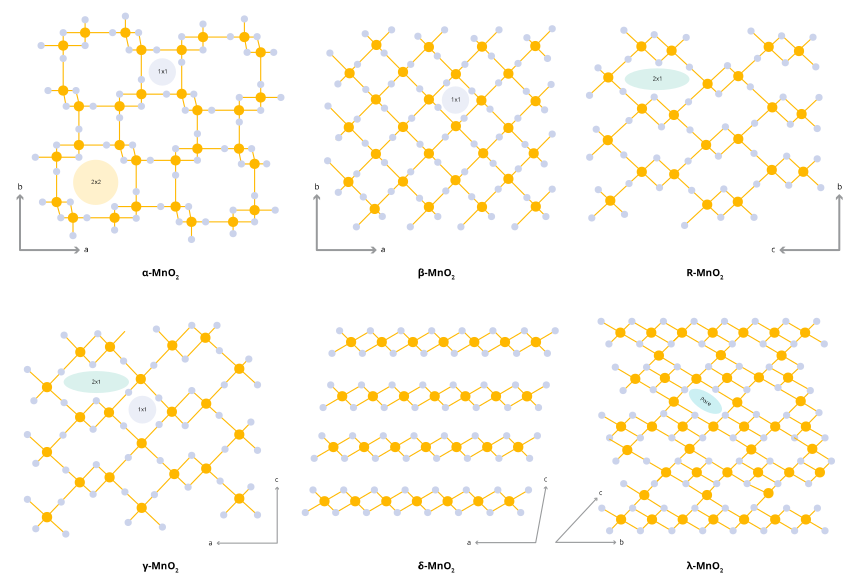
| Polymorph | α-MnO2 | β-MnO2 | R-MnO2 | γ-MnO2 | δ-MnO2 | λ-MnO2 |
|---|---|---|---|---|---|---|
| Mineral Type / Structure | Hollandite | Pyrolusite (Rutile structure) | Ramsdellite | Distorted Boehmite (Intergrowth mixed microdomain) | Birnessite (Layered) | Defect spinel |
| Space Group | I4/m | P42/mnm | Pnma | - | C2/m | Fd3m |
| Tunneling | 2 × 2 | 1 × 1 | 1 × 1 | 2 × 1 1 × 1 |
Layers | 3D Pores |
| Thermal Stability (°C) | 500 | 500 | 400 | 400 | Interlayer – 200 Layer - 500 |
240 |
Tunnels
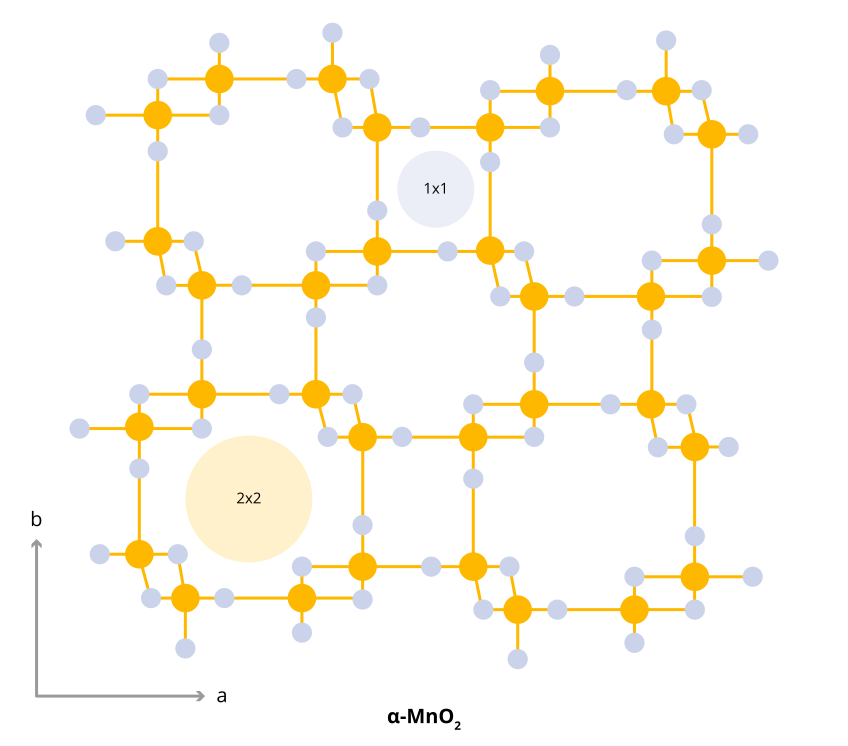
One-dimensional tunnels within some of the different MnO2 polymorph structures (α-MnO2, β-MnO2, R-MnO2, and γ-MnO2) allow for the intercalation of different small ions. This structural property has attracted the attention of battery scientists. The relatively open structures, featuring either the more spacious 2 × 2 or 2 × 1 tunnel, generally offer a higher degree of metal ion diffusion due to the presence of multiple open channels along the tunnel or in the planes nonparallel to the tunnel direction. However, as the walls of these larger tunnels are more spread out, the oxide ions have fewer neighbors to bond with. This lower "bonding density" makes the structure more likely to collapse.
Thermal Stability
The thermal stability of MnO2 polymorphs is explained in terms of the bonding environment of the oxide ions. If they are bonded to three manganese ions (β-MnO2) they exist in more rigid stable networks whereas when only bonded to two manganese ions oxygens are weaker links in the chain. The thermal stabilities of MnO2 polymorphs were experimentally shown to be β > α > R ≈ γ > δ ≈ λ below 650 °C. β and α-MnO2 are the most stable and maintain their structures up to 500 °C making them highly attractive in preventing battery degradation. R and γ transform to β-MnO2 at 400 °C therefore losing the attractive 2×1 tunnels. λ-MnO2 undergoes the same transformation to β-MnO2 at only 240 °C. δ-MnO2 transforms into α-MnO2 above 300 °C after losing its layered periodicity below 200 °C.
Particle Size
MnO2 particle size directly influences material properties and can be selected for a given application. For example, when used in energy storage, the smaller the particle size the larger the probability of ions intercalating within the crystal. The diffusion distance of ions in the MnO2 crystals is shortened, enhancing their ability to exploit the ion transport channels in the bulk phase.
Conductivity
The electrical conductivity range of MnO2 is 10-5 - 10-6 S/cm, which is low for typical energy storage materials. Strategies for increasing the electrical conductivity include reducing structures to the nanoscale range and using conductive additives such as carbon nanotubes and graphene.
Variable Oxidation State
The electronic configuration of manganese ([Ar]3d54s2), a transition metal with five unpaired electrons, means manganese oxide compounds exist with manganese in a variety of oxidation states (+4, +3, +2, 0). MnO2 most commonly contains manganese in the 4+ oxidation state to balance the charge of two oxygen atoms (2-). Depending on the polymorph and things like defects such as missing oxygen atoms (oxygen vacancies), other valence states are observed. This rich redox chemistry compared with other d-block elements and the ability to form species with a high oxidizing potential gives MnO2 distinctive physicochemical features which are attractive for catalysis, pollution reduction, and biological processes.
Specific Capacity
MnO2 has a large theoretical specific capacity of 1370 F g−1, making it attractive as an electrode material for energy storage applications. The specific capacitance of actual MnO2 crystals is dependent on their physical and chemical properties as well as their environment such as electrolyte type. The capacitance value decreases for different crystal forms of MnO2, which following is the order: α > δ > γ > λ > β. This is due to the difference in the size of spaces such as tunneling or interlayer spacing in the crystal structure of different dimensions. By controlling the morphology, surface area, pore size, oxygen vacancies, ion accessibility or even doping of manganese dioxide we can control specific capacity.
Applications
MnO2 is a versatile material with many interesting properties making it suited to a variety of applications, including:
Catalysis
MnO2 can shift between Mn4+ and Mn3+ during catalytic reactions, enabling it to repeatedly convert H2O2 into H2O and O2. MnO2 nanosheets have also been used as artificial oxidase for the detection and quantification of glutathione (GSH).
Detecting/Absorbing Toxic Metals
MnO2 can electrochemically detect toxic metal ions such as Zn(II), Pb(II), Cu(II) and Hg(II) and can remove them from water due to its aqueous stability and attractive sorption characteristics.
Ion-Sieving
MnO2 is particularly good at sieving small positively charged ions such as lithium (Li+) via its tunnels. This is vital for the recycling of lithium from secondary resources like salt-lake brines and lithium-containing wastewater. They are often referred to as octahedral molecular sieves (OMS) due to the MnO6 octahedral building blocks that make up the MnO2 polymorphs.
Energy Storage
MnO2 was first used in energy storage in the 1860s where it was added to the zinc-based Leclanché cell. This technology advanced to the widely used "Duracell" alkaline primary cells of 1.5 V Zn/MnO2. The use of MnO2 in batteries will be discussed further later on. Supercapacitor electrodes made from MnO2 have also been investigated due to its large theoretical specific capacity. The observed capacity of MnO2 based electrodes for supercapacitor applications can be tuned through morphology engineering, defect engineering and heterojunction engineering.
Manganese Dioxide in Batteries
MnO2 has been widely used in batteries due to their structural tunnels and high theoretical specific capacity. The flexibility to arrange the MnO6 building blocks within their lattice structures allows properties to be tuned for enhanced energy storage performance.
The key properties of the MnO2 polymorphs that are considered for battery applications are:
- Volume Expansion
- Electrical Conductivity
- Maximum Voltage
- Ion Mobility
- Stability
- Capacity
Types of Battery Containing MnO2
Due to the different tunnel sizes of MnO2 depending on morphology, a range of different metal ions can intercalate and be stored within the crystal structure. This has resulted in the use of MnO2 in a range of battery technologies, including:
- Lithium-ion batteries (LIBs): MnO2 is typically a cathode material in rechargeable LIBs. During the discharge cycle, lithium ions intercalate (insert themselves) into the crystal structure of the manganese dioxide.
- Calcium-ion batteries (CIBs): δ-MnO2 as the cathode material in CIBs has the highest electrochemical performance due to higher Ca-ion diffusivity.
- Sodium-ion batteries (SIBs): MnO2 loaded on graphene aerogel scaffold as cathode in a SIB exhibited excellent performance with power densities of > 70 mW cm−2.
- Aqueous zinc-ion batteries (AZIBs): MnO2 is the most widely studied cathode material. The two-electron reaction capable of manganese (Mn2+/Mn4+) results in high working voltage and theoretical capacity (616 mAh g−1). It pairs naturally with zinc anodes in water-based electrolytes, making the battery inherently non-flammable. The working mechanism for these batteries is very complicated.
- Redox flow batteries: MnO2 is a temporary solid phase created during charging where soluble Mn2+ in the electrolyte are oxidized and deposited on the electrode surface. The battery capacity is totally independent from the battery basic unit (cathode, anode and separator). Very high theoretical voltage and energy density.
Limitations of MnO2-based Batteries
The limitations of each polymorph in terms of their practicality for use in rechargeable lithium-ion batteries are:
- α-phase: Li-ion transport at reduced capacity and low structural stability during reversible Li-ion intercalation.
- β-phase: Narrower 1×1 tunnels so lower Li-ion transport and largest cell volume expansion (%) upon lithiation, which leads to mechanical failure during operation.
- R-phase: Low electronic conductivity, higher activation energy for Li-ion diffusion through 2×1 tunnels compared to 2×2.
- γ-phase: Large cell volume expansion (%) upon lithiation.
- δ-phase: Whilst it has the highest Li-ion storage capacity, it suffers greatly from low thermodynamic stability, electronic conductivity and slow Li-ion transport kinetics.
- λ-phase: Slow Li-ion transport kinetics.
During battery discharge irreversible structural phase transformation can occur due to the Jahn-Teller effect (crystal lattice distorts). During discharge, Mn4+ is reduced to Mn3+ which is electronically unstable, so it undergoes a disproportionation reaction, essentially splitting into Mn4+ and soluble Mn2+. The gradual dissolution and re-deposition of Mn2+ will lead to cathode active materials reduction, structural collapse, and the rapid decay of battery capacity.
Why the Renewed Interest of MnO2 in Battery Research?
The renewed interest in the use of MnO2 in batteries is driven by a shift away from expensive, hard-to-source materials like cobalt and nickel. While MnO2 has been the staple of disposable primary alkaline batteries for decades, it is now being reinvestigated for next-generation rechargeable systems. This is down to four trends in battery research:
Beyond-Lithium
MnO2 has emerged as a top candidate for newer chemistries such as aqueous zinc-ion batteries (AZIBs), calcium-ion batteries (CIBs) and sodium-ion batteries (SIBs) as the world seeks alternatives to lithium-ion batteries (LIBs) due to cost and lithium scarcity.
Structural Tuning
As scientists are developing methods for controlling the nanostructure and tunnel architecture of different MnO2 polymorphs, crucial properties such as stability and ion transport are selectively enhanced. This has broadened the applicability of MnO2 in energy storage applications.
Solving the Polysulfide Shuttle in Li-S
Lithium-sulfur (Li-S) batteries have incredible theoretical energy density but suffer from the "shuttle effect," where sulfur species dissolve and ruin the battery. MnO2 nanosheets are being used as a pollutant trap as their surface is highly polar and chemically binds to the polysulfides, locking them in place and increasing the battery's lifespan.
Sustainability
The geopolitical and ethical issues surrounding cobalt extraction have forced manufacturers to find other solutions.
- Abundance: Manganese is the 12th most abundant element in the Earth's crust.
- Cost: It is orders of magnitude cheaper than cobalt or nickel.
- Recyclability: MnO2 is much easier to process and recycle safely compared to the complex chemistries found in high-end EV batteries.
Metal Oxides
Learn More
 An Introduction to Transition Metal Oxides (TMOs)
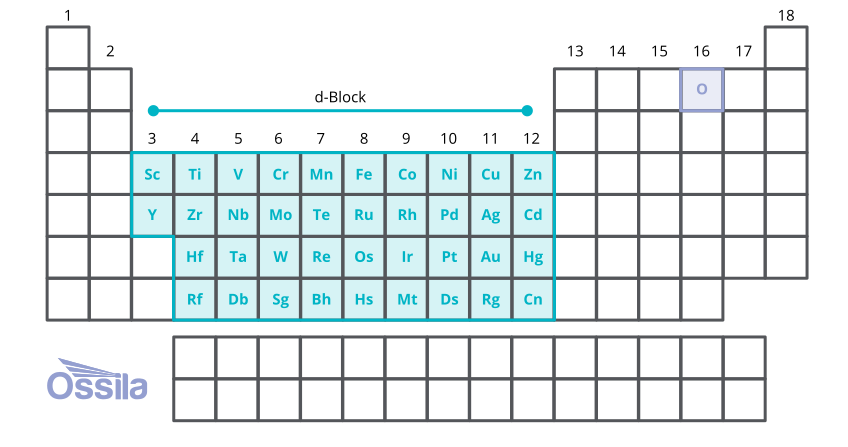
Transition metal oxides (TMOs) are compounds of transition metals bonded to oxygen. A transition metal is an element in the periodic table that has a partially filled d-shell or which forms cation with an incomplete d-shell. TMOs have been extensively researched due to their wide range of chemical and physical properties.
Learn more... What is a Ternary Lithium Battery?
A ternary lithium battery is a type of lithium-ion battery (LIB) that has a cathode composed of three different metals. The metals are nickel (Ni), cobalt (Co), manganese (Mn) or aluminum (Al).
Read more...
References
- Thermal stability of MnO2 polymorphs, Hatakeyama, T. et al., Journal of Solid State Chemistry (2022)
- First-principles evaluation of MnO2 polymorphs as cathode material..., Sun, W. et al., Sustainable Energy & Fuels (2024)
- Engineering Nanostructured MnO2 for High Performance Supercapacitors, Wang, J.-G., InTech (2016)
- Physicochemical properties of different crystal forms of manganese..., Pan, Y. et al., Nanoscale Adv. (2023)
- The energy storage mechanisms of MnO2 in batteries, Guo, X. et al., Current Opinion in Electrochemistry (2021)
Contributors
Written by
Application Scientist
Diagrams by
Graphic Designer