


Fast and Precise Wavelength Selection with <1 nm Accuracy
100 mm focal length and fast scan rate of 1000 nm/s
Overview | How Monochromators Work | Specifications | Choosing A Monochromator | Gallery | Software | Related Products
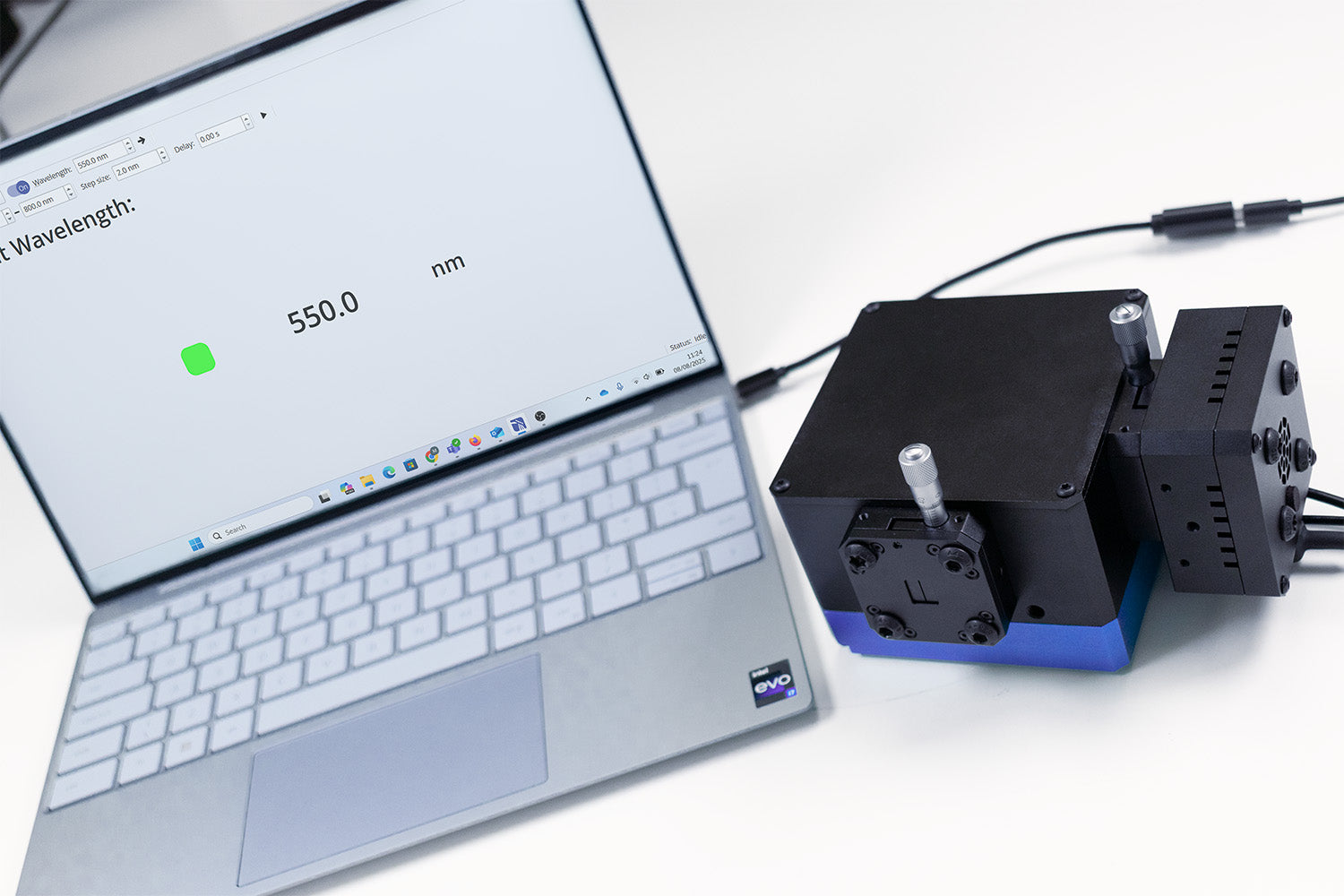
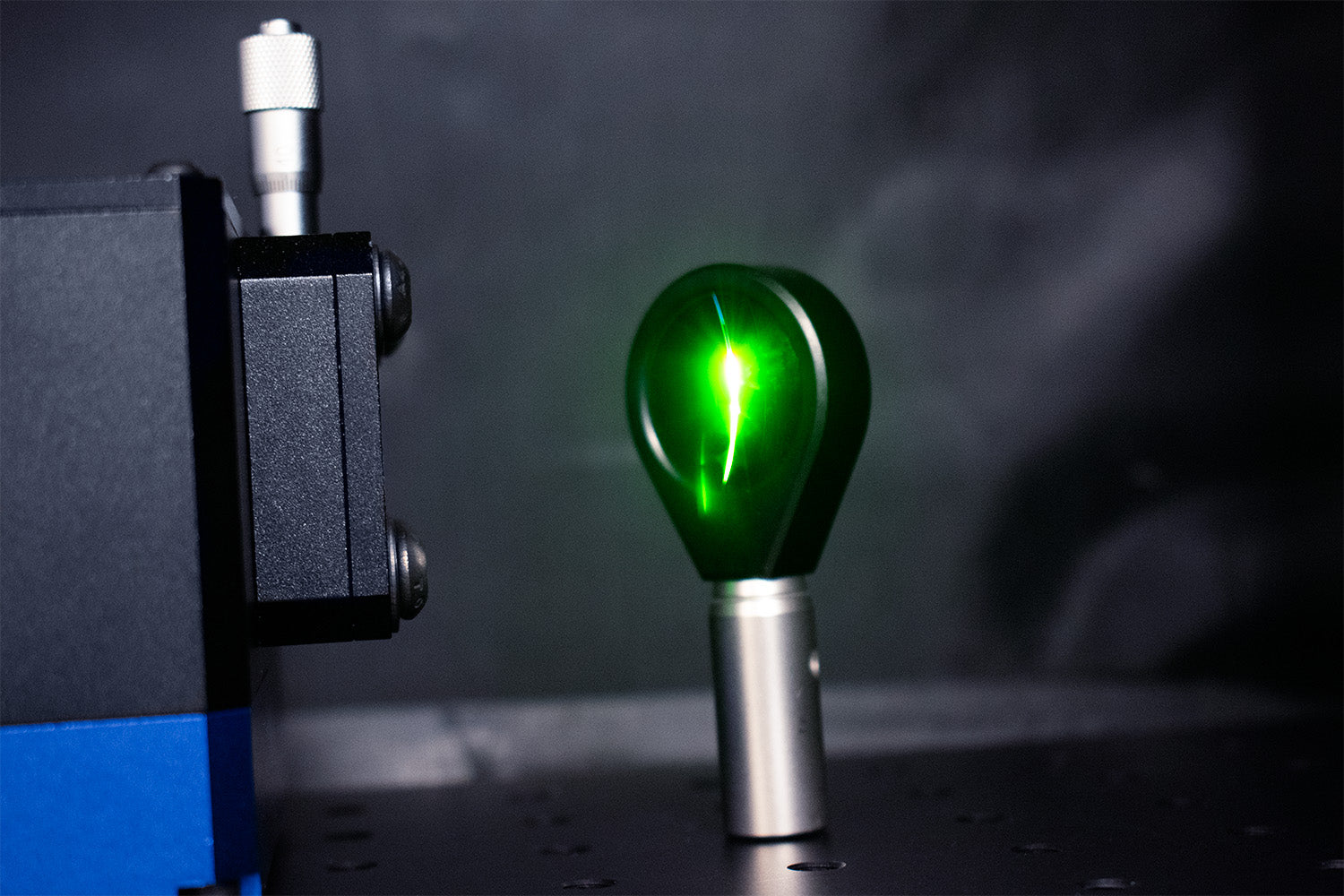
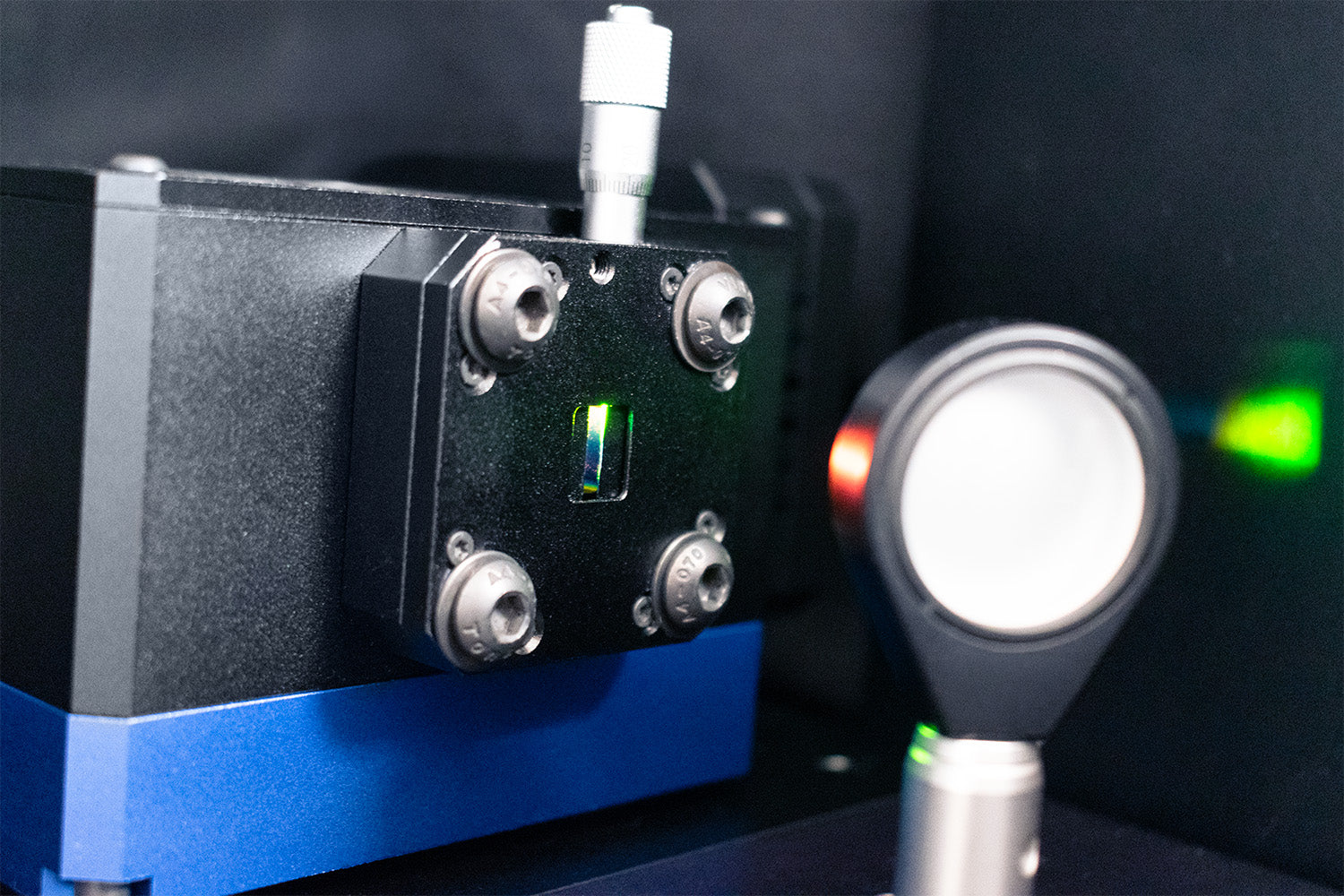
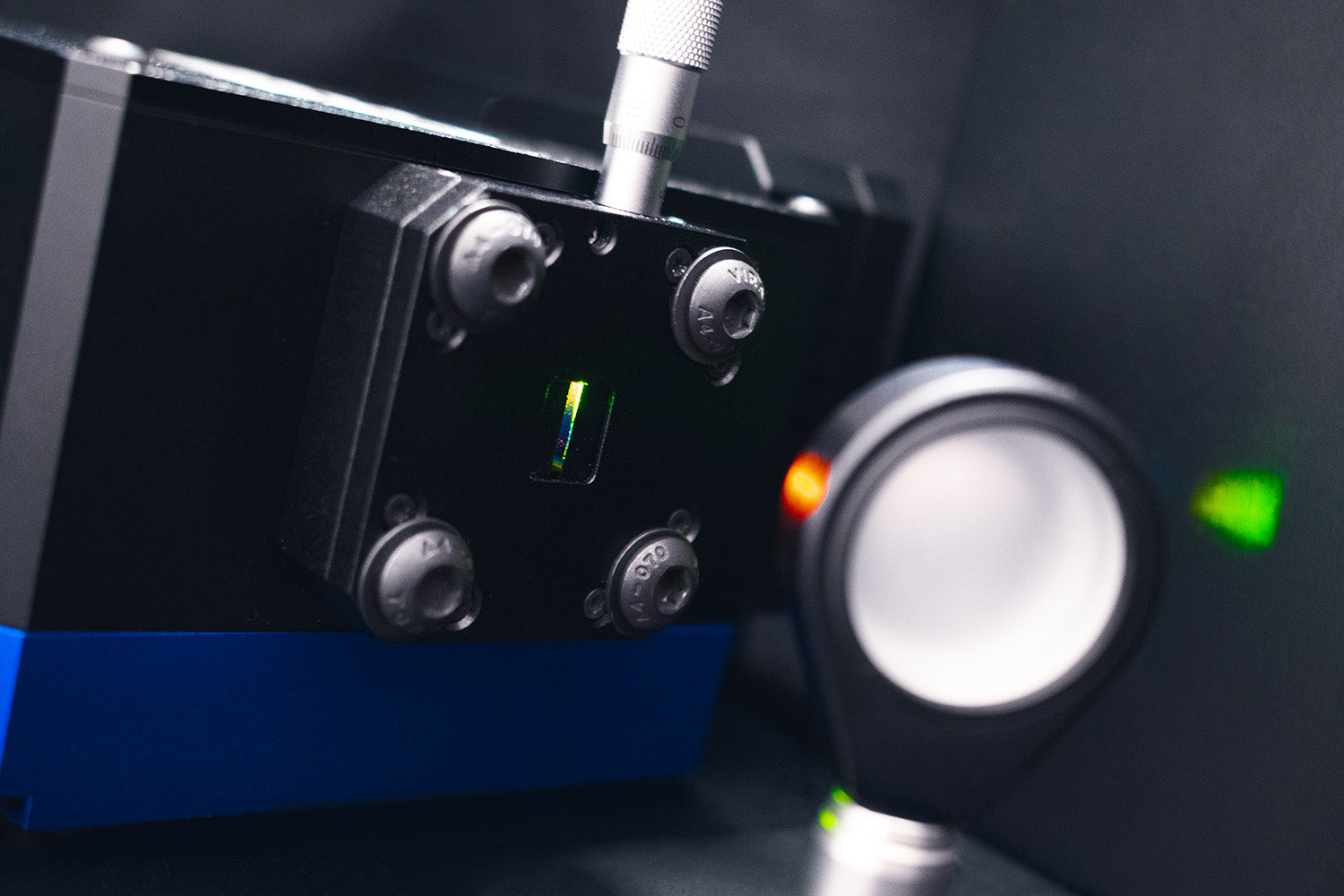
A compact, low price grating monochromator that can be reliably integrated into many optical setups. Capable of isolating specific wavelengths between 380 – 1000 nm with <1 nm accuracy and scanning through this spectral range with impressive rates of up to 1000 nm/s. Easily control this component with free downloadable Monochromator Console software, or with serial commands if your prefer. Choose specific excitation wavelengths for fluorescence measurements, isolate and measure specific emission signals, or simply improve the sensitivity and accuracy of absorbance measurements with just the touch of a button.
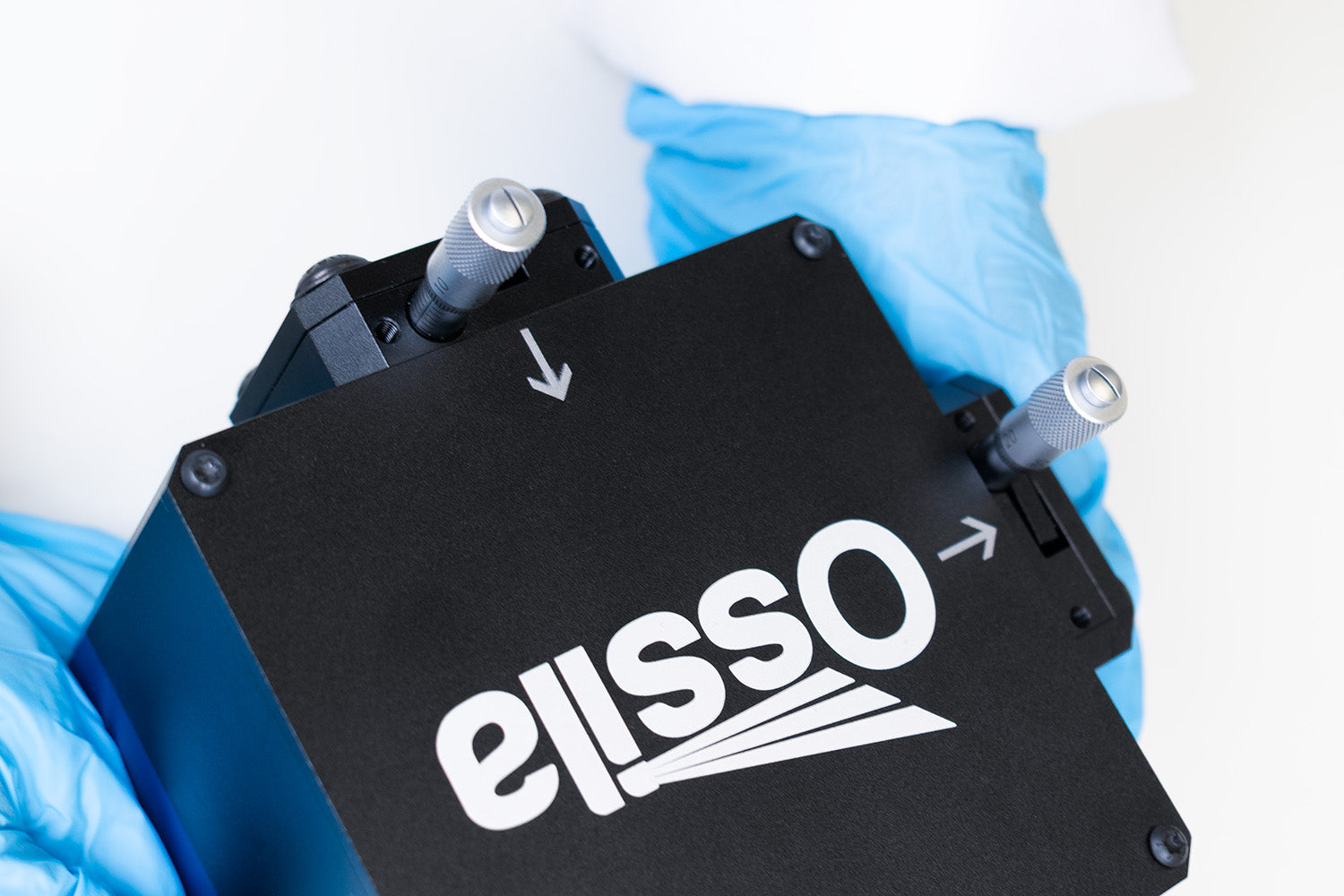
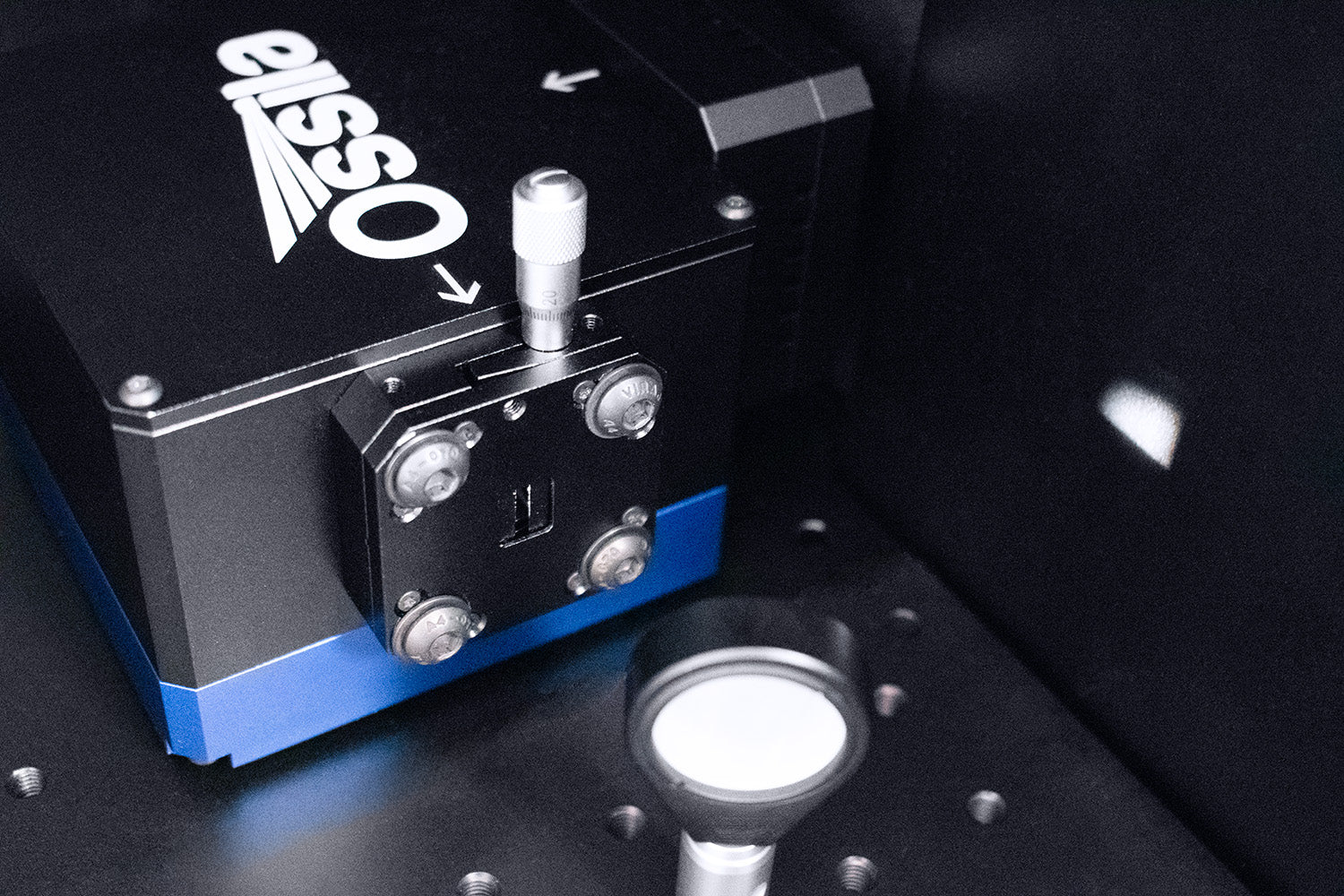
Compatible with optical rail systems, the Ossila Monochromator can be integrated into any optics bench to source reliable, tunable monochromatic light.

Compact Size
For easy integration into your optical setup, including optical rail systems

High-Speed Scanning
Scan across 380 – 1000 nm at a rate of 1000 nm/s for fast data acquisition

Easy to Use
Control with free software to isolate wavelengths to <1 nm accuracy

Smart Design
Popular Czerny-Turner configuration reduces measurement noise
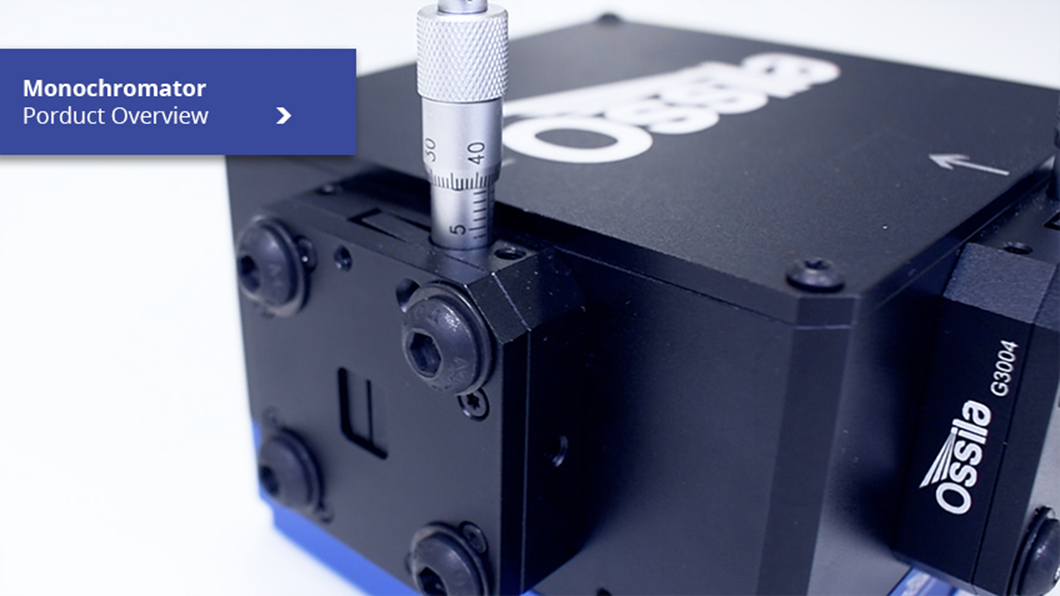
How Does A Grating Monochromator Work?
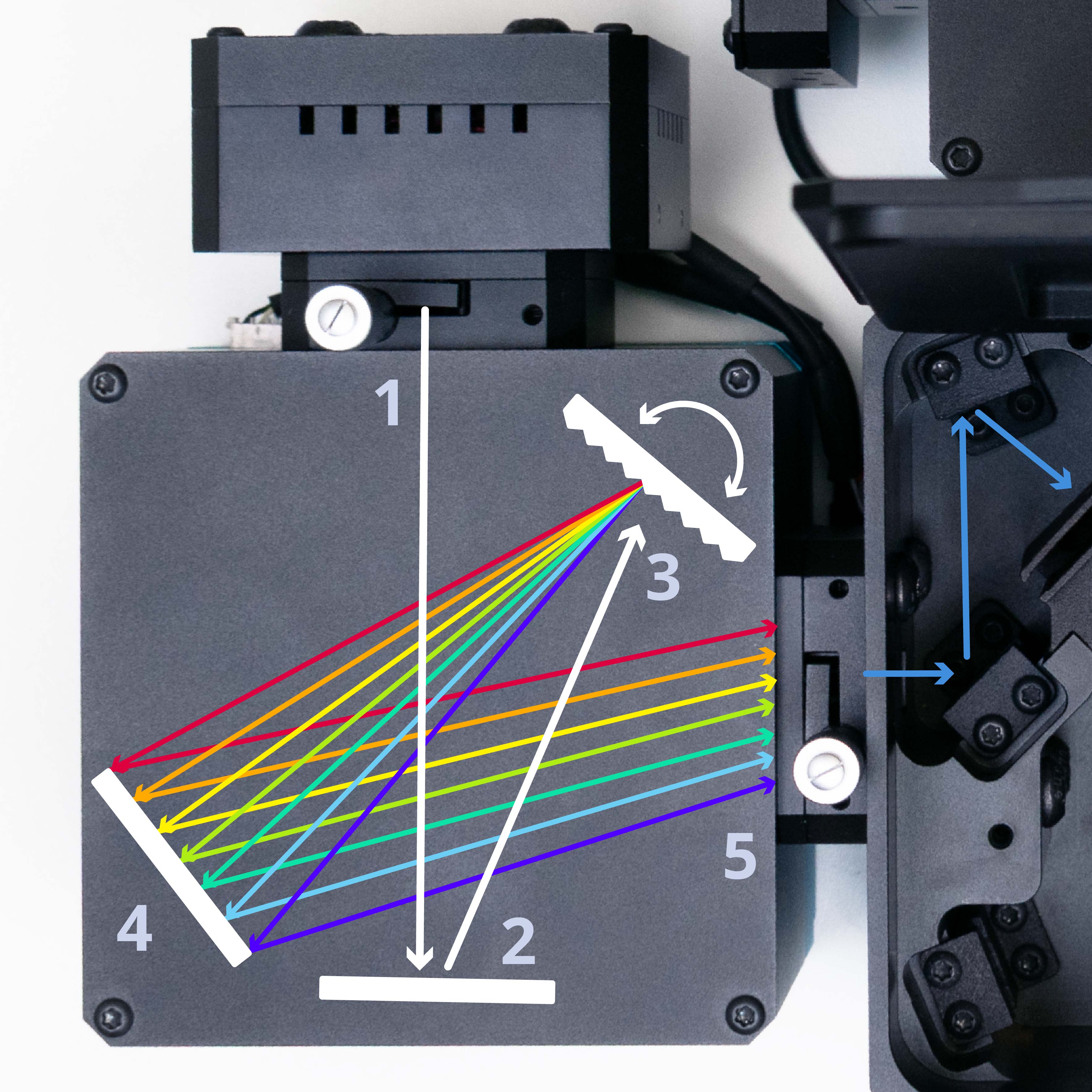
A monochromator splits light into its component spectrum, then isolates and transmits a specific narrow band of wavelengths. These systems can be used to select wavelengths for specific excitations, or to scan through a range of wavelengths individually.
In a grating monochromator, a diffraction grating disperses light. Then, an adjustable slit is used to select the narrow band of wavelengths to transmit as the output signal. A Czerny-Turner grating configuration, like the Ossila Monochromator, works by:
- Broadband light enters through the entrance slit
- A concave mirror focuses the light onto a diffraction grating
- The diffraction grating disperses the light towards a second mirror.
- A second mirror redirects the disperse light towards the exit slit
- Depending on the angle of the grating, a different portion of the disperse light is focused through the exit slit.
Specifications
| Wavelength Range | 380 nm – 1000 nm |
|---|---|
| Wavelength Accuracy | <1 nm |
| Wavelength Repeatability | <0.1 nm |
| Focal Length | 100 mm |
| f Number | f/4 |
| Configuration | Crossed Czerny-Turner |
| Slit Type | Manual |
| Possible Slit Sizes | 50 μm – 6 mm (W) x 10 mm (H) |
| Weight | 1.1 kg |
| Dimensions (W x D x H) | 114 mm x 114 mm x 100 mm |
Choosing A Monochromator
An efficient monochromator requires a high diffraction grating dispersion and grating efficiency in the appropriate wavelength range:
- Grating Dispersion (Measured in nm/mm): This is a property of diffraction gratings, representing the physical distance different wavelengths of light are dispersed by. With higher grating dispersions, light will be separated at larger angles, leading to greater physical separation. Higher grating dispersion increases a monochromators resolution
- Grating Efficiency (Plotted as efficiency over wavelength): Diffraction gratings will have different efficiencies at different wavelengths. By measuring the intensity of diffracted light over a wide wavelength range, manufacturers create a grating efficiency curve. Using this grating efficiency curve, monochromator manufacturers can choose diffraction gratings with the highest efficiencies in their desired spectral region.
Stray Light
Stray light refers to any light outside of the chosen wavelength range which escapes with the output signal. This contributes to the noise of a spectroscopy measurement. Stray light should be as low as possible in any monochromator design. It depends on many factors including monochromator bandpass, optical alignment and detector sensitivity.
Stray light is an important consideration in monochromators, especially when conducting fluorescence spectroscopy. In fluorescence measurements, only a small proportion of the excitation signal is absorbed by fluorophores, and the subsequent photoluminescence quantum yield is rarely 100%. Therefore, fluorescence signals could be 1000 x less intense than initial excitation signals, so even a small amount of stray light can cause unreliable measurements.
Sensitivity vs. Resolution
Adjustable width slits allow users to control the light entering and exiting the monochromator. There is a trade off when optimizing slit width. Light intensity allowed through a slit is proportional to slit area, so increasing slit width increases signal intensity and signal to noise ratio, so improves instrument sensitivity. This can be useful for low-signal measurements.
However, increasing slit width (especially at the exit slit) will decrease measurement resolution, as it allows a larger range of wavelengths to exit the monochromator. To increase measurement resolution requires a smaller slit width.
Achieving high resolution and sensitivity is a balancing act. Depending on your measurement requirements and your sample, you will need to optimize your slit widths to maximize resolution and sensitivity. Therefore, it is important to have a wide available slit width range for both the incident and output light.
Reduced Noise
Use the Ossila Monochromator to isolate specific wavelengths with <1 nm accuracy and <0.1 nm repeatability. The Czerny-Turner optical configuration with single entrance and exit slit reduces noise from unwanted reflections and multiple dispersions. Worry about one less thing and reliably source tunable monochromatic light as you refine your custom setup.
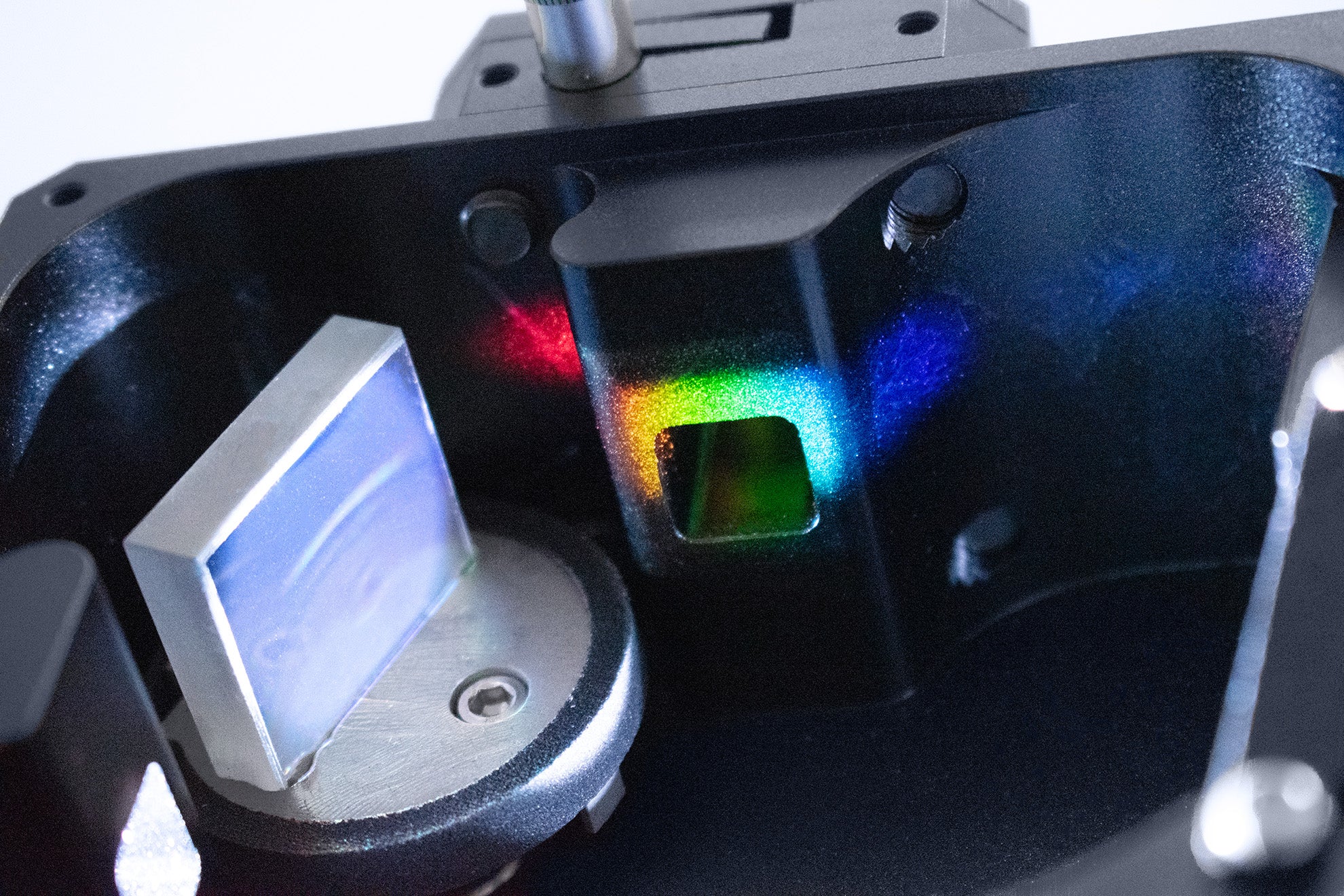
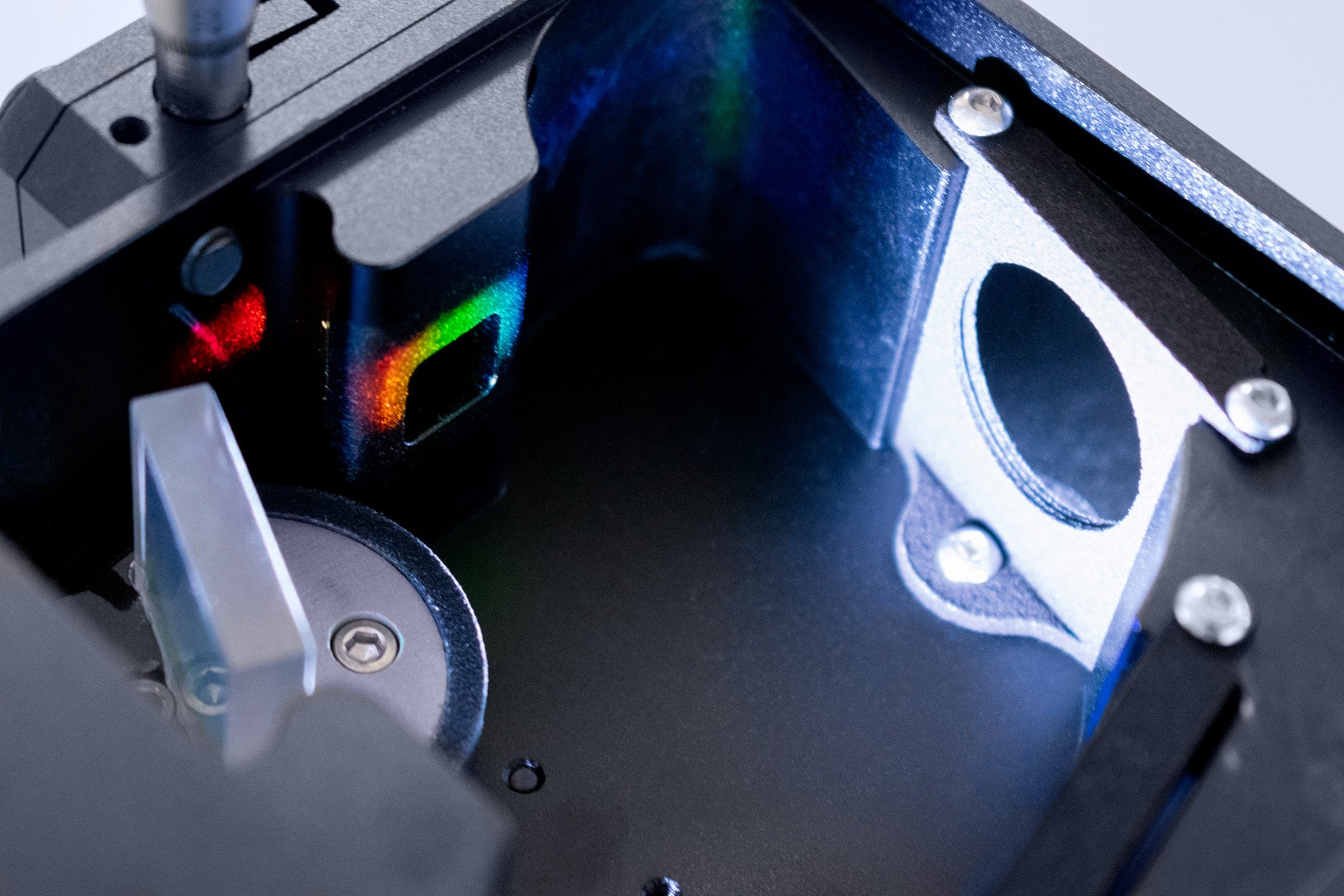
Grating Monochromator Gallery
Monochromators vs Spectrometers
Monochromators and spectrometers both use diffraction gratings or prisms to split light into its component wavelengths, but they serve different primary purposes.
Monochromators select and output a single beam of light with a narrow wavelength range. These systems are used within spectrofluorometers or within optical measurement systems, enabling more accurate measurements than spectrometers. In contrast, spectrometers are designed to measure the intensity of all wavelengths simultaneously. In spectrometers both diffraction grating and detector are housed in one unit. A stationary grating directs dispersed light towards a charge-coupled device (CCD) array. Each pixel corresponds to a different wavelength, so it measures an entire spectrum at once. These systems measure spectra more quickly, but with lower resolution.
Software
The Ossila Monochromator Console software is designed to make the monochromator easy to use once it is integrated into your optical setup. By adjusting the position of the diffraction grating via the software, you can:
- Control the output wavelength of the monochromator
- Perform scans/sweeps across multiple wavelengths
If required, the software also makes it possible to create and apply custom user calibration of output wavelengths.
Software Requirements
| Operating System | Windows 11 (64-bit) |
|---|---|
| CPU | Dual Core 2 GHz |
| RAM | 4 GB |
| Available Hard Drive Space | 187 MB |
| Monitor Resolution | 1440 x 960 |
| Connectivity | USB 2.0 |
Accessories and Related Products


